2026 Best Polymer Dosing Solutions for Efficient Water Treatment?
In the field of water treatment, Polymer Dosing has emerged as a vital process. Effective polymer dosing can enhance flocculation and sedimentation, leading to cleaner water output. According to a report by Water Environment Federation, optimizing polymer dosage can reduce chemical costs by up to 30%. This demonstrates the significant economic and environmental impact of precise dosing techniques.
Recent advancements in dosing technology show promise for future applications. Innovations in polymer types and dosing systems aim to improve both efficiency and accuracy. However, challenges exist. Many facilities struggle with over- or under-dosing, which can result in suboptimal performance and increased waste. Reports indicate that nearly 25% of water treatment plants encounter difficulties with polymer dosing.
With the industry's focus on sustainability, finding the best polymer dosing solutions is critical. Proper implementation can minimize environmental footprint while improving water quality. As we explore the best options for 2026, it is crucial to consider the balance between cost effectiveness and reliability. Addressing these challenges head-on will shape the future of water treatment solutions.
Overview of Polymer Dosing Solutions in Water Treatment
Polymer dosing solutions play a crucial role in water treatment processes. They enhance the efficiency of coagulation and flocculation, which are essential for removing impurities. These solutions work by altering the physical properties of particles in water, making them easier to aggregate and remove. Implementing the right polymer can lead to significant improvements in water clarity and quality.
Understanding the various types of polymers available is essential for optimizing water treatment. Cationic and anionic polymers serve different functions. Cationic options are often used for wastewater treatment, while anionic types are better suited for systems that require higher sedimentation rates. Selecting the right type depends on the specific characteristics of the water being treated.
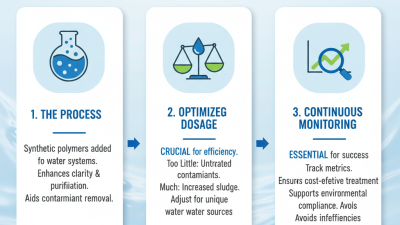
While polymer dosing systems can be effective, they are not without challenges. Equipment maintenance is crucial to ensure consistent performance. Operators should regularly check levels and adjust dosages based on varying water conditions. This continuous monitoring can reveal potential inefficiencies and areas needing improvement. Ultimately, a thoughtful approach to polymer dosing can lead to better outcomes in water treatment initiatives.
2026 Best Polymer Dosing Solutions for Efficient Water Treatment
This bar chart illustrates the efficiency ratings of various polymer dosing solutions, showcasing their effectiveness in water treatment applications. Ratings range from 1 to 10, with higher numbers indicating greater efficiency.
Importance of Polymer Selection for Treatment Efficiency
Polymer selection is crucial in water treatment processes, affecting both efficiency and cost. Different polymers exhibit varying properties, influencing flocculation rates and overall treatment performance. For instance, a report by the Water Environment Federation states that using the right polymer can enhance settling rates by up to 30%. This improvement leads to quicker purification processes, resulting in reduced operational costs.
In practice, the characteristics of the water being treated should guide polymer choice. Factors such as turbidity, pH, and temperature play significant roles. A polymer that works well in one scenario may underperform in another. Industry studies indicate that misalignment in polymer selection can lead to a 20% increase in chemical usage. It is essential to conduct trials to find the optimal polymer type and dosage. Regular monitoring of treatment effectiveness feeds into ongoing adjustments, ensuring efficiency is consistently met.
Moreover, the environmental impact must also be taken into account. Some polymers may lead to foam formation, which complicates the treatment. Balancing performance with environmental considerations is increasingly important. Reports show that over 40% of water treatment plants face challenges related to polymer waste disposal. Finding biodegradable or less harmful alternatives is becoming a priority. As industry demands evolve, continuous innovation in polymer development will be essential for sustainable water treatment solutions.
2026 Best Polymer Dosing Solutions for Efficient Water Treatment
| Polymer Type |
Molecular Weight (MW) |
Viscosity (cP) |
Dosing Concentration (%) |
Application Efficiency (%) |
| Cationic Polyacrylamide |
8,000,000 |
100 |
0.5 - 1.0 |
85 |
| Anionic Polyacrylamide |
10,000,000 |
150 |
0.3 - 0.8 |
90 |
| Nonionic Polyacrylamide |
6,000,000 |
75 |
0.4 - 0.7 |
80 |
| Bio-based Polymeric Flocculants |
15,000,000 |
50 |
0.2 - 0.5 |
92 |
| Synthetic Flocculants |
9,000,000 |
120 |
0.5 - 1.2 |
88 |
Key Features of Effective Polymer Dosing Systems
Efficient polymer dosing systems are crucial for optimizing water treatment processes. Key features define their effectiveness, ensuring minimal waste while maximizing results. Studies show that precise dosing can enhance flocculation, improving sedimentation rates by up to 30%. This directly impacts the quality of treated water.
Monitoring capabilities are vital. Real-time analytics allow operators to adjust dosages dynamically, responding to changing water conditions. A report by the Water Environment Federation emphasized that systems with automated feedback loops reduce chemical usage by 20%. This not only cuts costs but also lessens environmental impact.
However, challenges persist. Many facilities still rely on manual calibration, leading to inconsistent results. Moreover, operators may lack training, risking system reliability. Integrating advanced technologies, such as AI-driven controls, can bridge these gaps. Embracing innovation is critical for long-term sustainability in water treatment districts.
Challenges in Polymer Dosing for Water Treatment
Effective polymer dosing is crucial for water treatment operations. However, several challenges persist. Accurate dosing is essential; too little may lead to ineffective treatment, while too much can cause sludge and reduce efficiency. Operators often struggle with maintaining consistency amidst changing water quality and flow rates. These variables can complicate the process, affecting overall treatment outcomes.
Tips: Regular monitoring and calibration of dosing equipment help mitigate errors. Automating the process can enhance precision and reduce manual oversight. Training staff regularly on best practices ensures everyone is informed and responsive to challenges.
Environmental conditions can also impact polymer performance. For example, temperature fluctuations and varying pH levels can alter how polymers behave in water. Operators need to adapt their strategies accordingly. Ignoring these factors can lead to unexpected costs and treatment failures.
Tips: A comprehensive analysis of incoming water quality can provide insights into the required polymer adjustments. Keep a checklist to evaluate environmental factors regularly, ensuring your dosing process remains effective and efficient. Being proactive about these issues can save time and resources in the long run.
Future Trends in Polymer Technology for Water Treatment Solutions
The future of water treatment is increasingly linked to advancements in polymer technology. Analysts predict that the global polymer market for water treatment will reach $8 billion by 2026. This growth reflects the rising need for efficient and sustainable solutions. As water scarcity persists, the innovation of new polymer dosing solutions becomes essential.
Current trends indicate a shift towards biodegradable and environmentally-friendly polymers. These materials reduce environmental impact while optimizing treatment efficiency. A recent study highlighted that using bio-based polymers can enhance flocculation processes by up to 30%. This efficiency not only saves costs but also improves overall water quality.
However, challenges remain. Scaling up production of these new materials is complex and costly. Many existing facilities have outdated systems that do not adapt well to new technologies. Continuous R&D investment is crucial to overcoming these hurdles. Collaboration among industry experts, governments, and academia can drive this progress, ultimately transforming water treatment processes to meet future demands.