Best Polymer Dosing Techniques for Optimal Performance?
In the field of water treatment, effective Polymer Dosing is crucial for enhancing performance. According to recent industry reports, over 30% of wastewater treatment facilities struggle with dosing inaccuracies. This inefficiency can lead to increased operational costs and poor water quality.
Polymer dosing systems must be optimized. Many facilities still rely on outdated techniques, risking chemical imbalances. A well-calibrated dosage can improve coagulation and flocculation, leading to better solid-liquid separation. However, not all polymers perform the same way under varying conditions, which complicates the selection process.
Investing in advanced dosing technologies can yield significant benefits. Some studies indicate that upgrading dosage systems could reduce chemical usage by up to 20%. Yet, organizations often hesitate due to budget constraints. It’s essential to balance investment with potential gains. In this complex landscape, finding the right Polymer Dosing techniques remains a challenge.
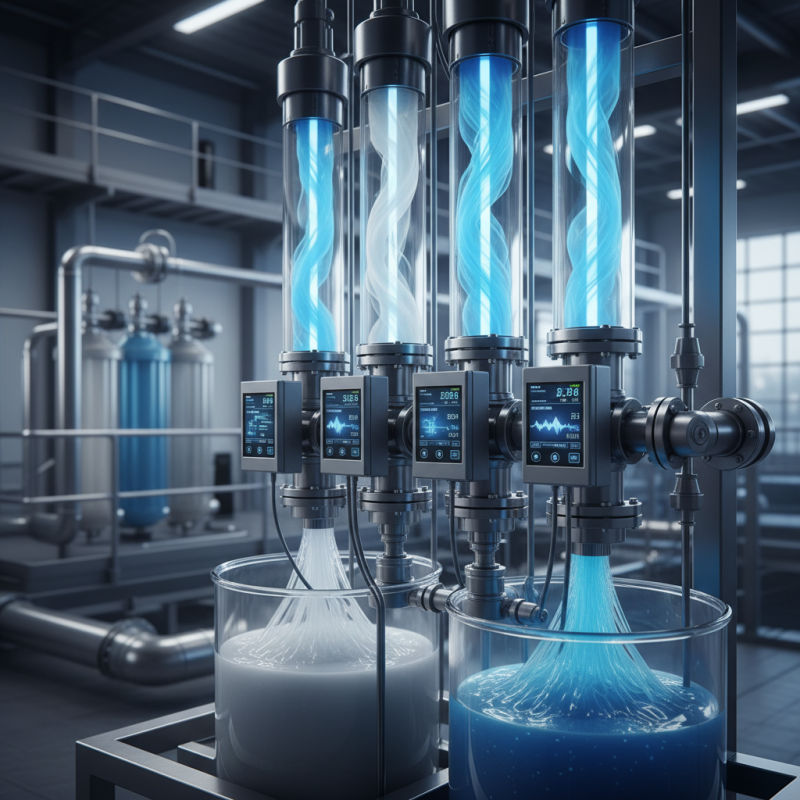
Best Practices in Polymer Dosing for Enhanced Water Treatment Efficiency
Polymer dosing is crucial for effective water treatment. It helps in coagulation, flocculation, and clarification processes. Therefore, selecting the right dosing technique enhances overall system efficiency. However, many facilities still struggle with implementation. Metering pumps and static mixers can optimize the dosing process. These tools ensure even distribution of polymers.
Proper polymer activation can make a difference. It’s essential to hydrate the polymer fully before use. Inadequate activation leads to clumping and poor performance. Monitoring conditions in the treatment system is vital. Inconsistent flow rates can affect dosing accuracy. Regular calibration of dosing equipment is also necessary.
Experimentation with different dosing strategies may yield better results. Sometimes, facilities stick to one method without reevaluation. This can lead to inefficiencies. Regular training for operators can improve understanding of polymer behavior. Engaging staff in the process encourages proactive adjustments. Evaluating the impact of different techniques is important. Take time to reflect on what works best for specific conditions.
Evaluation of Polymer Types and Their Suitability in Dosing Applications
The choice of polymer types significantly impacts dosing applications. An effective polymer enhances flocculation and sedimentation processes. Polyacrylamide, a widely used synthetic polymer, is noted for its high molecular weight. It works well in wastewater treatment and enhances solids separation.
When considering dosage techniques, one must assess the polymer's suitability. For example, cationic polymers are favorable in high-solids environments. In contrast, anionic polymers excel with low-solid concentrations. A recent report indicated that varying pH levels can affect polymer performance by up to 30%. This highlights the need for careful evaluation of each application’s parameters.
Tips: Always test polymer samples under specific conditions. Adjusting the concentration can lead to improved results. Monitoring system viscosity is vital, as it influences mixing efficiency. Adjustments may be necessary, as not all polymers perform equally across applications. Performance discrepancies can arise due to variations in raw materials or environmental factors. Engaging with appropriate data and continuous assessment promotes better decision-making.
Best Polymer Dosing Techniques for Optimal Performance
Influence of Dosing Techniques on Polymer Activation and Performance
When it comes to polymer dosing techniques, the activation and performance of polymers are significantly influenced by how they are applied. Research indicates that improper dosing can lead to suboptimal polymer performance. For instance, too high a concentration can cause clumping, while too low can mean insufficient flocculation. Both scenarios are undesirable in wastewater treatment processes, leading to increased operational costs.
A recent industry study highlighted that adjusting dosing rates can enhance polymer efficiency by up to 30%. This underscores the importance of precision in dosing techniques. On average, facilities that utilize automated dosing systems report a 15% reduction in chemical consumption. This is due to more accurate and responsive adjustments based on real-time data. Yet, despite these advancements, many operators still use manual techniques which can be inconsistent and prone to human error.
Moreover, the mixing process also plays a critical role in polymer activation. If polymers aren’t mixed correctly, their performance can degrade. In fact, ineffective mixing can reduce floc size, making it harder for polymers to bind with suspended particles. Optimization of mixing times and speeds can improve activation but requires careful monitoring. The industry still faces challenges in standardizing these practices across different plants and systems.
Best Polymer Dosing Techniques for Optimal Performance
| Dosing Technique |
Activation Level (%) |
Performance Efficiency (%) |
Application Type |
| Continuous Dosing |
85 |
90 |
Water Treatment |
| Batch Dosing |
75 |
70 |
Sludge Treatment |
| Intermittent Dosing |
80 |
85 |
Industrial Wastewater |
| Smart Dosing Systems |
90 |
92 |
Municipal Sewage |
| Pre-mixed Dosing |
78 |
74 |
Food Processing |
Optimization of Polymer Feed Rates Based on Treatment Facility Requirements
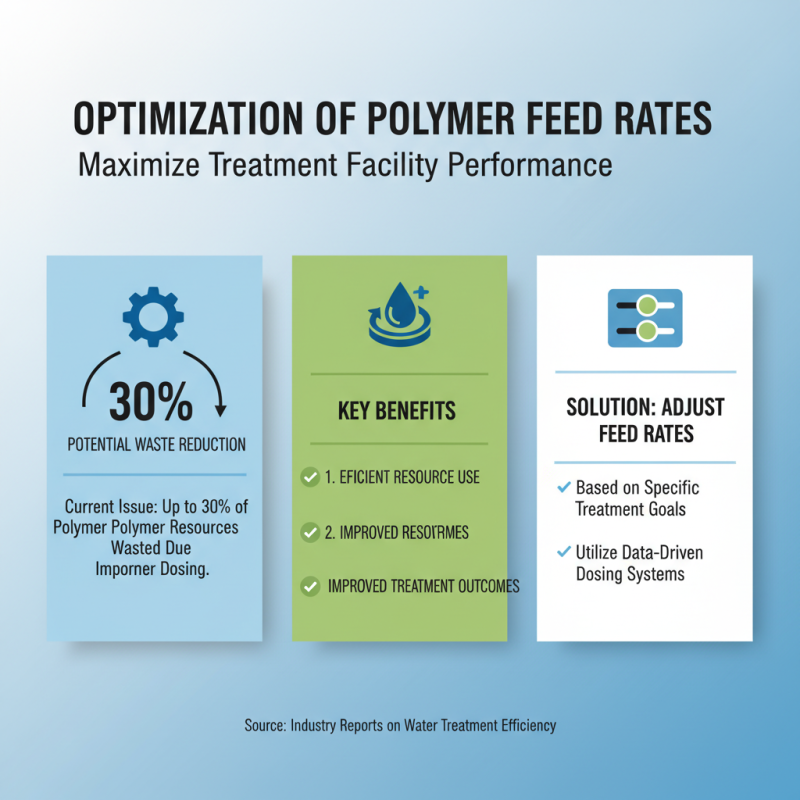
The optimization of polymer feed rates is crucial for maximizing treatment facility performance. Many facilities struggle with improper dosing, which can lead to inefficient use of polymers. Reports indicate that poorly managed dosing can waste up to 30% of polymer resources. It’s vital to adjust feed rates based on specific treatment goals.
For instance, a facility treating wastewater might require different polymer concentrations at various stages. An optimal approach involves real-time monitoring of flow rates and polymer properties. The industry standard suggests that operators should frequently test the sludge characteristics. This ensures that the polymer dosage aligns precisely with treatment demands. In some scenarios, facilities experienced a dramatic reduction in operational costs by adjusting their feed strategies.
Yet, implementing precise dosing isn’t without its challenges. Many operators report difficulties in balancing polymer viscosity and flow rates. Such discrepancies can lead to ineffective treatment and increased operational costs. Facilities must continually refine their dosing methodologies to align with evolving treatment needs and regulatory standards. With the right techniques, achieving optimal performance becomes more feasible.
Monitoring and Adjusting Dosing Parameters for Improved Operational Results
Monitoring and adjusting dosing parameters are crucial for achieving optimal performance in polymer dosing systems. A recent report from the Water Environment Federation indicates that improper dosing can lead to a 30% increase in operational costs. Accurate monitoring allows operators to detect deviations early, preventing oversized dosages that can harm water quality or infrastructure.
Adjusting dosing parameters based on real-time data improves overall efficiency. For instance, fine-tuning the flow rates based on chemical reactions can reduce waste and enhance performance. Inadequate reactions often result in excess polymer consumption, which does not translate to better results. Operators may need to reconsider their approach if they consistently see variations in performance.
The implications are significant. A study by the American Chemical Society shows that mismanagement of dosing leads to up to 15% lower treatment plant efficiency. Continuous monitoring coupled with timely adjustments can mitigate these issues. However, many facilities still use outdated practices that fail to adapt to changing water characteristics. Operators must be aware of the need for adaptation and remain open to evolving their strategies for better operational outcomes.