2026 How to Choose the Best Ph Dosing Pump for Your Needs?
In today's industrial environment, precise pH control is critical. The pH dosing pump plays a vital role in maintaining this balance. According to a report from the Environmental Protection Agency, improper pH levels can lead to costly operational issues and regulatory non-compliance. The global pH dosing pump market is expected to grow by over 5% annually, revealing a rising demand for reliability and efficiency in fluid management.
Selecting the right pH dosing pump for your needs is not a simple task. Numerous factors come into play, including flow rate, chemical compatibility, and required accuracy. A poorly chosen pump can lead to frequent maintenance issues and unexpected downtime. In a study published by the American Water Works Association, nearly 30% of water treatment facilities reported struggles with their existing dosing pumps, highlighting a need for informed decisions in this domain.
Navigating the options available can be overwhelming. Many manufacturers claim superiority, yet not all can deliver on their promises. Understanding the specific requirements of your application is essential. After all, not every pump fits all scenarios. Clear evaluation criteria will ensure that you make a smart choice that aligns with your operational goals.
Understanding pH Dosing Pumps: Key Concepts and Functions
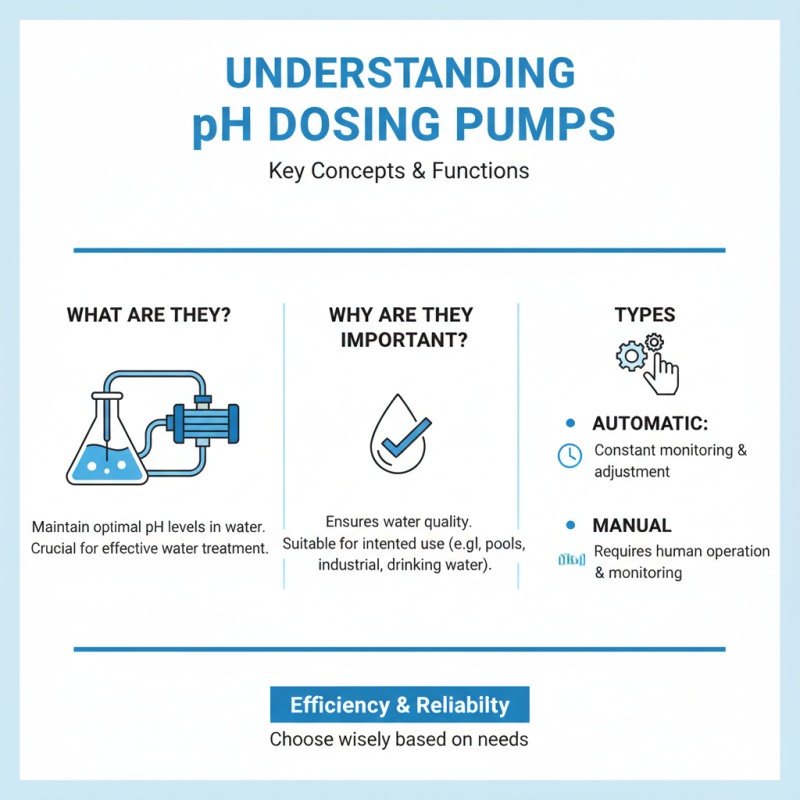
Understanding pH dosing pumps is essential for effective water treatment. These devices help maintain optimal pH levels. They ensure the quality of water is suitable for its intended use. pH dosing pumps can be automatic or manual. Choosing the right type affects efficiency and reliability.
Key concepts include flow rates and chemical compatibility. Flow rates determine how much solution is injected per unit time. This must match your system’s demands. Chemical compatibility is critical. Not every pump tolerates every chemical. This disparity can lead to equipment failure.
Users often overlook maintenance needs. Regular checks can prevent breakdowns. An unmaintained pump may underperform. Experience shows that poorly sized pumps are common issues. Evaluating your system's specific requirements helps avoid this trap. Understanding these principles enhances the reliability and efficiency of your water treatment process.
Types of pH Dosing Pumps Available in the Market
When it comes to selecting a pH dosing pump, understanding the types available is crucial. There are several common types of pH dosing pumps on the market. Each type has its unique features and benefits, making them suitable for different applications.
Diaphragm pumps are popular for their precision. They offer consistent dosing, ideal for chemical applications. However, they can be sensitive to pressure changes. Users must ensure proper maintenance to avoid performance issues.
Peristaltic pumps are another option. They provide gentle pumping action, which prevents fluid damage. But they may have limitations with high-viscosity fluids.
A third type is the solenoid-driven pump. These pumps are very efficient, particularly for small dosing tasks. They are compact and often easy to install. However, noise can be a concern in quieter environments.
When choosing a pump, consider the specific requirements of your application. Assessing flow rate, chemical compatibility, and installation space remains essential. Be mindful, as each pump type has pros and cons that could affect your choice.
Factors to Consider When Selecting a pH Dosing Pump
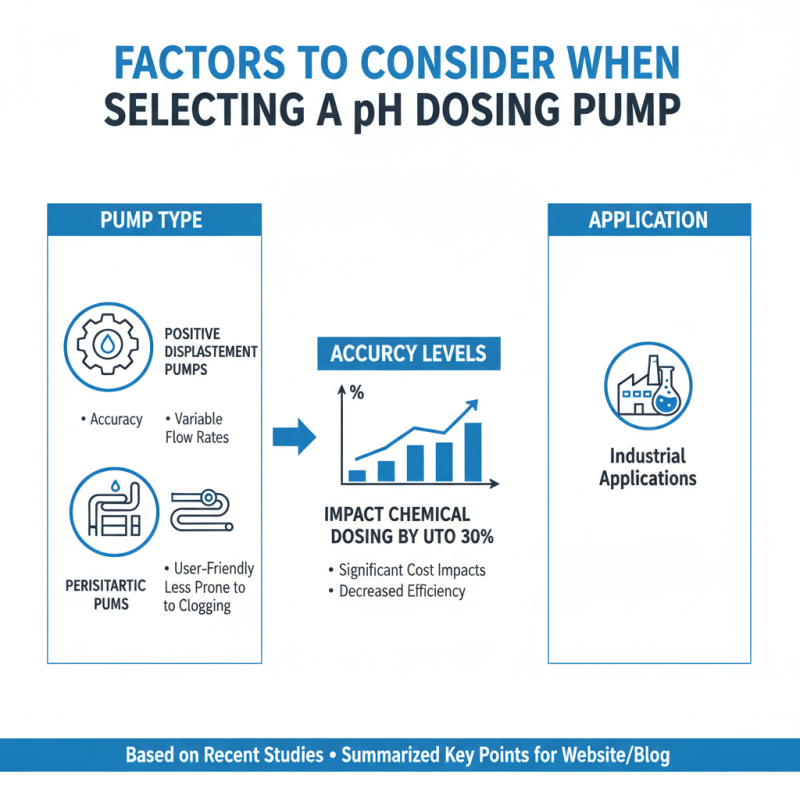
When selecting a pH dosing pump, several critical factors come into play. The pump type is essential. Positive displacement pumps are known for accuracy and can handle varying flow rates. In contrast, peristaltic pumps are user-friendly and less prone to clogging. According to recent studies, accuracy levels can impact chemical dosing by up to 30% in industrial applications. This variance can lead to significant cost impacts and decreased efficiency.
Flow rate is another vital consideration. The required capacity directly influences pump size and design. Many facilities require a flow rate between 0.5 to 5 gallons per hour. However, fluctuations can occur due to system demands. Additionally, pressure capabilities should not be overlooked. Systems with higher pressures often require more robust pump designs.
Durability also plays a key role. Pumps encounter harsh environments, leading to wear and potential failure. Materials used in pump construction must resist corrosion from various chemicals. A recent industry report highlighted that maintenance costs could rise by 20% without proper material selection. It's crucial to evaluate your specific application needs. Each factor influences not only performance but lifespan and operational costs.
Maintenance and Troubleshooting Tips for pH Dosing Pumps
Regular maintenance is crucial for the longevity of pH dosing pumps. Inspect the pump weekly. Look for signs of wear or leaks. Check all connections and seals. A small leak can lead to big problems. If you notice any discrepancies in performance, address them immediately.
Troubleshooting is part of the ownership experience. If the pump fails to operate, check the power supply first. Often, it's as simple as a blown fuse. Listen for unusual sounds. A grinding noise might indicate a mechanical issue. Ensure that all settings are correctly configured. This can save time and reduce frustration.
You may encounter challenges during operation. Calibration errors can arise if pH sensors are not regularly maintained. Recalibrate the system as needed. Document any issues and solutions. This log can help identify recurring problems. Learning from each experience builds expertise in managing your system. Regular reflection on performance helps prevent future challenges.
2026 pH Dosing Pump Performance Metrics
Cost Analysis: Budgeting for a pH Dosing Pump Purchase
When considering the purchase of a pH dosing pump, cost analysis is essential. Various factors influence the total expenditure. It's not just about the initial price. Installation, maintenance, and operation should all factor into your budget. Conducting thorough research can help you understand these costs better.
Factors like flow rate requirements and material compatibility can impact pricing significantly. If your system requires high precision, expect to pay a premium. In contrast, simpler models may save money upfront but could lead to higher long-term expenses due to inefficiency. Each choice comes with trade-offs, and it's crucial to weigh them carefully.
Don't overlook additional costs like training for staff and potential upgrades. Spending less on the pump may lead to complications later. Always consider the long-term implications of your choices. It's easy to underestimate the full picture, but a comprehensive cost analysis can prevent future regrets.