How to Choose a Dewatering Press Machine for Your Needs?
Choosing the right Dewatering Press Machine is crucial for efficiency. These machines play a vital role in various industries. They help reduce liquid waste in processes like food production or mining.
With numerous options available, finding the best fit can be overwhelming. Consider factors such as capacity, power consumption, and material compatibility. Each dewatering press has unique features that can impact your operations. Not all machines will serve your specific needs.
Reflect on your current requirements and future goals. Sometimes, the most popular choice may not be the best one for you. Take time to evaluate different models, and think about your long-term needs. This consideration can prevent costly mistakes in the future. Remember, a well-suited Dewatering Press Machine can enhance productivity significantly.
Understanding Dewatering Press Machines
Dewatering press machines play a crucial role in various industries. They reduce the moisture content of waste, making disposal easier. This process is vital for applications in wastewater treatment and food processing. According to industry reports, effective dewatering can lead to a 20-30% reduction in waste volume. This saves on transport and disposal costs.
Understanding the operation of dewatering presses is essential. They often use mechanical pressure to expel water from materials. This method is efficient, achieving moisture content as low as 30% for sludge. However, challenges arise. Not all machines suit every material. For instance, some presses handle fibrous materials better than others. It's important to evaluate the specific needs of your applications.
The choice often depends on several factors. The type of material, desired moisture level, and production rate are key considerations. Frequent adjustments to settings might be necessary. An operator must be skilled in optimizing performance. User errors can lead to subpar results, costing time and resources. Understanding these machines can help minimize these risks and improve efficiency.
How to Choose a Dewatering Press Machine for Your Needs?
| Feature |
Description |
Importance |
| Capacity |
Volume of material that can be processed per hour. |
Essential for matching the machine with your production needs. |
| Dehydration Rate |
The percentage of water removed from the material. |
Critical for ensuring efficient operations and cost savings. |
| Material Type |
Types of materials the machine can effectively handle. |
Important for suitability to specific industrial applications. |
| Energy Consumption |
Amount of energy the machine uses during operation. |
Key for operational cost management and sustainability. |
| Maintenance Requirements |
Frequency and complexity of required upkeep. |
Crucial for minimizing downtime and extending equipment life. |
| Cost |
Initial investment and operational costs of the machine. |
Fundamental for budgeting and overall financial planning. |
| Footprint |
Physical space required for installation. |
Essential for planning layout in the facilities. |
Key Factors to Consider When Choosing a Dewatering Press
When choosing a dewatering press, several key factors need attention. First, consider the feed material. Different materials may require distinct pressure levels and processing times. This means understanding your waste type is critical. For example, sludges often have high moisture content, requiring more robust solutions. Other materials might need less force but a different approach to achieve the desired results.
Next, assess the operational capacity. It's vital to know your processing volume daily. Some machines can handle larger amounts at once, while others work better in smaller batches. Size is another important aspect. A machine too large for your needs may waste resources. Conversely, a small unit may not keep up with your requirements. Ensure you have a clear idea of overall workflow to find the right balance.
Finally, think about maintenance. Machines require upkeep to function correctly. Complexity and ease of access can influence downtime. Some designs may seem efficient but lead to complications that are hard to address. It's beneficial to examine past experiences and user feedback on maintenance challenges. This reflection can inform a wiser decision in the long run.
How to Choose a Dewatering Press Machine for Your Needs?
This chart illustrates the key factors to consider when choosing a dewatering press machine, including treatment capacity, energy consumption, maintenance frequency, and final dryness of the cake. These factors are essential for optimizing the efficiency and cost-effectiveness of the dewatering process.
Types of Dewatering Press Machines Available
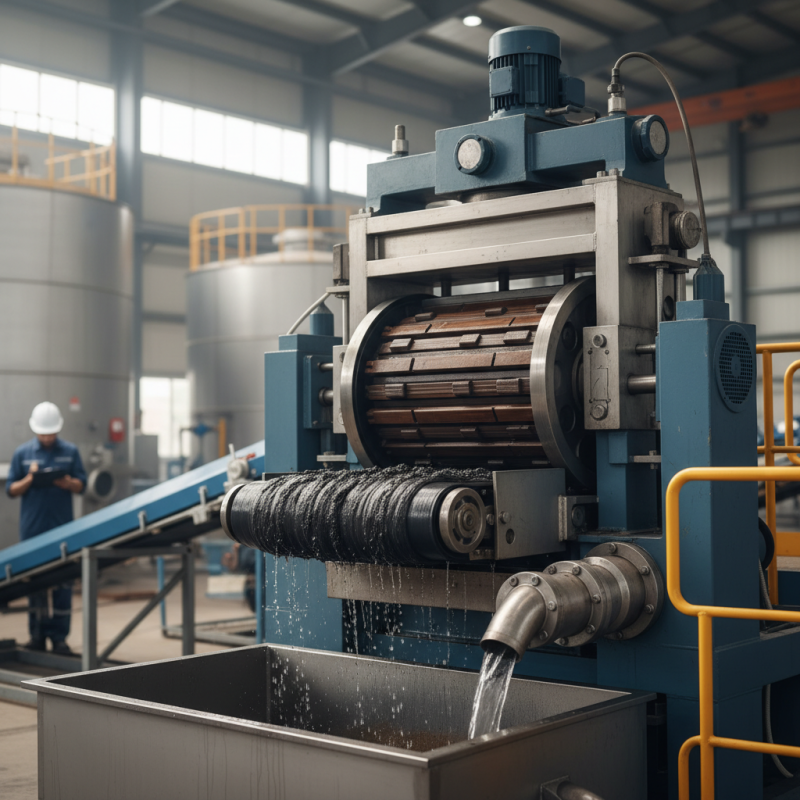
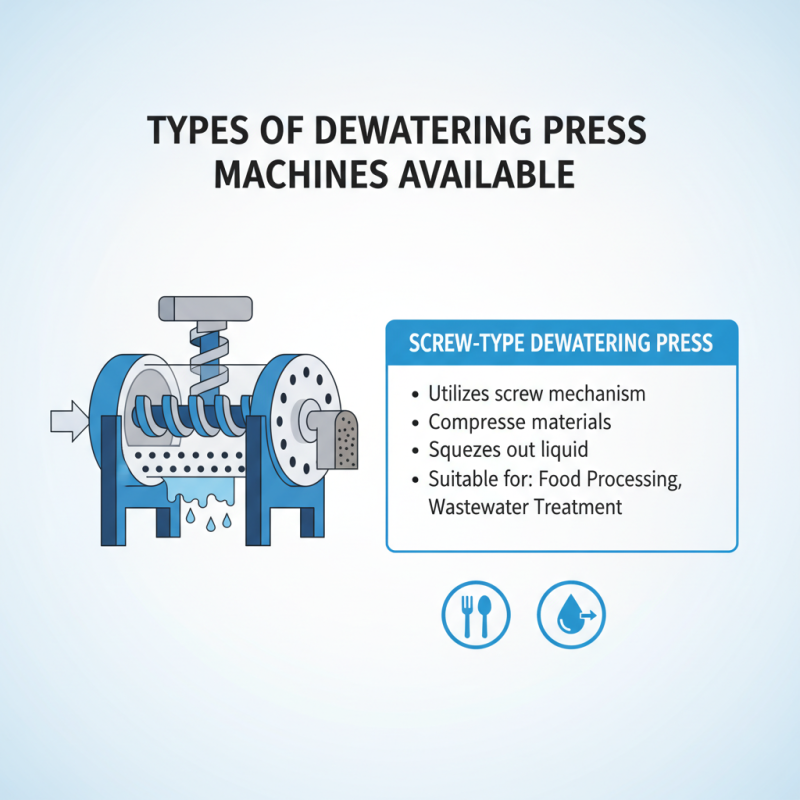
When selecting a dewatering press machine, understanding the types available is crucial. There are several main types to consider. The screw-type dewatering press is popular. It utilizes a screw mechanism to compress materials, effectively squeezing out liquid. This type is suitable for various industries, including food processing and wastewater treatment.
Another option is the belt filter press. It utilizes a belt system to separate solids from liquids. This machine is efficient for large volumes and can handle diverse materials. However, it might not be suitable for extremely fine particles. Users often report issues with clogging, which requires regular maintenance.
Finally, the plate and frame filter press is worth mentioning. It consists of multiple plates and is highly effective in separating solids from liquids. This machine is great for high solid concentrations. Yet, it can be time-consuming to clean and may have a higher initial cost. Each type has its own pros and cons, and considering the specific application is essential in making the right choice.
Evaluating Performance and Efficiency Metrics
Evaluating performance and efficiency metrics is crucial when choosing a dewatering press machine. The solid-liquid separation industry reports that operational efficiency can vary significantly among machines. Some units achieve up to 90% efficiency, while others hover around 70%. This discrepancy often impacts total cost of ownership.
Understanding specific metrics is essential. For instance, throughput rate measures how quickly the machine processes materials. High-quality machines can handle over 5 tons per hour. Yet, many users overlook maintenance frequency, which can contribute to downtime. Reports suggest that machines requiring frequent maintenance can lead to increased operational costs.
Energy consumption is another vital factor. Some dewatering presses consume as little as 15 kWh per ton of processed material, while others may exceed 25 kWh. This difference might seem trivial but can drastically affect long-term profitability. Additionally, the efficiency of the filtration process should not be neglected; systems that regularly produce dry cakes with less than 20% moisture content are ideal. However, achieving these metrics requires continuous assessment and optimization, highlighting the need for reflective practices in choosing the right machine.
Budgeting for Your Dewatering Press Investment
When budgeting for a dewatering press investment, it’s essential to consider the total cost of ownership. This includes not just the initial purchase price but also operational costs and maintenance. For example, reports indicate that operational costs can account for up to 30% of the total investment within the first five years. This is critical for long-term budgeting.
Maintenance is another factor often overlooked. Regular maintenance can prevent costly breakdowns. If neglected, these costs can increase by nearly 20% per year, according to industry studies. It's also vital to factor in energy consumption. Dewatering press machines vary widely in energy efficiency. Some models use up to 50% more energy than standard machines.
Financial experts recommend allocating an initial budget not only for the purchase but also for training operators. Unsurprisingly, many facilities feel unprepared after the purchase. Mismanagement can lead to underperformance. It’s common for companies to discover they haven't fully evaluated their operational needs, leading to additional unexpected expenses.