Why Choose a Dewatering Press for Your Industrial Needs?
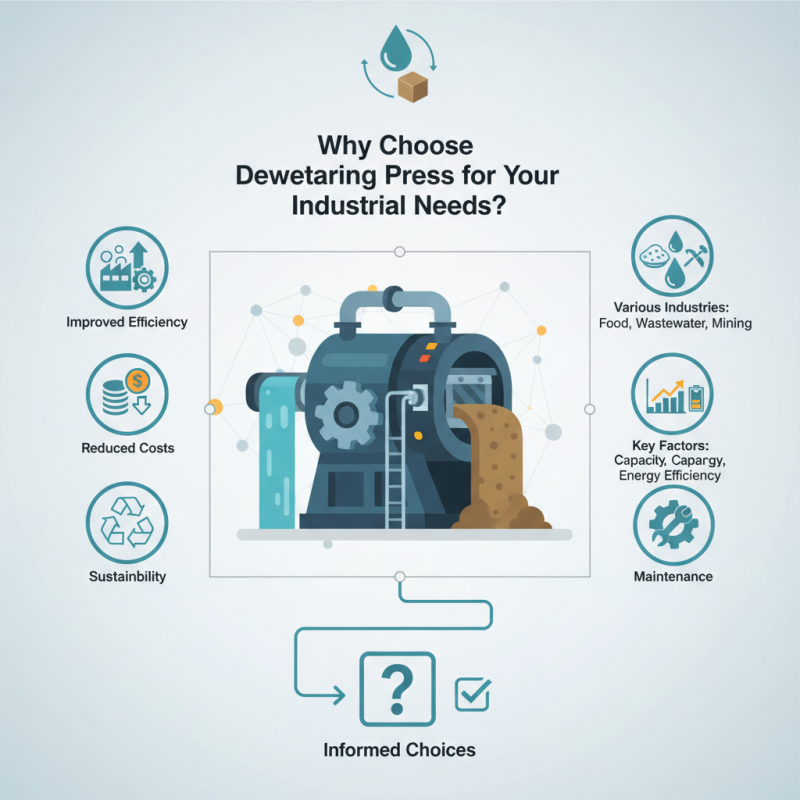
In the ever-evolving industrial landscape, a Dewatering Press has become a valuable asset for various sectors. This innovative equipment addresses critical needs in waste management and materials processing. Effective dewatering improves efficiency and reduces costs, making it essential for businesses striving for sustainability.
The Dewatering Press operates by applying force to separate liquids from solids. This process enhances the quality of materials and allows for easier disposal. Industries such as food production, wastewater treatment, and mining benefit significantly from this technology. However, finding the right Dewatering Press can be a challenging endeavor.
Selecting a Dewatering Press requires careful consideration of factors like capacity, energy efficiency, and maintenance. Companies must evaluate their specific needs and the press's capabilities. Not all presses are created equal. Investing in the wrong equipment can lead to operational inefficiencies and increased costs. Hence, understanding the intricacies of a Dewatering Press is crucial for making informed choices in industrial applications.
Benefits of Using a Dewatering Press in Industrial Applications
A dewatering press offers numerous advantages for industrial applications. By effectively reducing moisture content in waste materials, it enhances the efficiency of downstream processes. Studies indicate that dewatering presses can reduce waste water content by up to 90%. This significant reduction minimizes disposal costs and improves the overall sustainability of operations.
Another key benefit is energy efficiency. Conventional drying methods can consume vast amounts of energy. However, dewatering presses utilize mechanical force to achieve moisture removal, often using 30% less energy than traditional systems. This shift toward energy-efficient solutions contributes to lower operational costs. Industries that embrace dewatering technology often see a return on investment within a couple of years.
Tips for success include regular maintenance of the dewatering press to ensure optimal performance. Additionally, monitoring the properties of the input material can lead to better processing results. Understanding your material's characteristics allows for adjustments in the dewatering cycle, optimizing efficiency further. Involve your team in regular training to stay updated on best practices, as even small lapses can lead to inefficiencies. Engaging the workforce can yield insights that enhance the overall system performance.
Benefits of Using a Dewatering Press in Industrial Applications
How Dewatering Presses Enhance Efficiency and Reduce Waste
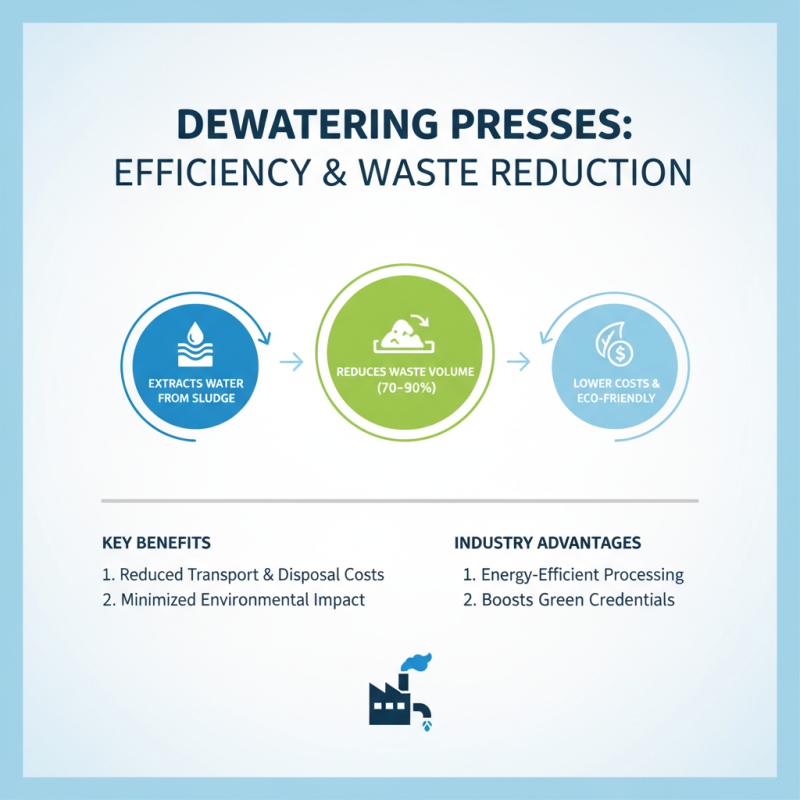
Dewatering presses are vital for improving operational efficiency in various industries. These machines effectively extract water from sludge, slurry, and other waste materials. By doing so, they significantly reduce the volume of waste that requires disposal. This reduction not only saves on transportation costs but also minimizes the overall environmental impact. The ability to handle large volumes with less energy makes them a smart choice for industries aiming to enhance their green credentials.
Using dewatering presses can also lead to higher product recovery rates. In many industries, water reclaiming can foster a circular economy. This promotes sustainability while ensuring that resources are utilized more efficiently. However, the implementation is not without its challenges. Operators may face technical issues if maintenance is neglected. There is also the need for proper training to maximize the press's efficiency. A poorly managed dewatering process can lead to increased waste generation instead of reducing it.
Communicating the benefits of dewatering presses is essential for fostering industry adoption. Sharing case studies and research findings can enhance trust in the technology. As industries continue to prioritize sustainability, understanding the potential drawbacks and addressing them will be crucial. Investing in training and proper maintenance can ensure these machines are reliable and effective, ultimately benefiting both the environment and the bottom line.
Key Features to Look for in a Quality Dewatering Press
When selecting a dewatering press for industrial applications, several key features should not be overlooked. Efficiency is paramount. A high-quality dewatering press can achieve a solid-liquid separation efficiency of over 90%, significantly reducing waste volume. This is critical for industries like wastewater management, where optimizing resource use is essential. According to industry reports, companies utilizing effective dewatering solutions have reported savings of up to 30% in disposal costs.
Another crucial feature to consider is durability. A robust dewatering press can withstand the rigors of continuous operation. Materials used in construction should resist corrosion and wear. This longevity is essential, particularly in challenging environments such as mines or municipal water treatment facilities. It's not uncommon for low-quality presses to experience frequent breakdowns, leading to expensive repairs and downtime.
Moreover, ease of operation and maintenance cannot be ignored. A user-friendly interface allows operators to monitor performance easily. Maintenance should be straightforward to prevent operational hiccups. Many organizations grapple with complex machinery, leading to inefficiencies. In a sector where time is money, choosing a dewatering press that simplifies these tasks can significantly enhance productivity.
Why Choose a Dewatering Press for Your Industrial Needs? - Key Features to Look for in a Quality Dewatering Press
| Feature |
Description |
Importance |
| High Throughput |
Ability to process large volumes of material in shorter timeframes. |
Increases efficiency and productivity. |
| Compact Design |
Space-saving model that fits into limited industrial spaces. |
Ideal for small operations or facilities with space constraints. |
| Energy Efficiency |
Utilizes less energy while maintaining performance standards. |
Reduces operational costs and environmental impact. |
| Durability |
Built with robust materials to withstand rigorous industrial usage. |
Ensures long-term investment and reduces maintenance needs. |
| User-Friendly Interface |
Easy to operate controls and monitoring systems. |
Minimizes training time and operator errors. |
Common Industries Benefiting from Dewatering Press Technology
Dewatering presses are essential in various industries, helping to efficiently manage waste and optimize resources. Industries such as food processing, municipal wastewater treatment, and mining are increasingly turning to these technologies for improved sustainability. For instance, a report from the Water Environment Federation highlights that nearly 65% of municipal facilities are now utilizing dewatering technology for sludge management. This reduces waste volume and lowers transportation costs.
In the food processing sector, dewatering presses can significantly enhance operational efficiency. A study published in the Journal of Cleaner Production indicates that implementing dewatering systems can lead to water recovery rates of up to 90%. Such efficiency not only conserves water but also reduces disposal costs. The mining industry also benefits, particularly in tailings management. Effective dewatering can minimize the environmental impact and enhance resource recovery. According to a report from the International Council on Mining and Metals, dewatering technology has improved recovery rates by up to 30%.
While many industries are reaping the benefits of dewatering presses, challenges remain. The initial investment can be substantial. Some companies may overlook maintenance needs, jeopardizing long-term performance. Continuous monitoring and adaptation to specific conditions are crucial. Striking a balance between cost, efficiency, and sustainability is an ongoing concern for many sectors adopting this technology.
Maintenance and Operation Tips for Maximizing Dewatering Press Performance
Maintaining a dewatering press is vital for optimal performance. Regular checks on components help prevent unexpected downtime. Monitor belts and seals closely; wear and tear can lead to inefficiencies. Ensure the hydraulic system is free from leaks to maintain pressure.
Proper operation enhances dewatering efficiency. Operators should be trained to avoid overloading the press. This can reduce effectiveness and increase wear. Adjust feed rates based on material consistency, as different materials behave uniquely. Anomalies in output might indicate underlying issues.
Here are some tips for maintaining your dewatering press:
- Keep a logbook of maintenance activities.
- Regularly clean the machine to avoid buildup that could hinder performance.
- Lastly, schedule periodic professional inspections to catch issues early.
These steps can significantly extend the lifespan of your equipment.