How to Choose the Right Mini Max Dosing Pumps for Your Needs?
Choosing the right Mini Max Dosing Pumps can be a daunting task. With so many options, how do you know which one fits your needs? Industry expert Dr. Sarah Whitman emphasizes, "Selecting the right pump is critical for efficiency and precision."
Mini Max Dosing Pumps serve various applications in different sectors. Understanding your specific requirements is crucial for optimal performance. For instance, consider the flow rate, viscosity, and chemical compatibility when making your decision. Many users overlook these aspects, leading to inefficiencies.
Inevitably, there will be challenges during selection. Not all pumps perform well under unique conditions. It's essential to consult with professionals and analyze past experiences. This careful consideration can prevent costly mistakes and ensure reliability.
Understanding the Basic Functions of Mini Max Dosing Pumps
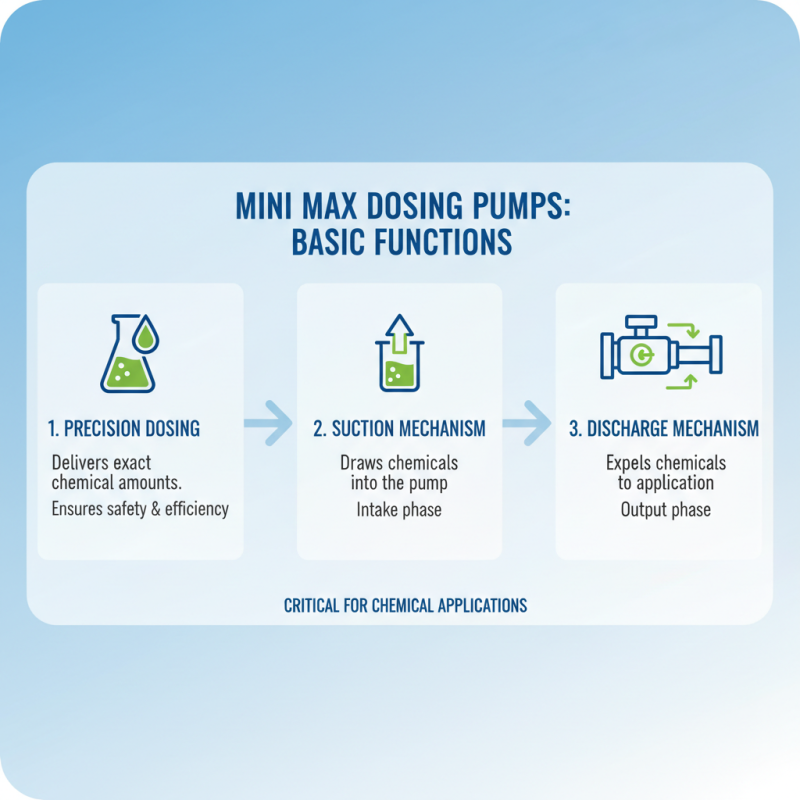
When selecting the right Mini Max dosing pumps, understanding their basic functions is critical. These pumps often serve crucial roles in chemical applications. They deliver precise chemical dosages, ensuring safety and efficiency. Their operation predominantly involves suction and discharge mechanisms, which can vary based on the application.
In the industry, reports indicate that accurate dosing can reduce chemical use by 30%. This not only leads to cost savings but also minimizes environmental impact. Effective dosing pumps can also enhance system performance. For example, ensuring optimal flow rates means better mixing and reaction time in processes.
Tip: Always consider the flow rate and pressure requirements of your application. Analyzing these parameters can help prevent system failures. It's essential to choose pumps that match your specific needs.
Operators should regularly assess their dosing systems. Inefficiencies can arise from wear and tear or improper calibration. Monitoring performance ensures the pumps operate at peak efficiency. Understanding these basic functions and considerations is vital for making an informed choice in dosing pumps.
Key Factors to Consider When Selecting Mini Max Dosing Pumps
When selecting Mini Max dosing pumps, several key factors demand attention. Flow rate is crucial. Dosing pumps typically operate at various flow rates, from 0.1 to over 100 gallons per hour. Understand the specific requirements of your application. The wrong flow rate can lead to inefficiency and potential operational hazards.
Another critical factor is the fluid's characteristics. Viscosity and corrosiveness impact pump selection. For instance, high-viscosity liquids may require a pump designed to handle thicker substances. According to industry data, approximately 45% of pump failures are linked to improper selection based on fluid properties.
Material compatibility also plays a significant role. The pump's materials must resist degradation caused by the chemicals being handled. Utilizing PVC for one application may work, while PTFE is necessary for another. Research indicates that nearly 30% of pump issues arise from material incompatibility. Keeping these factors in mind can improve reliability and efficiency in dosing processes.
How to Choose the Right Mini Max Dosing Pumps for Your Needs?
| Factor |
Description |
Recommended Range |
| Flow Rate |
The volume of fluid the pump can move per unit time. |
0.1 to 100 L/H |
| Pressure Rating |
Maximum pressure the pump can handle during operation. |
0 to 10 Bar |
| Chemical Compatibility |
The materials the pump can safely handle without degradation. |
Various (consult datasheet) |
| Power Source |
The type of energy required to operate the pump. |
Electric, Pneumatic |
| Pump Type |
The design of the pump which affects its application. |
Diaphragm, Peristaltic |
| Control Method |
How the pump's operation is controlled. |
Manual, Automatic |
Comparing Different Types of Mini Max Dosing Pumps Available
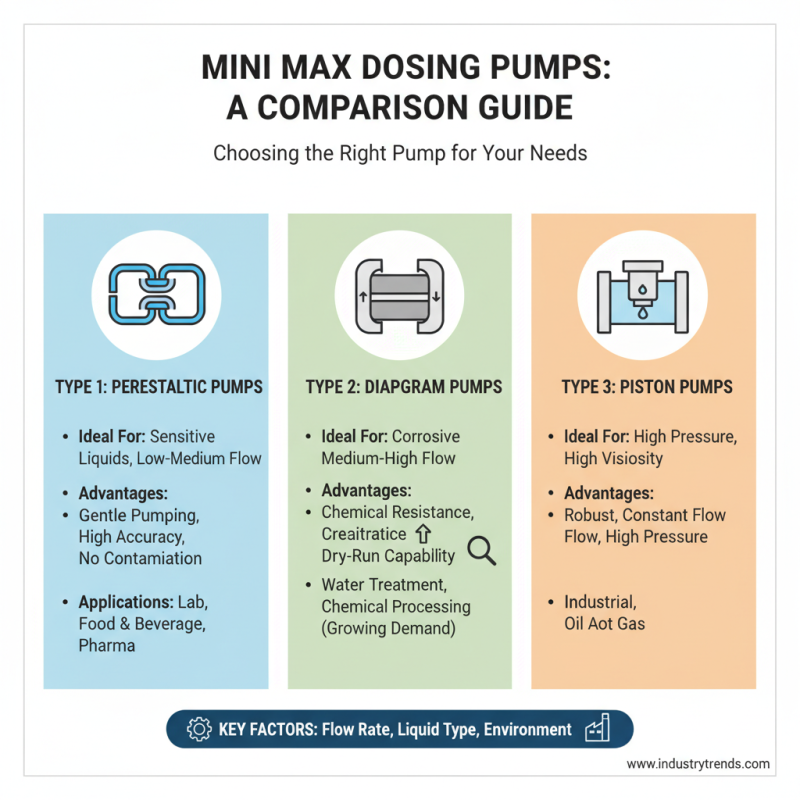
Choosing the right Mini Max dosing pump can be challenging. There are various types available, each suited for specific applications. According to a recent industry report, market trends indicate a growing demand for these pumps in water treatment and chemical processing sectors. The right pump depends on flow rates, liquid characteristics, and operating environment.
Different types of Mini Max dosing pumps include diaphragm pumps, peristaltic pumps, and gear pumps. Diaphragm pumps offer precise dosing and are ideal for corrosive liquids. Peristaltic pumps are excellent for shear-sensitive fluids. Gear pumps provide high pressure and consistent flow but may require more maintenance. Understanding the specifications and limitations of each type ensures a better fit for your needs.
Tip: Always assess the fluid's viscosity and chemical compatibility before selecting a pump. Proper research can save costs. Consider maintenance requirements; some pumps may need more frequent servicing. Be mindful of the energy consumption levels; efficient pumps can significantly reduce operating expenses over time.
Assessing Your Specific Application Requirements for Dosing Pumps
Choosing the right mini max dosing pumps requires careful assessment of your specific application. Accurate dosing is crucial in industries such as water treatment, chemical processing, and pharmaceuticals. Each application has unique requirements, like flow rates and chemical compatibility.
To determine your needs, start by measuring the required flow rate. According to industry reports, pumps can vary from 0.5 mL/min to over 50 L/min. Understanding your peak operational needs can help you select a suitable model. Additionally, consider the viscosity and density of the media. Not all pumps handle thicker fluids well, leading to inaccurate dosing.
Tip: Review standard industry specifications for performance benchmarks. This will help you make informed decisions.
Next, think about the pump's power source. Some applications may require electric-powered pumps, while others function better with pneumatic systems. Evaluate your facility's infrastructure and energy sources. An ill-suited pump could lead to inefficiencies or downtime.
Tip: Always consult with a knowledgeable technician to analyze your environment and potential challenges. Take time to reflect on past experiences with dosing systems; learning from failures can guide your selection process. Your ultimate goal should be a dosing system that enhances reliability and maintains accuracy in operations.
Choosing the Right Mini Max Dosing Pumps: Application Requirements
Evaluating Cost and Maintenance Aspects of Mini Max Dosing Pumps
When evaluating mini max dosing pumps, cost and maintenance are key considerations. These pumps vary widely in price, typically ranging from $200 to $2,000. According to a recent industry report, a high-quality dosing pump can improve process efficiency by up to 30%. However, the initial investment is not the only financial factor. Maintenance costs can add up over time.
Regular maintenance is crucial for optimal performance. A study published in the "Journal of Fluid Mechanics" states that improperly maintained dosing pumps can experience a 15% reduction in efficiency. This highlights the importance of routine checks and timely repairs. Users should establish a maintenance schedule to extend pump life and maintain accuracy.
Moreover, the long-term costs associated with downtime should not be overlooked. Unplanned outages can lead to production losses estimated at $3,000 per hour in some industries. Selecting a pump with robust support and readily available parts can mitigate these risks. Users must weigh the upfront costs against potential long-term savings for a smart investment.