Leave Your Message

Polymer Dosing Control Innovations at China Import Expo?

The upcoming China Import Expo presents an exciting opportunity to explore innovations in Polymer Dosing Control. This technology is vital in industries that rely on precise material mixing. Recent advancements suggest a shift towards more automated and intelligent solutions. New systems are being developed to improve accuracy and consistency in dosing processes.

One of the significant challenges in integrating these innovations lies in the user interface and machine learning capabilities. For example, not all systems are user-friendly. Training is often necessary to ensure operators can maximize efficiency. Innovators must take this feedback into account. They should aim for designs that facilitate easy adaptation and learning.

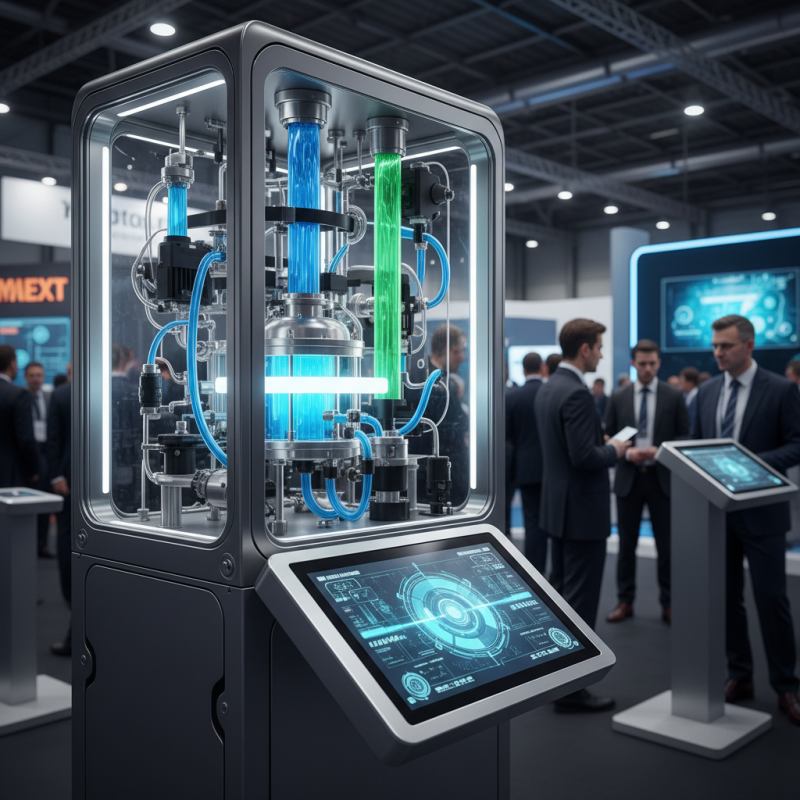
At the expo, attendees will witness real-world applications of Polymer Dosing Control innovations. Demonstrations will showcase how improvements impact production lines. Insights gained could lead to further advancements in materials science. This progress is essential for companies striving for quality and efficiency in their outputs. While the path forward is promising, it is critical to acknowledge areas needing refinement.
Polymer Dosing Control Innovations at China Import Expo?

Polymer Dosing Control Innovations Overview

Polymer Dosing Control Innovations at China Import Expo?

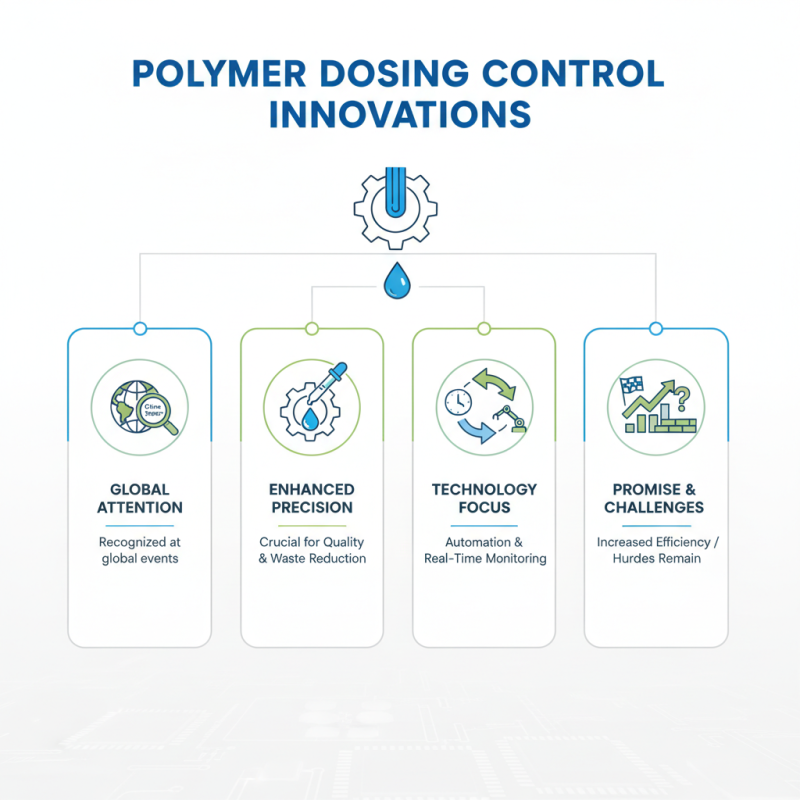
Innovations in polymer dosing control are gaining attention at events like the China Import Expo. This surge highlights the need for better precision in polymer applications. It enables industries to achieve high-quality outputs while reducing waste. Recent advancements focus on automation and real-time monitoring. These improvements promise increased efficiency in manufacturing processes, but challenges remain.

Not all innovations are perfect. Some systems can be overly complex, making user training essential. Furthermore, the integration of new technology can lead to unexpected downtime during the transition. While many manufacturers are excited about the potential benefits, they must proceed with caution. A well-implemented system can revolutionize production, yet poor execution may yield disappointing results.

The future of polymer dosing control remains bright. Automation and precision will drive improvements. Continuous feedback from users can refine these systems. Ultimately, embracing innovation while acknowledging limitations is key to success in this field.
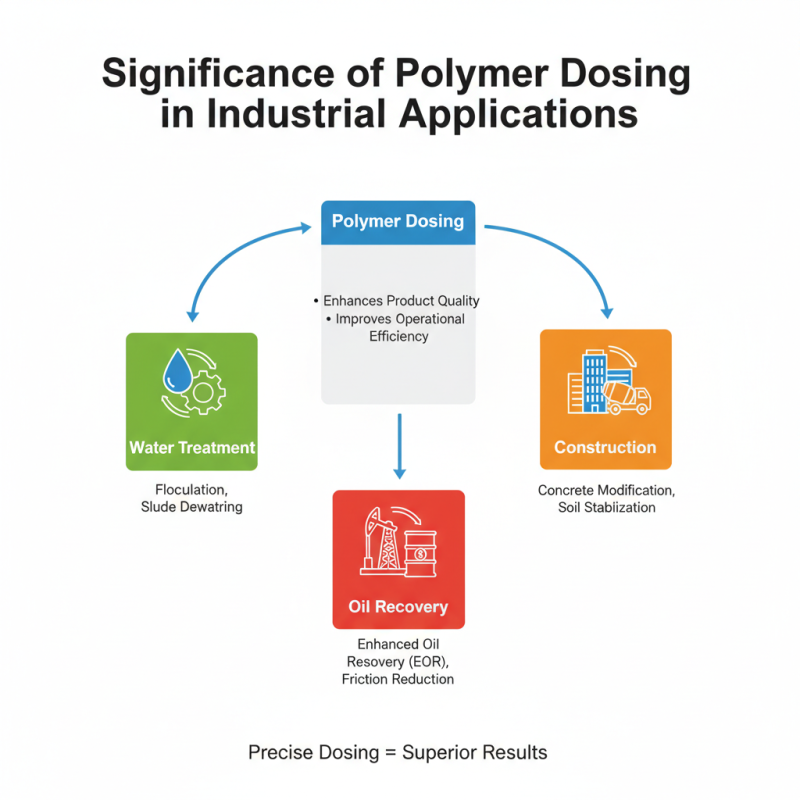
Significance of Polymer Dosing in Industrial Applications

Polymer Dosing Control Innovations at China Import Expo?

Polymer dosing plays a crucial role in many industrial applications. It enhances product quality and improves operational efficiency. Industries like water treatment, construction, and oil recovery benefit greatly from precise polymer dosing.

In water treatment, accurate dosing ensures effective flocculation and sedimentation. This process results in clearer water and reduced pollution levels. However, inconsistencies in dosing can lead to subpar results, highlighting the need for innovation. Many facilities still use outdated methods, resulting in wasted resources.

In construction, polymers enhance the strength and durability of materials. If not dosed correctly, the final products may lack required properties. Reflecting on these challenges reveals an industry ripe for improvement. The ongoing innovations in polymer dosing technology can bridge these gaps. More precise controls could help optimize processes, leading to better outcomes.

Technological Advances in Polymer Dosing Systems

The China Import Expo showcased exciting developments in polymer dosing systems. Technological advancements are reshaping how industries implement these systems. Manufacturers are exploring automation to enhance precision and efficiency. This shift allows for better consistency in product quality.

New sensors and software play a crucial role. They enable real-time monitoring of polymer levels. However, integrating these technologies presents challenges. Companies must ensure compatibility with existing systems. Data management becomes complex as more information is collected. Proper training is also necessary for personnel to adapt.

User feedback is essential in refining these innovations. Some systems still have a learning curve. The potential for human error remains. Continuous improvement processes are vital. Adopting new technology should not compromise safety. Striking a balance between innovation and practicality is key for companies seeking growth.

Polymer Dosing Control Innovations

This chart illustrates the advancements in polymer dosing systems over the past five years, highlighting the increased efficiency and precision in dosing technologies.

Impact of Innovations on Operational Efficiency

The recent Polymer Dosing Control Innovations showcased at the China Import Expo signify a pivotal shift in operational efficiency within manufacturing. Industry reports indicate that effective polymer dosing can improve production rates by 25% while reducing waste by 15%. Automation and precise measurement tools are at the forefront of these innovations.

Recent advancements have made it possible to integrate real-time data analytics into dosing systems. This allows for immediate adjustments, enhancing the reaction efficiency of chemicals. For instance, while traditional methods were often slow and subjective, new systems are achieving a 90% accuracy rate in dosing. Yet, there are challenges. Not all facilities have implemented these innovations effectively. Some face resistance due to initial setup costs and retraining staff.

Moreover, the learning curve around these innovations is steep. Suboptimal implementation could lead to increased operational costs rather than savings. Research shows that about 30% of companies experience difficulties during the transition phase. Regular assessment of the systems in place is vital. Companies must ask themselves if they’re truly utilizing the full potential of these advancements.

Polymer Dosing Control Innovations at China Import Expo - Impact of Innovations on Operational Efficiency

Innovation Type Impact on Efficiency (%) Cost Reduction (% of Total Costs) Technology Used Implementation Time (Months)
Automated Dosing System 15 10 IoT Sensors 6
Real-Time Monitoring 20 5 Cloud Computing 3
Predictive Maintenance 25 15 AI Algorithms 12
Integrated Control System 30 20 Machine Learning 8
Feedback Control Mechanism 18 12 Control Theory 4

Future Trends in Polymer Dosing Control Technology

Polymer dosing control technology is evolving rapidly. Innovations are driven by the need for precision and efficiency in various industries. According to recent industry reports, this market is expected to grow at a CAGR of 7.5% from 2023 to 2028. This increase is fueled by the demand for higher accuracy in material preparation.

In applications such as plastics and coatings, even minor dosing errors can lead to significant production losses. Companies often overlook these small details. Implementing advanced control systems can mitigate risks. Newer systems utilize real-time data analytics to enhance accuracy. Data shows that firms adopting these innovations can reduce waste by over 15%. However, there are still challenges. Not all operations are ready for such technology. Integration with existing systems can be complex.

Moreover, the cost of advanced systems is a concern. A significant investment is required upfront. Some companies hesitate to commit without clear ROI. Future trends indicate a potential shift toward more affordable solutions. Emerging technologies could democratize access to advanced polymer dosing controls. This shift may encourage more businesses to adopt these practices. Yet, ensuring reliability remains a challenge that needs careful management.