
Leave Your Message
Choosing a Dissolved Air Flotation System in 2026 requires more than comparing advertised flow rates. Buyers must connect equipment design with water chemistry, operating conditions, and discharge limits. The wrong choice can leave cloudy effluent, unstable sludge, and higher polymer consumption.
Global demand is becoming more demanding. The WHO and UNICEF Joint Monitoring Programme reported that 2.2 billion people lacked safely managed drinking water in 2022. Its 2024 update shows why reliable treatment infrastructure remains urgent. The United Nations World Water Development Report 2024 also links water quality, industrial growth, and resource security. These pressures are shaping equipment decisions across municipal, food-processing, petrochemical, and mining applications.
Different systems solve different problems. Conventional DAF units suit many suspended-solids applications. High-rate designs reduce footprint where plant space is limited. Circular, rectangular, and packaged systems offer different maintenance and hydraulic advantages. Lamella-assisted DAF can improve clarification within a compact tank. Electroflotation may appear attractive, but energy use and electrode replacement need careful review.
Specifications can mislead.
The U.S. Environmental Protection Agency’s wastewater technology resources emphasize process evaluation, pilot testing, and site-specific design. Grand View Research’s water and wastewater treatment equipment analysis also reflects continued investment in advanced treatment infrastructure. However, market forecasts do not guarantee performance at a particular factory. That assumption can fail.
This 2026 buyer-focused overview compares leading Dissolved Air Flotation System types by separation efficiency, footprint, energy demand, automation, maintenance, and lifecycle cost. It also considers practical details, including recycle-water pressure, scraper accessibility, sludge dryness, and polymer response. No single type wins every project. The best selection depends on verified influent data, realistic operating targets, and disciplined supplier evaluation.
2026 Top Dissolved Air Flotation System Types for Buyers
What Is a Dissolved Air Flotation System?
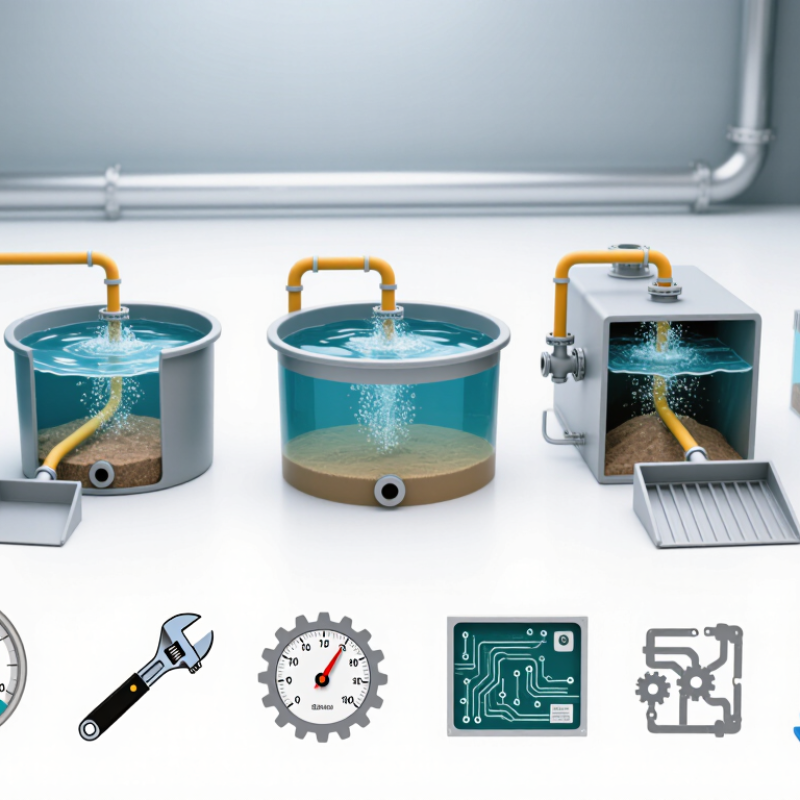
A dissolved air flotation system separates suspended solids, oils, and grease from water. It uses tiny air bubbles, not heavy mechanical force. A recycle stream is pressurized and saturated with air. When pressure drops, microbubbles form and rise through the flotation tank.
These bubbles attach to particles, making them buoyant. A surface scraper then moves the floating sludge into a collection trough. Clarified water leaves below the floating layer. The process often treats industrial wastewater, food-processing water, and municipal streams.
Different system types suit different operating needs. Full-flow pressurization treats the entire influent stream. Partial-flow designs pressurize only a portion of the water. Side-stream systems recycle clarified effluent, which can reduce energy demand and improve control. Packaged units may fit smaller facilities, while larger rectangular systems support higher hydraulic loading.
In field evaluations, water chemistry matters as much as equipment size. Coagulation and flocculation usually come before flotation. Poor chemical dosing can create weak flocs that collapse before reaching the surface. A jar test and pilot trial provide stronger evidence than a catalog capacity.
Watch the sludge blanket.
Buyers should examine air-to-solids ratio, surface loading, retention time, scraper access, and cleaning requirements. Stainless construction may help in corrosive environments, but it increases capital cost. A design can look efficient on paper and still disappoint during seasonal flow changes. That limitation deserves honest attention before purchase.
| DAF System Type | How It Works | Typical Recycle or Air-Release Arrangement | Best-Suited Applications | Main Treatment Targets | Key Advantages | Buyer Considerations |
|---|---|---|---|---|---|---|
| Conventional Recycle-Flow DAF | A portion of clarified effluent is pressurized with air and returned to the flotation tank. When pressure is released, fine bubbles attach to suspended particles and carry them to the surface. | Pressurized recycle stream Approx. 5–20% recycle commonly used | Municipal wastewater, industrial pretreatment, food processing and general clarification. | Suspended solids, fats, oils, grease, algae and chemically precipitated phosphorus. | Flexible design, good solids capture and relatively stable operation across changing loads. | Requires a recycle pump, air-saturation vessel, pressure controls and adequate chemical mixing when coagulation is needed. |
| Full-Flow Pressurization DAF | The complete incoming wastewater flow, or nearly the complete flow, is pressurized and saturated with air before entering the flotation zone. | Entire feed flow pressurized High-pressure pumping duty | Applications requiring intensive air contact, compact hydraulic layouts or strong flotation performance. | Fine suspended solids, emulsified oils after pretreatment and low-density particles. | Provides thorough air dispersion and can deliver strong flotation when the feed characteristics are consistent. | Higher pumping energy, greater equipment exposure to abrasion or fouling and more demanding pressure-control requirements. |
| Partial-Flow Pressurization DAF | Only a selected portion of the influent is pressurized and saturated with air. The treated pressurized stream mixes with the remaining feed before flotation. | Partial feed pressurized Lower flow through saturation equipment | Medium and large installations where energy use and equipment size must be balanced with flotation capacity. | Suspended solids, oil and grease, biological solids and chemically enhanced solids. | Lower pressurization flow than full-flow designs while maintaining effective microbubble generation. | Requires proper mixing and flow distribution; poor blending can reduce bubble-to-solids contact. |
| Vacuum DAF | Air is dissolved in wastewater under vacuum conditions and released when the liquid enters the flotation chamber, forming bubbles that lift buoyant and attached solids. | Vacuum-based gas release Lower pressure process | Selected industrial streams and specialized applications with moderate solids loading. | Suspended solids, grease and other particles that can be floated without high-pressure recycle equipment. | Can reduce high-pressure equipment requirements and may be suitable where a gentle flotation process is preferred. | Generally less common than pressurized-recycle DAF; vacuum integrity, degassing and hydraulic design require close control. |
| Induced-Air Flotation (IAF) | Mechanical devices disperse air directly into the wastewater, usually producing larger bubbles than a dissolved-air system. | Mechanical air dispersion No air-saturation recycle loop | Oil-water separation, produced water and applications where free oil or buoyant solids are dominant. | Free oil, grease, hydrocarbons and readily floatable suspended matter. | Simple air-introduction concept and effective for streams with naturally buoyant contaminants. | Not equivalent to DAF for fine solids; larger bubbles may provide less surface area and weaker capture of dense or small particles. |
| Lamella-Packed DAF | A DAF process fitted with inclined plates or tubes that increase effective clarification area and shorten the settling or flotation path. | Pressurized recycle or partial-flow design Inclined plate module | Sites with limited footprint, high hydraulic loading or a need for compact clarification. | Flocculated suspended solids, precipitated metals, phosphorus and oily solids. | Compact footprint and improved hydraulic separation within the flotation tank. | Lamella channels need effective screening, cleaning access and suitable floc characteristics to limit plugging. |
| Circular DAF | Wastewater enters a circular flotation basin, flows radially or tangentially, and clarified water exits after surface solids are removed by a rotating scraper. | Usually pressurized recycle Circular hydraulic distribution | Medium to large municipal and industrial treatment plants with sufficient structural space. | Suspended solids, algae, biological sludge, fats, oils and grease. | Good surface-skimming coverage, robust operation and suitability for relatively high treatment capacities. | Requires a larger circular footprint and careful inlet distribution to prevent short-circuiting or uneven flotation. |
| Rectangular DAF | Wastewater travels through a long rectangular flotation basin while a chain-and-flight or bridge scraper removes floated solids from the surface. | Usually pressurized recycle Linear flow path | Municipal plants, food and beverage facilities, pulp and paper and industrial pretreatment systems. | Suspended solids, fats, oils, grease, fibers and chemically formed flocs. | Efficient use of building layouts, modular expansion options and straightforward integration with upstream and downstream units. | Long scraper mechanisms need maintenance; hydraulic short-circuiting must be controlled through proper inlet and outlet design. |
| Packaged or Modular DAF | A factory-assembled DAF unit combines the flotation tank, recycle pump, air-saturation equipment, chemical dosing interfaces, skimmer and controls in a compact package. | Integrated recycle system Preassembled controls | Small to medium industrial facilities, temporary capacity, decentralized treatment and projects with short installation schedules. | Suspended solids, oil and grease, food-processing solids and chemically enhanced contaminants. | Shorter installation time, compact arrangement and simplified procurement compared with fully site-built systems. | Capacity, hydraulic flexibility, access for maintenance and compatibility with local electrical and control standards should be verified. |
A dissolved air flotation system is a water-treatment process that dissolves air under pressure and then releases it at lower pressure to create fine bubbles. The bubbles attach to suspended or buoyant contaminants, lifting them to the surface for mechanical removal. Actual performance depends on wastewater characteristics, chemical pretreatment, air-to-solids ratio, hydraulic loading, recycle rate, temperature and operator control.