China Top Dissolved Air Flotation Manufacturers?
China’s wastewater equipment sector has expanded alongside stricter discharge controls and growing municipal treatment demand. The China Urban Construction Statistical Yearbook documents continuing investment in urban wastewater collection and treatment infrastructure. The United Nations World Water Development Report 2024 also identifies water quality and treatment capacity as major global priorities. These trends make Chinese Dissolved Air Flotation manufacturers increasingly relevant to international buyers.
This guide examines manufacturers through engineering evidence, not catalogue claims. It considers dissolved-air release performance, recycle-water design, pressure-vessel construction, skimmer stability, and control-system integration. The U.S. Environmental Protection Agency’s Wastewater Technology Fact Sheet: Dissolved Air Flotation explains how microbubbles separate suspended solids, oils, and grease from water. That mechanism sounds simple. It is not.
A credible supplier should provide pilot-test results, hydraulic loading data, removal-efficiency records, and references from comparable industries. Food processing, petrochemicals, municipal wastewater, and paper production require different designs. Certifications matter, but they do not replace operating evidence. Buyers should also review pump brands, spare-part availability, installation support, and commissioning procedures. A low purchase price may become expensive when scraping systems jam or air-release nozzles foul.
This overview does not treat company size as proof of quality. A manufacturer may have strong fabrication skills but limited overseas service capacity. Another may advertise advanced automation without publishing test conditions. That gap deserves attention. The following assessment therefore compares China’s leading Dissolved Air Flotation suppliers using measurable capabilities, application experience, documentation quality, and long-term support.
What Is Dissolved Air Flotation and How Does It Work?
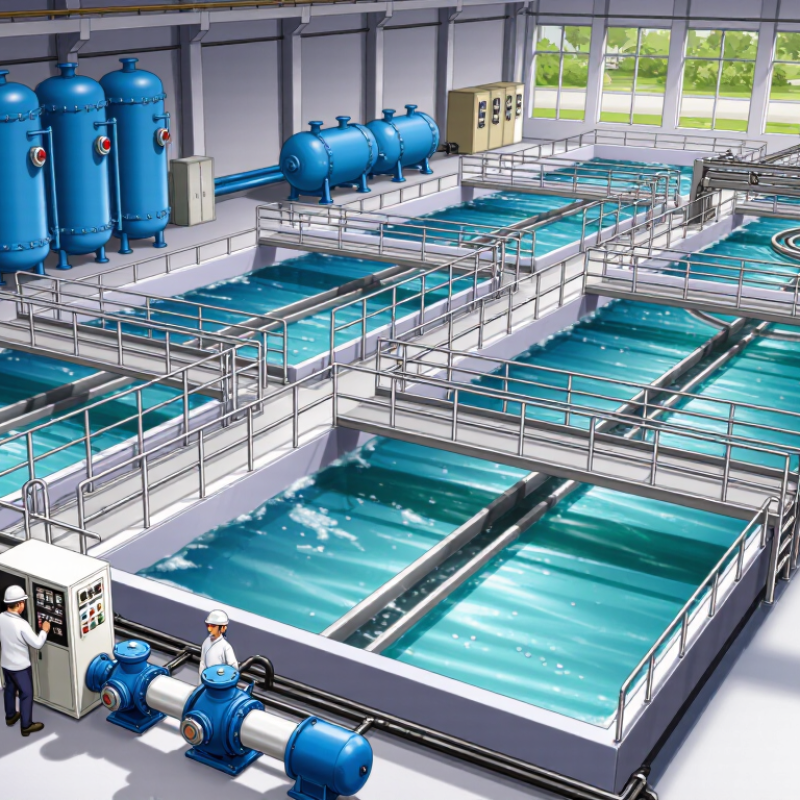
Dissolved air flotation, or DAF, removes suspended solids, oils, grease, and some organic matter from water. It works by lifting pollutants instead of settling them. In treatment plants, operators commonly use DAF before biological treatment or discharge polishing. It suits food processing, industrial wastewater, and drinking water applications. Small bubbles matter.
A side stream of treated water enters a pressurized vessel with compressed air. Pressure forces air into the water. When this stream returns to the flotation tank, pressure drops quickly. Air forms thousands of tiny bubbles. These bubbles attach to flocs, oil droplets, and other light particles. The combined material rises to the surface.
A mechanical skimmer then moves the floating sludge into a collection trough. Heavier particles may settle in the tank, while clarified water leaves through lower outlets. Coagulants and polymers often improve particle capture, but overdosing can create weak, sticky sludge.
Real performance depends on bubble size, hydraulic loading, recycle pressure, and chemical mixing. Operators should monitor turbidity, sludge thickness, and outlet quality every day. A system may look efficient on paper but perform poorly with unstable wastewater. Temperature changes can also affect air solubility and flotation behavior. DAF is not effortless. Poor maintenance may block nozzles or reduce pressure. Careful jar testing and routine inspection usually reveal these problems before they become expensive. Some results remain difficult to predict, especially when wastewater composition changes without warning.
Key Applications of Dissolved Air Flotation Systems in China
China Top Dissolved Air Flotation Manufacturers? Key Applications of Dissolved Air Flotation Systems in China
Dissolved air flotation (DAF) systems are widely used in China’s industrial and municipal water treatment. They remove suspended solids, oils, grease, algae, and some organic matter. Pressurized water releases tiny bubbles inside the flotation tank. These bubbles attach to particles and lift them to the surface. A scraper then collects the floating sludge. The process is compact and often responds quickly to changing water quality.
In food factories, DAF units treat wastewater containing fats, proteins, and fine solids. Textile plants use them before biological treatment to reduce color-linked particles and chemical loads. Petrochemical facilities apply DAF for oil-water separation after production or cleaning operations. Municipal plants may use DAF during algae events or before membrane systems. However, performance depends on dosage, pH, temperature, and hydraulic loading. A system can look efficient while producing unstable sludge. That detail is easy to miss.
Tips: Test representative wastewater before selecting equipment. Record turbidity, oil content, temperature, and settling behavior. Adjust chemical doses through jar testing. Keep the recycle pump stable and inspect nozzles regularly. Operators should check sludge thickness each shift. In my experience, poor chemical control causes more trouble than tank size. Oversized pumps waste power, while weak recycle flow reduces bubble formation. Local service capability matters, but operating data matters more.
How to Evaluate China’s Dissolved Air Flotation Manufacturers
Evaluating China’s dissolved air flotation manufacturers requires more than comparing catalog prices. Start with process evidence. Ask for reference projects treating similar wastewater, not only municipal examples. A food-processing plant may need different solids loading and chemical control. Request flow diagrams, hydraulic calculations, and a clear explanation of recycle-water pressure.
Experienced engineers should discuss removal targets, retention time, air-to-solids ratio, and sludge characteristics. They should also explain what changes during cold weather or unstable influent conditions. Request a pilot test using representative wastewater. Laboratory water can make performance look better than reality. It happens.
Inspect the equipment details closely. Check the tank material, surface finish, pressure vessel documentation, scraper design, valves, instruments, and corrosion protection. Ask whether key components are sourced consistently and supported locally. Factory acceptance testing should include pumps, controls, pressure stability, and emergency shutdown functions. Photos are useful, but witnessed testing is stronger evidence.
Reliable manufacturers provide readable drawings, operation manuals, maintenance schedules, and spare-parts lists before signing. Their technicians should answer practical questions without hiding behind technical language. Verify production capacity through a factory visit or an independent inspection. A neat workshop does not guarantee sound engineering, yet poor traceability is a serious warning. Compare promised removal rates with measured data, energy use, chemical consumption, and sludge volume. Some suppliers may offer a cheaper unit by reducing controls or access space. That saving can become an operator’s daily problem. Ask difficult questions early, and record every assumption in the technical specification.
Leading Manufacturer Capabilities and Product Differences
China’s leading dissolved air flotation manufacturers differ mainly in engineering depth, not tank appearance. The U.S. EPA’s Wastewater Technology Fact Sheet reports typical DAF removal of approximately 80–99% suspended solids and 50–80% BOD, depending on wastewater quality and chemical conditioning. These figures are useful benchmarks, not guarantees.
Experienced manufacturers validate performance through pilot trials, jar testing, and site-specific hydraulic calculations. Their designs may use different recycle ratios, saturation pressures, scraper speeds, and hydraulic loading rates. A higher recycle rate is not automatically better. It can increase energy use and destabilize operation. That assumption deserves testing.
Product differences also appear in construction and control systems. Stainless-steel contact tanks suit corrosive environments, while coated carbon steel may reduce initial cost. Automatic polymer dosing, pressure monitoring, and variable-speed skimming can improve consistency. However, sensors require calibration, cleaning, and operator attention. The World Bank’s wastewater guidance stresses that reliable treatment depends on both equipment and operational control. Buyers should request verified removal data, power consumption, sludge dryness, maintenance intervals, and spare-part availability. A polished brochure is not enough. Insist on trial evidence.
China Top Dissolved Air Flotation Manufacturers? — Leading Manufacturer Capabilities and Product Differences
This chart compares common DAF system configurations using representative industry design ranges. Surface loading indicates hydraulic treatment intensity, while recycle ratio shows the proportion of clarified water commonly recycled for pressurized air saturation. Actual values depend on water quality, solids concentration, temperature, flotation chemistry, and local design standards.
How to Select the Right Chinese DAF Manufacturer for Your Project
China Top Dissolved Air Flotation Manufacturers?
How to Select the Right Chinese DAF Manufacturer for Your Project
Selecting the right Chinese DAF manufacturer requires more than comparing catalog prices. Start with your actual wastewater profile, including flow rate, suspended solids, oil content, temperature, and chemical demand. A capable supplier should request laboratory data before recommending equipment. Guesswork creates expensive problems.
Ask for a process design, not only a product brochure. The proposal should explain hydraulic loading, recycle flow, dissolved air pressure, scraper speed, sludge collection, and expected removal performance. Check the tank material, weld quality, electrical components, and corrosion protection. Request drawings and inspection records. Data matters.
Factory experience should be visible through reference projects with similar wastewater conditions. Speak with recent customers when possible, and ask about startup support, operator training, spare parts, and response times. A pilot test can reveal whether the proposed chemical program actually works. It may also show that the initial design needs adjustment. That is useful, not embarrassing.
Review quality controls during a factory visit or remote inspection. Look for pressure testing, dimensional checks, coating inspections, and documented final testing. Confirm compliance with your local discharge requirements and site safety rules. A low quote may exclude installation guidance or after-sales service. The cheapest machine is not always the lowest project cost. Select a manufacturer that explains limitations clearly and accepts technical questions. Reliability is often proven in small details.