How to Choose the Best Disc Type Air Diffuser for Your Needs?
Choosing the right Disc Type Air Diffuser can significantly impact your indoor air quality. It's not just about aesthetics; it’s also about efficiency. Understanding your specific needs is crucial. Different environments require different diffuser types. Factors such as room size, airflow patterns, and specific heating or cooling needs must be considered.
Many businesses overlook the importance of selecting the right diffuser. They might choose based solely on price or appearance. This could lead to inefficiency and higher energy costs. In contrast, a well-chosen Disc Type Air Diffuser can optimize airflow and comfort. This choice affects not just the climate of a space but also health.
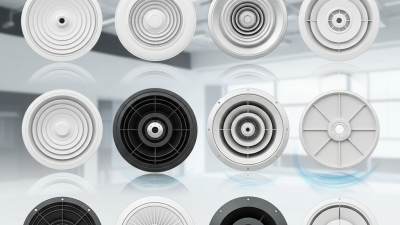
Various models exist, with unique features that cater to different settings. Some provide better airflow control, while others are quieter. Researching options is a must. Don't underestimate the importance of professional guidance. This helps in making a more informed decision. Ultimately, your choice should enhance both comfort and functionality.

Understanding Disc Type Air Diffusers: An Overview
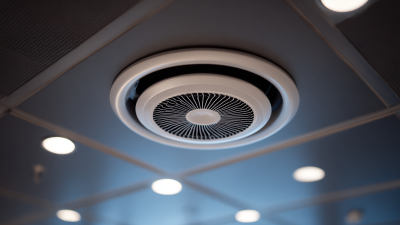
Disc type air diffusers play a crucial role in HVAC systems. They help distribute air evenly throughout a space. Understanding the structure and function of these diffusers is essential for effective application. Typically, a disc diffuser consists of a circular body with multiple openings. These openings allow for adjustable air flow patterns. The design offers flexibility in different environmental settings.
Choosing the right disc diffuser involves considering various aspects. The size of the room will influence the diffuser's diameter and airflow rate. Additionally, the ceiling height matters. Higher ceilings may require larger or more powerful diffusers. A common mistake is underestimating these factors. If airflow is inadequate, it can lead to discomfort. Improper installation can also affect performance.
Be aware of aesthetic considerations too. Some spaces benefit from discreet designs, while others embrace bold installations. Reflect on the overall decor when selecting diffusers. However, don’t just focus on appearance. Functionality and performance should be the priority. Mismatches in any of these areas could lead to inefficiencies.
Key Factors in Selecting the Right Size for Your Space
Choosing the right size for a disc type air diffuser can significantly impact your space's air distribution. According to the American Society of Heating, Refrigerating and Air-Conditioning Engineers (ASHRAE), proper sizing can improve efficiency by up to 15%. A diffuser that is too small will struggle to circulate air effectively. Conversely, one that is too large might create uncomfortable drafts.
Consider the room dimensions and the airflow requirements. A general guideline is to aim for 2 to 3 air changes per hour in residential spaces. For instance, a 300 square foot room often requires around 200 to 300 CFM (cubic feet per minute). It's essential to perform calculations based on your ceiling height and layout. However, not every installation follows these rules perfectly, which can lead to less-than-ideal airflow.
While the ideal size is crucial, other factors must also be assessed. Ceiling height, furniture placement, and local climate can all influence performance. Data shows that rooms with poor airflow can result in up to 30% energy waste. Addressing these issues early will lead to better comfort and energy savings—ultimately benefiting your space long-term.
Evaluating Airflow and Noise Levels in Disc Type Diffusers
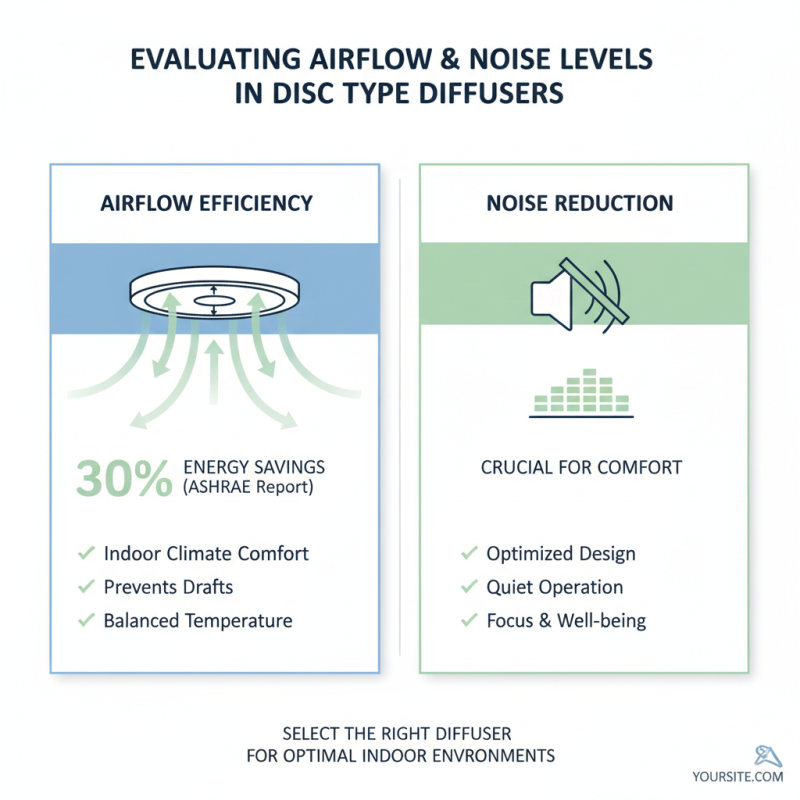
When selecting a disc type air diffuser, understanding airflow and noise levels is crucial. Airflow efficiency directly affects indoor climate comfort. According to a report by ASHRAE, optimized airflow can improve energy savings by up to 30%. The right diffuser can channel air evenly, preventing drafts and ensuring a balanced temperature across the space.
Noise levels are another key consideration. A well-designed diffuser should maintain sound levels below 35 dBA for a comfortable environment. Studies indicate that noise disturbances can reduce concentration and productivity by 20%. Look for performance data that outlines both airflow patterns and sound levels. Field-testing, alongside manufacturer claims, provides valuable insights into real-world performance.
Always ask about installation specifics. A poorly placed diffuser can lead to turbulence, increasing noise. The type of duct system also impacts noise levels. A balanced approach ensures you choose a diffuser that not only functions well but also promotes a pleasant acoustic environment. Remember, it’s essential to customize your choice based on the specific needs of your space.
Material Choices: Impact on Durability and Performance
When selecting an air diffuser, material choice matters greatly. Different materials affect both durability and performance. Plastic diffusers are common and cost-effective. However, they can warp under high temperatures. This can lead to inefficient air distribution over time. Metals, such as aluminum, often provide better longevity. They resist wear and can handle heat more effectively. Yet, metal options might come with higher initial costs.
Another factor to consider is how materials impact air quality. Some plastics may emit gases that affect indoor air. Opting for high-grade materials helps to mitigate these risks. Additionally, the finish and coating of a diffuser can influence its lifespan. A well-coated metal diffuser can resist corrosion, enhancing durability. However, a poorly made product—even from the best materials—may still underperform.
Reflecting on personal experiences can help clarify needs. Have you faced issues with airflow in your space? This could indicate the wrong material type. Assess your environment. Are temperatures consistent? Understanding these factors aids informed choices. Remember that not every option fits every need. Experimenting might lead to the perfect solution for your space.
How to Choose the Best Disc Type Air Diffuser for Your Needs? - Material Choices: Impact on Durability and Performance
| Material Type |
Durability Rating (1-5) |
Performance Impact |
Cost Range (per unit) |
| Plastic |
3 |
Moderate performance; suitable for residential use |
$5 - $15 |
| Aluminum |
4 |
High performance; good for commercial environments |
$15 - $30 |
| Stainless Steel |
5 |
Excellent performance; ideal for industrial settings |
$30 - $60 |
| Fiberglass |
4 |
Good performance; suitable for high humidity areas |
$10 - $25 |
| PVC |
2 |
Lower performance; limited to non-critical areas |
$3 - $10 |
Energy Efficiency Ratings: Importance in Cost-Effective Air Distribution
Energy efficiency ratings are key when choosing an air diffuser. They indicate how well the device distributes air while minimizing energy use. Selecting a disc type air diffuser with a high rating can lead to lower energy costs over time. This is especially important for larger facilities where air distribution can significantly impact energy bills.
A well-designed diffuser enhances system performance. For example, diffusers with optimal air patterns create balanced airflow. However, not all designs achieve this. Some models may have poor seal integrity or inadequate airflow characteristics. It is essential to consider these factors seriously. A poorly performing diffuser might save money upfront but lead to wasted energy.
Efficiency ratings provide insight but should not be the sole factor. Installation and maintenance matter too. A properly installed diffuser can function as intended. Regular inspections ensure it remains efficient. In the end, focusing solely on ratings could overlook real-world performance and installation quality. Balancing these elements will lead to better outcomes.