2026 How to Choose the Right Dewatering Press for Your Needs?
Selecting the right dewatering press is crucial for industries dealing with waste management and material recycling. According to a 2022 industry report, the global dewatering equipment market is expected to reach $6.5 billion by 2026. This growth emphasizes the need for efficient dewatering systems. The right dewatering press can significantly enhance operational efficiency and reduce disposal costs for businesses.
Different types of dewatering presses are available, each designed for specific applications. The filtration technique, materials processed, and volume play critical roles in choosing the appropriate model. Industry experts suggest evaluating performance metrics such as moisture content, throughput, and energy consumption. For instance, users often overlook the importance of maintenance and service support, which can affect long-term operational reliability.
Investing in a dewatering press requires careful consideration. It's not merely about price or capabilities; understanding specific needs and potential future changes is essential. Organizations should remain adaptable to evolving regulations and environmental standards. The future of waste management relies heavily on innovative and effective dewatering solutions that meet these challenges head-on.

Understanding Dewatering Press: Types and Functions
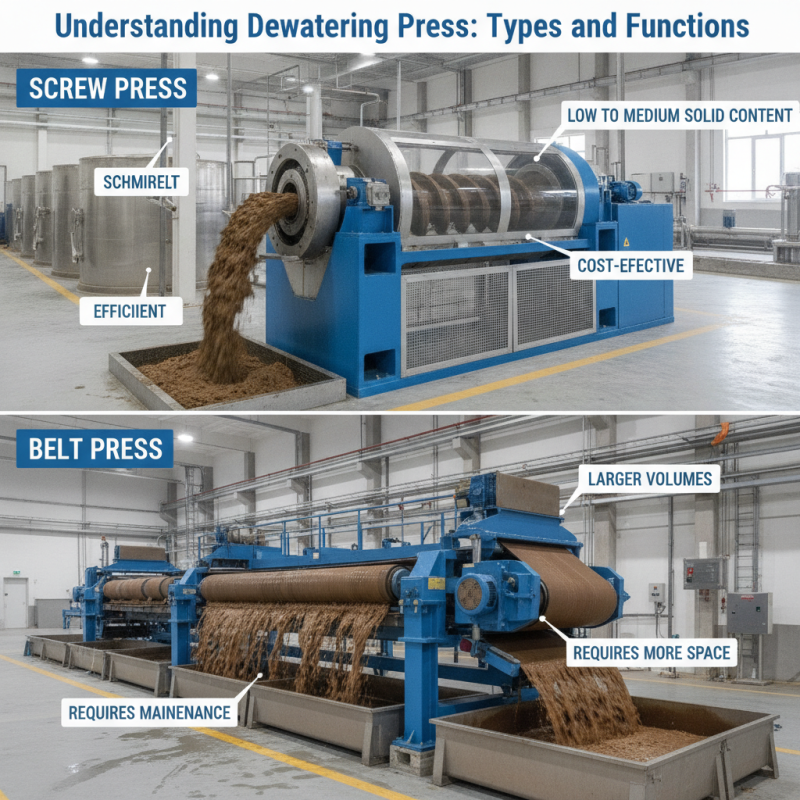
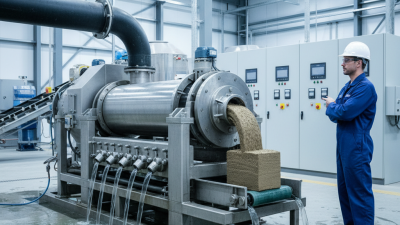
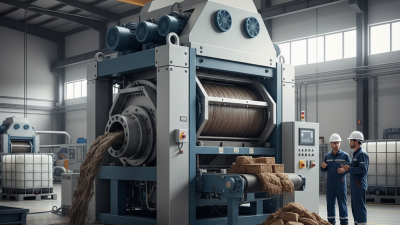
When considering dewatering presses, understanding the types and functions is crucial. There are various designs, each serving specific purposes. A common type is the screw press. It uses mechanical forces to squeeze out water from sludge. Ideal for low to medium solid content, it is efficient and cost-effective. Another option is the belt press. This design employs tension and gravity, making it suitable for larger volumes. However, it might require more maintenance and space.
Each type of dewatering press addresses unique challenges. For instance, a plate-and-frame press excels with high solid content. The materials used definitely affect durability and performance. It’s vital to assess your needs carefully. What works for one application may not be effective for another. Consider factors like the type of material, operational costs, and maintenance requirements. Take the time to compare different systems to avoid poor outcomes.
Training staff on the equipment is equally important. Understanding the limitations can prevent operational mishaps. Regular maintenance schedules should not be overlooked. Ultimately, making an informed decision ensures better efficiency and reliability. Reflecting on experiences can lead to optimal choices in your dewatering processes.
Key Considerations When Selecting a Dewatering Press
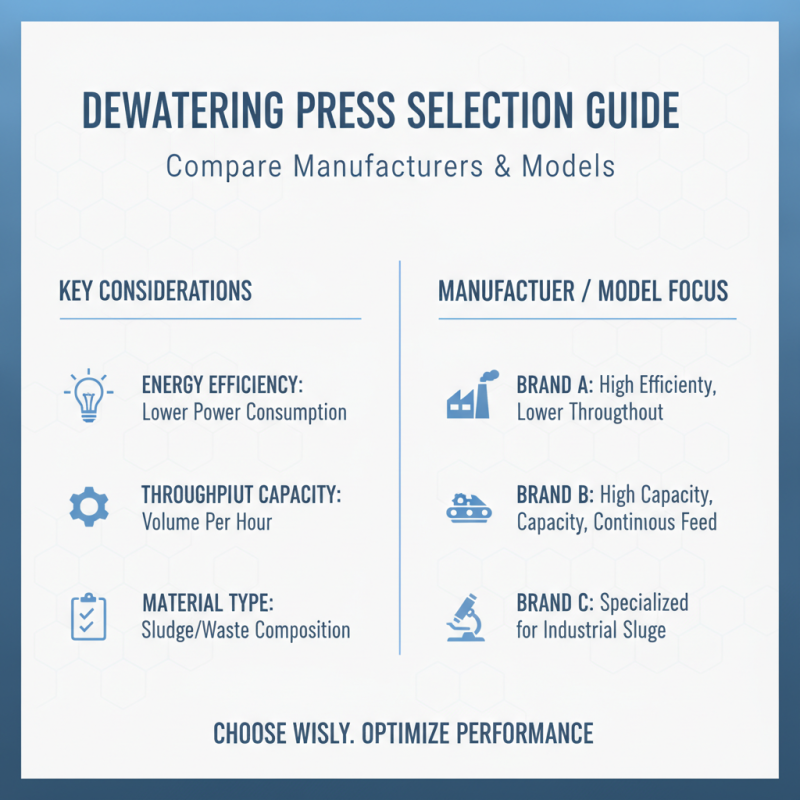
When selecting a dewatering press, several key considerations come into play. The type of material you are working with significantly affects your choice. Understand the characteristics of the solids you need to dewater. For example, are they fibrous or granular? Each type requires different approaches for optimal results. This can determine the efficiency of your operation.
Capacity requirements also play a crucial role. If your operation processes a high volume of material, a larger press may be necessary. Think about your future needs, too. An oversized press can lead to waste, while an undersized one may hinder productivity.
Energy efficiency is another vital aspect. Choosing a model that consumes less power could save costs over time.
Beyond technical specifications, ease of use and maintenance should not be overlooked. How often do you need to clean the press? Can operators easily manage the setup? Having a user-friendly interface minimizes downtime. The integration of automation features can also boost efficiency, but be wary. Automation comes with initial investment costs. Reflect on your budget and long-term goals to find a balance that works for you.
Factors Influencing Dewatering Efficiency and Performance
Choosing the right dewatering press requires understanding various factors that influence dewatering efficiency and performance. Key aspects include the type of material being processed, the desired dryness of the end product, and the volume of material. Each material has unique properties that affect dewatering. For instance, fibrous materials may require a different approach compared to sludge.
Tip: Always assess your material properties before selecting a dewatering method. This step is crucial in optimizing the dewatering process.
Another important factor is the design of the dewatering press. Different designs can yield varying performance levels. A well-designed press can enhance the efficiency of the operation. Some designs may struggle with certain materials, leading to unsatisfactory results.
Tip: Consider testing small batches of your material to evaluate which design works best. Testing can provide invaluable insights.
Maintenance also plays a significant role in overall performance. Regular maintenance ensures the equipment operates at peak efficiency. Neglecting this aspect may lead to breakdowns or decreased performance over time. Timely maintenance can prevent costly downtime.
Tip: Establish a routine maintenance schedule. This habit can significantly improve the longevity of your equipment and enhance productivity.
Factors Influencing Dewatering Efficiency and Performance
Evaluating Cost-Effectiveness and Maintenance Needs of Dewatering Presses
When selecting the right dewatering press, understanding cost-effectiveness and maintenance is vital. Most industries benefit from efficiency in waste management. A well-chosen dewatering press can reduce operational costs. However, the initial investment can be significant. It often leads industries to weigh their options carefully.
Maintenance needs often get overlooked. Many users underestimate the time and resources required for upkeep. Regular maintenance can prevent costly downtime, ensuring the press operates optimally. Some presses require specific training for operators. This added layer can increase costs and complicate usage.
Evaluating these factors demands honest reflection. Are the anticipated savings worth the investment? Cost calculations should include not only purchase price but also long-term maintenance. Understanding these elements can guide a more informed decision. Balancing costs with performance metrics is essential for making the right choice.