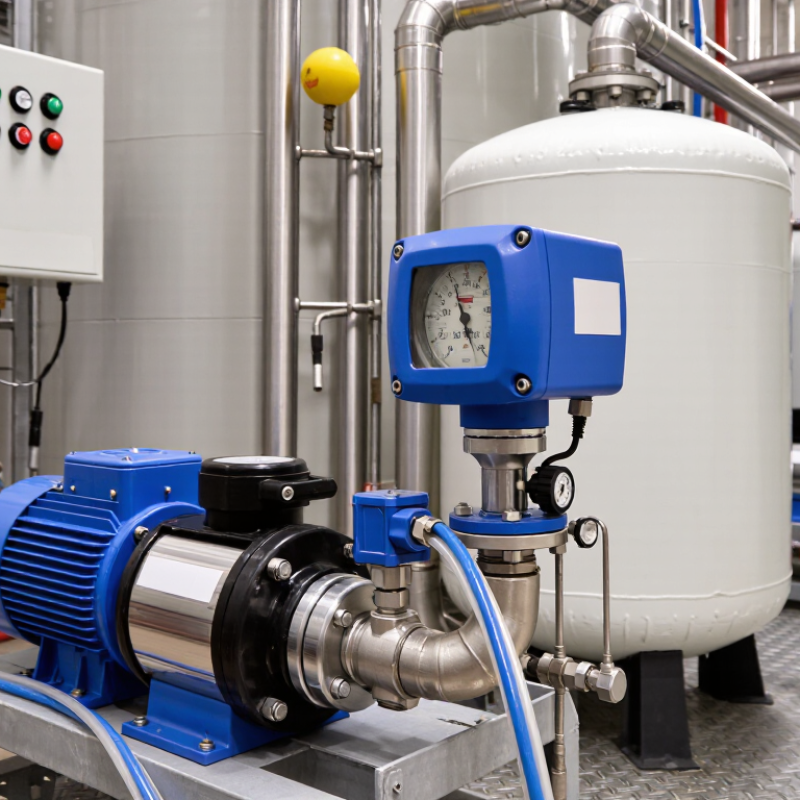
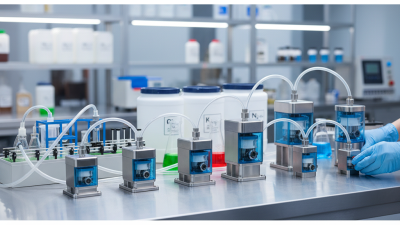
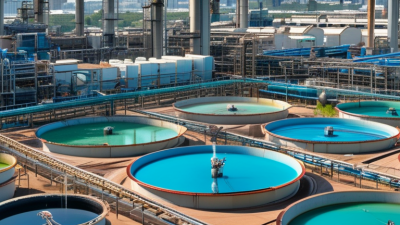
Selecting the right Ph Dosing Pump manufacturer requires more than comparing prices, flow rates, or catalog photographs. Global buyers need verified performance, documented materials, responsive service, and reliable calibration support. A dosing pump may sit beside a municipal water tank, under harsh chemical fumes, or inside a compact industrial skid. Each environment changes the purchasing decision.
The World Health Organization and UNICEF Joint Monitoring Programme reported that 2.2 billion people lacked safely managed drinking water in 2022. This pressure is increasing investment in water treatment, disinfection, and pH control systems. Industry reports from MarketsandMarkets and Grand View Research also identify water and wastewater treatment as major demand areas for chemical dosing equipment. Their findings support a practical point: pump reliability affects both operating costs and treatment consistency.
Small errors matter.
A supplier should explain diaphragm compatibility, wetted-part materials, maximum pressure, turndown ratio, IP protection, and calibration procedures. Buyers should also request test records, spare-parts availability, warranty terms, and local technical support. These details reveal manufacturing maturity better than marketing claims. However, published market forecasts are not always consistent. Definitions, regional coverage, and reporting periods differ. That limitation deserves attention.
This guide evaluates leading Ph Dosing Pump manufacturers for global buyers through technical capability, product range, certification practices, service networks, and field experience. The comparison remains practical rather than promotional. It focuses on equipment that can deliver stable chemical feed, withstand demanding conditions, and support safe, measurable water-treatment operations.
A pH dosing pump is a metering device that adjusts water chemistry by adding acid or alkaline solution. It works with a pH probe, controller, and chemical-resistant pump. The probe measures hydrogen-ion activity in a tank or pipeline. The controller compares that reading with the selected pH target. When the value moves outside the set range, the pump injects a calculated chemical dose.
Small changes matter. A pump may run in short pulses, slow its stroke, or stop completely after reaching the target. In industrial practice, operators should check flow rate, pressure, tubing condition, and probe calibration together. A clean probe can still report misleading data if the sample point is poorly placed. The neat diagram is incomplete. Temperature, mixing time, and chemical concentration also affect control accuracy.
Tips: Calibrate the probe regularly with suitable reference solutions. Install the injection point after adequate mixing space. Use compatible tubing and fittings for the selected chemical. Keep a manual test kit nearby; digital readings are useful, but they are not beyond question. Record actual pH changes after each adjustment, especially during commissioning. A slower dosing rate often prevents overshooting, although every system needs field testing.
Top pH Dosing Pump Manufacturers for Global Buyers
Key Features to Compare Among Global pH Dosing Pump Manufacturers
Selecting a pH dosing pump requires more than comparing flow rates. In field installations, chemical compatibility often determines service life. Check wetted materials against acids, alkalis, oxidizers, and cleaning agents. A pump may perform well in testing but fail after months of continuous exposure.
Flow accuracy is another practical benchmark. Compare the stated accuracy, minimum dosing rate, turndown ratio, and calibration method. Pumps with stable low-flow control support tighter pH management and reduce chemical waste. Ask whether accuracy changes with back pressure, temperature, or suction lift. These details matter.
Look for sensor integration, automatic adjustment, alarms, and data logging. Clear display menus reduce training time. Remote communication can help operators review trends before a small drift becomes a process problem. Yet advanced controls are not always better. Complex settings may confuse maintenance teams. Keep it practical.
Inspect the enclosure rating, diaphragm design, valve quality, and spare-part availability. Global buyers should request installation guides, wiring diagrams, test records, and service procedures. Independent certifications can strengthen confidence, but certificates should match the actual model.
A perfect specification rarely survives a dusty pump room. I would also test priming, noise, leakage points, and calibration access before approval. Small weaknesses often appear during routine maintenance, not during a polished demonstration.
| Comparison Dimension | Common Market Range or Configuration | Why It Matters for pH Control | Recommended Buyer Verification |
|---|---|---|---|
| Pump Technology | Solenoid diaphragm, motor-driven diaphragm, peristaltic, or stepper-motor metering designs | Technology affects chemical compatibility, pulsation, maintenance, turndown capability, and pressure performance. | Confirm the operating principle, duty cycle, expected service life, and suitability for continuous dosing. |
| Flow-Rate Capacity | Small laboratory units may deliver below 1 L/h; industrial metering pumps commonly cover several L/h to hundreds of L/h, depending on model size. | Correct capacity prevents slow pH response, chemical overfeed, and unstable control during changes in process demand. | Compare rated flow at the actual discharge pressure, chemical temperature, and required stroke frequency. |
| Pressure Rating | Typical pressure ratings range from low-pressure water-treatment service to more than 10 bar for selected industrial metering models. | The pump must overcome static head, friction loss, injection-point pressure, and any backpressure valve setting. | Request a performance curve showing flow at the required discharge pressure rather than relying only on the maximum rating. |
| Metering Accuracy | Many precision metering pumps specify approximately ±1% steady-state accuracy under defined test conditions; actual field accuracy depends on calibration and installation. | Accurate chemical delivery reduces pH overshoot and lowers acid or alkali consumption. | Check the test conditions, repeatability, minimum controllable flow, and calibration procedure. |
| Control Input | Common options include manual adjustment, pulse input, 4–20 mA, analog voltage, relay control, and digital communications on advanced models. | The control interface determines how easily the pump can integrate with a pH controller, PLC, SCADA system, or dosing skid. | Confirm signal type, input impedance, isolation, scaling method, and communication protocol. |
| pH Feedback Compatibility | Some pumps include an integrated pH controller; others receive a control signal from a separate pH transmitter or process controller. | Reliable feedback helps maintain the target pH despite changing flow, alkalinity, or chemical demand. | Determine whether the system supports proportional control, PID control, alarm limits, and sensor calibration functions. |
| Wetted Materials | Common materials include polypropylene, PVC, PVDF, PTFE, ceramic, stainless steel, EPDM, and FKM, selected according to the chemical. | Material compatibility affects diaphragm life, seal reliability, leakage risk, and safe handling of acids or alkalis. | Match every wetted component with the chemical concentration, temperature, pressure, and exposure time. |
| Chemical Compatibility | Typical pH-adjustment chemicals include diluted sulfuric acid, hydrochloric acid, sodium hydroxide, and other approved treatment chemicals. | Chemical concentration and temperature can change the compatibility of plastics, elastomers, valves, and diaphragms. | Obtain a written compatibility recommendation and safety documentation for the exact chemical concentration. |
| Turndown Ratio | Electronic metering pumps may offer wide adjustable ranges, often around 10:1 or greater, depending on design and control method. | A wider usable range supports both low-demand operation and peak chemical requirements without frequent pump replacement. | Check minimum stable flow and accuracy at the lowest expected dosing rate. |
| Self-Priming and Valve Design | Options may include spring-loaded valves, anti-siphon valves, automatic degassing, manual priming, and foot valves. | These features improve startup, gas handling, suction reliability, and protection against uncontrolled chemical flow. | Verify suction lift, gas-handling capability, anti-siphon performance, and installation orientation. |
| Pulsation Management | Diaphragm pumps produce dosing pulses; pulse dampeners, multi-head designs, or peristaltic systems can reduce flow fluctuation. | Lower pulsation improves mixing, measurement stability, pipework protection, and pH-control response. | Ask for recommended dampener size, injection fitting, and minimum straight-pipe requirements. |
| Protection and Alarms | Available protections may include overpressure, diaphragm rupture, dry-run, low-level, overtemperature, and signal-failure alarms. | Alarms reduce the risk of chemical spills, equipment damage, untreated discharge, and uncontrolled pH changes. | Identify alarm outputs, fail-safe behavior, reset requirements, and compatibility with site emergency shutdown systems. |
| Enclosure and Environmental Rating | Indoor and outdoor models may use sealed enclosures with ratings such as IP65 or higher, depending on the product and installation method. | Protection against dust, water, humidity, and corrosive atmospheres supports reliable operation in treatment plants and process areas. | Confirm the exact ingress-protection rating, ambient-temperature range, ventilation needs, and corrosion resistance. |
| Power Supply | Global configurations commonly include 100–240 V AC, 50/60 Hz, or region-specific AC and DC supplies. | Correct electrical compatibility prevents installation delays and reduces the need for additional transformers or converters. | Verify voltage tolerance, frequency, current draw, plug type, grounding, and electrical certifications required at the destination. |
| Measurement and Calibration | pH measurement commonly uses glass-electrode sensors with buffer calibration at pH 4, 7, and/or 10, selected for the operating range. | Accurate measurement is essential because dosing quality cannot exceed the quality of the pH signal. | Check sensor type, temperature compensation, calibration records, cleaning requirements, and replacement availability. |
| Standards and Compliance | Depending on the destination, relevant requirements may include CE, UKCA, UL, CSA, EMC, RoHS, and local electrical or chemical-safety rules. | Compliance documentation supports lawful import, safe installation, and acceptance by end users or authorities. | Request declarations, test reports, manuals, and certificates applicable to the exact model and destination market. |
| Maintenance and Spare Parts | Typical service items include diaphragms, valve seats, O-rings, injection fittings, tubing, sensors, and calibration solutions. | Accessible spare parts reduce downtime and make long-term operating cost more predictable. | Compare spare-part lead times, service intervals, local support, warranty terms, and total cost of ownership. |
| Documentation and Export Support | Professional suppliers normally provide datasheets, installation manuals, wiring diagrams, chemical-compatibility information, packing documents, and technical support. | Clear documentation reduces commissioning errors and simplifies international procurement, installation, and after-sales service. | Evaluate document quality, language availability, response time, export experience, packaging, and technical training resources. |

Note: Performance ranges are representative industry references only. Final selection should be based on the exact chemical, concentration, temperature, flow rate, discharge pressure, control method, and local compliance requirements.
Global buyers usually compare pH dosing pump manufacturers by region, application experience, and service depth. East Asia offers broad production capacity, competitive pricing, and strong OEM support. Many factories provide compact diaphragm pumps for water treatment skids and chemical storage rooms. European manufacturers often focus on precise metering, durable materials, and documented quality control. Their pumps commonly support municipal treatment, food processing, and pharmaceutical production.
North American suppliers tend to emphasize engineered packages, remote monitoring, and technical consultation. India and Southeast Asia are growing sources for customized systems and regional after-sales support.
Local manufacturers may adapt pumps to unstable power supplies, humid workshops, or limited maintenance resources. These details matter in daily operation. A technically impressive pump can still fail when replacement parts arrive slowly.
Manufacturer types also differ. Specialist metering pump companies usually offer deeper knowledge of flow control, diaphragm life, and calibration. Industrial automation integrators can connect dosing equipment with pH sensors, PLC panels, and alarm systems. Chemical equipment fabricators may deliver complete tanks, mixers, valves, and pumps in one package. OEM manufacturers reduce purchasing complexity, but documentation can be thinner. Buyers should request flow-test records, material certificates, calibration procedures, and clear warranty terms. Field engineers should check tubing flexibility, injection-point pressure, and chemical compatibility before approval. Mistakes happen. Even experienced teams sometimes trust catalog data without testing actual site conditions. A small trial under real temperature and pressure can reveal more than a polished presentation.
When evaluating a pH dosing pump, start with verified accuracy, not brochure claims. Ask for test data across the expected flow range. A pump accurate at maximum output may drift during low-dose operation. Small errors matter. Check repeatability, calibration steps, and response to changing back pressure. I have found that a simple field test with a graduated cylinder can reveal installation problems quickly. Temperature, air bubbles, and worn tubing often affect readings more than expected.
Material selection should match the chemical, concentration, temperature, and cleaning routine. Common options include PVC, PVDF, PTFE, and stainless steel. Do not choose materials by price alone. Review diaphragm compatibility, valve seals, and connection fittings together. One weak component can shorten service life. Look closely. A clear chemical chart is useful, but actual process conditions still require technical review.
Controls should support practical work, including manual adjustment, pulse input, analog signals, and alarm outputs. Remote monitoring is valuable when tanks sit far from operators. Confirm whether the interface shows flow faults, empty-tank conditions, and calibration reminders. Support quality becomes visible after installation. Evaluate spare-part availability, troubleshooting documents, training, and response times in your region. Ask for commissioning guidance and service contacts before ordering. I once treated documentation as secondary; that decision created avoidable delays. A reliable supplier should explain limits honestly, even when the answer is inconvenient.
Top pH Dosing Pump Manufacturers for Global Buyers
Applications, Compliance, and Purchasing Factors for International Buyers
pH dosing pumps support wastewater treatment, cooling systems, process water, and controlled chemical adjustment. Each application demands different flow rates, pressure ranges, and material choices. A pump handling acidic media needs corrosion-resistant wetted parts, reliable seals, and stable calibration. Small details matter.
International buyers should request performance curves, calibration procedures, material certificates, and factory test records. Confirm whether the unit meets destination-market requirements, such as applicable electrical, safety, and electromagnetic compatibility rules. Compliance markings alone are not enough. Review the supporting declaration and test scope carefully. Voltage, plug type, language, and documentation formats can also delay installation.
Purchasing teams should compare total operating cost, not only the quoted price. Check diaphragm life, replacement-part availability, controller integration, and technical support across time zones. Ask how accuracy changes at low flow. In field assessments, this point is often missed. A pump may perform well at its rated capacity but struggle during overnight dosing. No checklist is perfect. Site temperature, chemical concentration, and operator habits can change actual results. Request a sample calibration record and verify the proposed flow with a simple water test before shipment. Also confirm packaging protection, spare-part lead times, warranty terms, and responsibility for customs documentation.