Leave Your Message

What Are China Top Polymer Dosing Control Suppliers?

Polymer Dosing Control is becoming a practical priority for water, wastewater, mining, paper, and sludge-dewatering operators. The reason is visible on the plant floor: unstable polymer concentration can create cloudy filtrate, wet sludge, blocked lines, and unnecessary chemical consumption. The World Health Organization and UNICEF reported that 2.2 billion people lacked safely managed drinking water in 2022. Meanwhile, the United Nations World Water Development Report 2024 identified agriculture as responsible for roughly 70% of global freshwater withdrawals. These pressures make accurate chemical dosing more than an efficiency goal.

Dr. James K. Edzwald, a respected water-treatment researcher and editor of Water Quality & Treatment, states, “Coagulation is a critical step in water treatment.” His observation supports a wider lesson: dosing accuracy influences every later treatment stage. MarketsandMarkets and Grand View Research both identify continuing growth in water-treatment chemicals and dosing equipment, driven by stricter discharge expectations and industrial reuse. However, market growth does not automatically identify the best supplier. It may only reveal rising demand.

This guide examines China’s top Polymer Dosing Control suppliers through engineering capability, pump accuracy, automation, material quality, documentation, and after-sales support. It considers diaphragm pumps, dry-polymer preparation units, flow meters, PLC integration, and remote alarms. Real performance depends on more than a polished catalog. A stainless-steel cabinet means little if calibration records are missing. A low price can also become expensive after repeated clogging. No supplier is perfect. Buyers should compare verified test data, site experience, spare-parts access, and response times before choosing a long-term partner.

What Are China Top Polymer Dosing Control Suppliers?

What Is Polymer Dosing Control and Why Does It Matter?

What Is Polymer Dosing Control and Why Does It Matter?

Polymer dosing control regulates how much polymer enters a treatment process. It combines pumps, flow meters, mixing equipment, sensors, and control software. The goal is steady chemical delivery, not simply higher output.

In water and wastewater treatment, polymer helps bind fine particles into larger flocs. Correct dosing can improve settling, reduce sludge volume, and protect downstream equipment. Too little polymer may leave cloudy water. Too much can create sticky sludge, waste chemicals, and increase operating costs. Small errors matter. A pump running five percent faster can change the final result.

Top polymer dosing control suppliers should offer accurate metering, reliable calibration, and clear operating data. They should also understand polymer type, concentration, temperature, and shear sensitivity. A good supplier asks about real site conditions before recommending equipment. This is important because laboratory results may not match a cold, dusty plant floor. No system is perfect. Even a well-designed unit needs regular inspection, cleaning, and operator judgment.

Tips: Check the pump output against a measured container. Inspect tubing for air pockets and wear. Record polymer concentration, flow rate, and pressure during each shift. Do not trust alarms alone. A quiet control panel can hide a blocked line. Operators should review unusual readings, even when production appears normal. The best choice is practical, serviceable, and matched to the process rather than promoted by impressive specifications.

What Is Polymer Dosing Control and Why Does It Matter?

Polymer dosing control is the automated adjustment of coagulant or flocculant feed according to flow rate, solids loading, turbidity, and sludge characteristics. Accurate dosing improves floc formation, reduces chemical waste, supports clearer effluent, and helps dewatering equipment operate more consistently.

The chart shows representative polymer-dose ranges commonly used in water and wastewater treatment applications. Actual settings depend on jar testing, polymer type, influent quality, and process conditions.

How China’s Polymer Dosing Control Supplier Market Is Structured

China’s polymer dosing control supplier market is structured around several distinct supplier groups. Large manufacturers usually produce dosing pumps, mixers, controllers, and complete skid systems. Their strength is production capacity, standardized testing, and stable component sourcing.

Mid-sized engineering suppliers often combine equipment with process design. They may adjust dosing accuracy, tank volume, and control logic for municipal treatment, mining, or industrial water systems. Many rely on regional workshops and qualified subcontractors. This can improve flexibility, but quality may vary between projects. The market is not perfectly transparent.

A third group focuses on automation integration. These companies connect dosing equipment with sensors, PLC systems, remote monitoring, and plant control platforms. Experienced buyers normally review calibration records, material certificates, factory testing, and commissioning support. A polished website proves little. Site references matter more.

Supplier competition is also shaped by location. Manufacturing clusters support faster machining, easier component access, and lower logistics costs. Export-oriented suppliers often maintain multilingual documentation and stronger packaging procedures. Domestic project suppliers may understand local installation conditions better. Neither model is automatically superior.

In practical evaluations, buyers should compare chemical compatibility, flow stability, spare-part availability, and response time. Ask how the supplier handles blocked lines or unstable polymer concentration. Real operating data is more useful than a broad performance claim. Some suppliers still understate maintenance needs. That deserves careful questioning.

Which Chinese Suppliers Lead in Polymer Dosing Control Systems?

China’s leading polymer dosing control suppliers usually stand out through practical engineering, not attractive brochures. They design complete systems for wastewater treatment, mineral processing, papermaking, and sludge dewatering. A strong supplier can provide polymer make-up units, dry or liquid dosing pumps, mixing tanks, sensors, and PLC control cabinets as one coordinated package.

Field experience shows that stable dosing depends on more than pump accuracy. Polymer concentration, water quality, shear force, and aging time can change performance within one shift. Reliable Chinese suppliers therefore offer adjustable dilution ratios, low-shear mixers, automatic calibration, and alarm functions for empty tanks or blocked lines. Stainless steel contact parts also matter in humid treatment rooms. Small details matter.

Technical credibility is easier to verify through drawings, factory testing records, and documented installation cases. Ask whether the supplier can test your actual polymer before production. Request flow-rate curves, control logic, spare-parts lists, and operator training. Some suppliers respond quickly but provide weak commissioning support. That remains a common weakness. Others build excellent skids but overlook local electrical standards or cleaning access.

The better suppliers accept these questions. They explain limitations clearly and modify designs when site conditions change. Remote support is useful, but trained technicians are still valuable during startup. A serious evaluation should compare dosing stability, maintenance access, response time, and lifecycle cost rather than purchase price alone. Their equipment may look similar, yet daily reliability can differ sharply.

How to Compare Supplier Technology, Quality, and Customization

What Are China’s Top Polymer Dosing Control Suppliers?

How to Compare Supplier Technology, Quality, and Customization

Comparing polymer dosing suppliers requires more than checking flow-rate tables. Examine how each system handles changing viscosity, fluctuating water quality, and low-dose accuracy. A reliable unit should combine calibrated pumps, stable mixing, responsive sensors, and clear control logic. Ask whether the controller supports automatic adjustment through flow, concentration, or turbidity signals. Test results should show performance at both minimum and maximum capacity.

Look closely at manufacturing quality. Request material certificates, pump calibration records, electrical test reports, and traceability for critical components. Stainless steel grades, seal materials, cabinet protection, and cable routing matter in humid treatment rooms. A supplier with documented factory testing usually provides stronger evidence than one relying on attractive photographs. Still, paperwork is not proof of field reliability.

Customization separates practical suppliers from catalogue sellers. Share polymer type, target concentration, dilution water pressure, daily consumption, and installation limits. The supplier should explain jar-test procedures and identify possible shear damage during mixing. Check communication protocols, alarm settings, remote monitoring, and spare-parts availability. Factory acceptance testing can expose unstable dosing before shipment. It can also reveal misunderstandings. A polished proposal may miss a simple issue, such as insufficient drain space or an operator panel placed too high. Ask for a pilot trial when process data remains uncertain. Real conditions often challenge perfect calculations.

What Are China Top Polymer Dosing Control Suppliers? - How to Compare Supplier Technology, Quality, and Customization
Comparison Dimension Relevant Technical Data and Industry Reference Information to Request from a Supplier Recommended Evaluation Method
Polymer Preparation Method Compare dry-polymer, liquid-polymer, and emulsion-polymer preparation. Dry-polymer systems commonly include powder conveying, wetting, maturation, and dilution stages. Liquid systems generally require controlled dilution and mixing rather than powder wetting. Process-flow diagram, equipment list, polymer type compatibility statement, recommended maturation time, and operating procedure. Give higher scores when the system is designed for the actual polymer form, concentration, viscosity, and required maturation conditions.
Dosing Capacity and Turndown Evaluate the minimum and maximum polymer solution output, dosing accuracy, and stable operating range. A practical comparison should include normal, minimum, and peak flow conditions rather than only the rated maximum capacity. Capacity curve, calibration procedure, minimum stable flow, maximum continuous flow, and dosing accuracy test results. Prefer systems that maintain stable dosing at both low-load and peak-load conditions and provide documented test data.
Concentration Control Check whether the system supports recipe-based polymer concentration control, automatic dilution, water-flow measurement, and independent adjustment of polymer and dilution-water flow. Concentration range, control logic, flow-meter specifications, recipe-management screenshots, and commissioning records. Higher scores should be assigned to systems with closed-loop concentration control and independent verification of polymer and water flow.
Control Architecture Common control functions include PLC control, touchscreen HMI, automatic start/stop, low-level alarms, overload protection, pump interlocks, and remote signals through common industrial communication interfaces. I/O list, control narrative, HMI screenshots, alarm list, communication protocol list, and cybersecurity or access-control options. Assess control transparency, alarm quality, manual override protection, data logging, and compatibility with the plant control system.
Mixing and Polymer Activation The system should provide sufficient wetting and mixing without excessive shear. Excessive shear can reduce the effectiveness of some polymers, while insufficient mixing can create fish-eyes, lumps, or uneven concentration. Mixer type, speed range, residence-time calculation, polymer activation test, and application references using comparable polymer grades. Prefer suppliers that can demonstrate activation performance with the customer’s polymer and process water rather than relying only on standard laboratory data.
Material Selection and Corrosion Protection Wetted materials should be selected according to polymer chemistry, dilution water, cleaning chemicals, temperature, and site conditions. Common options may include stainless steel, engineering plastics, elastomers, and coated carbon steel. Material-of-construction schedule, gasket and seal specifications, corrosion-compatibility statement, surface-finish information, and coating system details. Give priority to a complete material schedule with no unspecified wetted components and with compatibility confirmed for the intended chemicals.
Pump and Metering Technology Compare progressive-cavity, diaphragm, peristaltic, screw, or other metering technologies according to viscosity, solids content, pressure, pulsation, maintenance requirements, and required flow range. Pump curve, viscosity range, pressure rating, seal design, dry-run protection, spare-parts list, and expected service intervals. Select the pump type based on the actual polymer solution properties and discharge pressure, not solely on purchase price or nominal flow.
Measurement and Calibration Reliable systems normally use calibrated flow, level, pressure, or conductivity measurements where applicable. Calibration intervals should be defined according to instrument type, process criticality, and site quality procedures. Instrument datasheets, accuracy specifications, calibration certificates, calibration procedure, and recommended verification frequency. Higher scores should reflect traceable calibration, accessible instruments, and a practical field-verification method.
Manufacturing Quality Quality comparison should cover welding, pressure testing, electrical testing, dimensional inspection, component traceability, and final functional testing before shipment. Quality plan, inspection and test plan, welding records where applicable, factory acceptance test procedure, inspection photographs, and nonconformance process. Award higher scores when quality checks are documented, repeatable, and linked to serial numbers or equipment identification.
Applicable Standards and Compliance Verify compliance with the standards required by the destination market and project. Depending on the installation, this may include electrical, machinery, pressure, lifting, environmental, and occupational-safety requirements. Declaration of conformity where applicable, electrical drawings, component certificates, safety assessment, test reports, and project-specific compliance matrix. Score based on project relevance and documentary evidence. Do not treat a generic certificate as proof of compliance for every application.
Customization Capability Typical customization areas include capacity, tank volume, number of preparation chambers, pump configuration, skid dimensions, pipe connections, electrical voltage, enclosure rating, communication protocols, and environmental protection. Previous customized drawings, design-change procedure, engineering schedule, interface drawings, and confirmation of customer approval points. Prefer suppliers with documented design control and clear responsibility for mechanical, electrical, and software interfaces.
Footprint and Installation Compare overall dimensions, operating clearances, lifting points, access to consumables, maintenance space, pipe routing, and shipping configuration. General arrangement drawing, foundation loads, lifting plan, utility list, nozzle schedule, and installation manual. Higher scores should reflect easy access for filling, inspection, cleaning, pump replacement, and instrument calibration.
Reliability and Maintainability Examine redundancy, accessible wear parts, anti-bridging measures, drain and flushing arrangements, spare-parts availability, and preventive-maintenance requirements. Recommended spare-parts list, preventive-maintenance schedule, failure-mode analysis, warranty terms, and operating references for comparable duty. Evaluate expected downtime, ease of cleaning, replacement time for wear parts, and availability of technical support.
Factory and Site Testing Factory testing should verify mechanical assembly, electrical wiring, control sequences, alarms, interlocks, and leak-free operation. Site testing should confirm performance under actual water, polymer, and operating conditions. FAT and SAT procedures, acceptance criteria, test forms, performance guarantees, punch-list process, and commissioning plan. Give the highest scores to suppliers offering measurable acceptance criteria rather than visual inspection only.
Documentation Package A complete package typically includes operating manuals, maintenance manuals, parts lists, P&IDs, electrical drawings, data sheets, certificates, software backups, and recommended operating parameters. Sample anonymized document index, drawing format, revision-control procedure, language options, and delivery schedule. Assess completeness, accuracy, revision control, language quality, and whether documents are delivered before commissioning.
After-Sales Support Compare response time, remote troubleshooting, commissioning support, training, spare-parts logistics, warranty duration, and availability of local service resources. Service-level agreement, support contact process, training agenda, spare-parts lead times, warranty exclusions, and escalation procedure. Higher scores should reflect defined response times, clear warranty responsibilities, and practical access to replacement parts.
Total Cost of Ownership Include purchase price, shipping, installation, commissioning, polymer consumption, water consumption, electricity, maintenance labor, spare parts, and expected downtime. Itemized quotation, utility-consumption estimate, maintenance-cost assumptions, spare-parts pricing, warranty coverage, and lifecycle-cost calculation. Compare five- to ten-year operating cost where project data is available instead of comparing equipment price alone.
Evaluation note: Technical ranges and requirements vary with polymer chemistry, concentration, water quality, duty cycle, pressure, temperature, and local regulations. Supplier claims should be verified through datasheets, test records, references, and project-specific acceptance criteria.

What Industries Use China-Made Polymer Dosing Control Equipment?

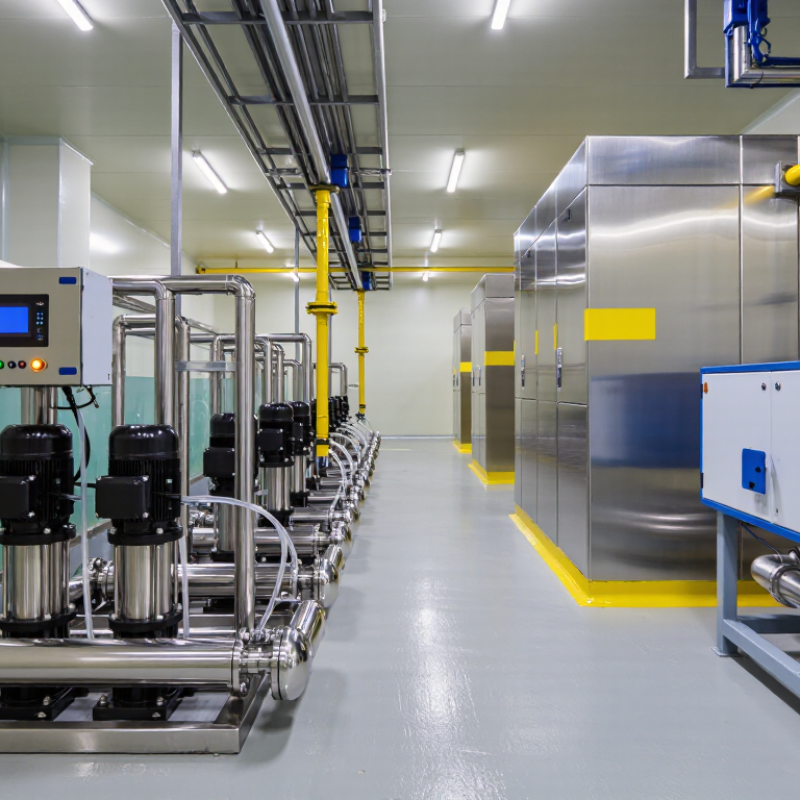
China-made polymer dosing control equipment serves many industries that need stable chemical preparation and accurate injection. Municipal water plants use it to feed polymers during sludge thickening and dewatering. Operators often adjust dosage after testing sludge moisture, flow rate, and settling behavior. A dry powder feeder, mixing tank, and metering pump must work as one system.

Mining operations also use polymer dosing skids for tailings separation and wastewater clarification. Cement plants, paper mills, and textile facilities apply them to reduce suspended solids before discharge or reuse. Food-processing factories may use dosing equipment in wastewater treatment, but hygienic materials and careful chemical separation remain essential. Each site has different viscosity, temperature, and corrosion concerns.

Good suppliers provide control panels with flow feedback, alarm functions, and adjustable speed settings. They should also explain calibration procedures, spare parts, and service response times. Stainless steel contact parts can help in corrosive environments, though material selection still requires chemical review. Small errors matter. An oversized pump may waste polymer and damage operating costs. An undersized mixer may create uneven solution strength. Technical drawings rarely show every field problem. Buyers should request trial data, factory inspection records, and clear testing standards before installation. Even reliable equipment needs routine cleaning, sensor checks, and operator training.