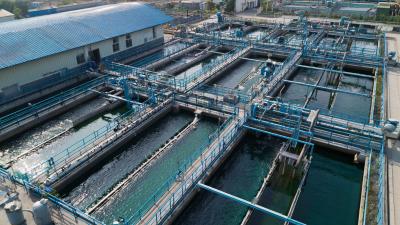
2026 Best Dispersed Air Flotation Systems for Global Buyers?
In the evolving landscape of wastewater treatment, **Dispersed Air Flotation** (DAF) systems have become essential tools for industry leaders. According to a recent report by Global Water Intelligence, the market for DAF systems is projected to grow at a CAGR of 6% through 2026. This growth underscores the increasing demand for efficient water treatment solutions across various sectors.
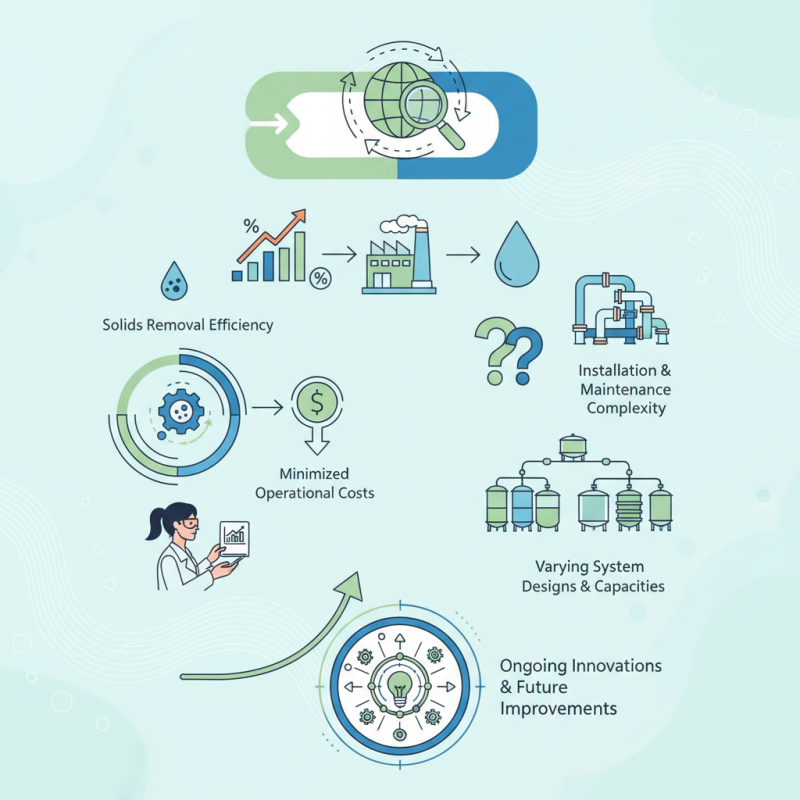
Industry expert Dr. Emily Zhang emphasizes the significance of DAF technology, stating, "Dispersed Air Flotation offers unmatched efficiency in solids removal." This highlights the critical role of DAF systems in enhancing water quality while minimizing operational costs. As companies seek sustainable practices, their reliance on advanced flotation technologies continues to rise.
However, adopting DAF systems isn't without challenges. Installation and maintenance can be complex, and users must navigate varying system designs and capacities. This variability complicates decision-making for global buyers. Companies need to weigh these complexities against potential benefits. With ongoing innovations, the market for **Dispersed Air Flotation** systems promises to bring continued improvements.
2026 Market Trends in Dispersed Air Flotation System Technologies
As we approach 2026, the landscape for Dispersed Air Flotation (DAF) systems continues to evolve. This technology plays a crucial role in wastewater treatment by separating contaminants effectively. Recent studies indicate the DAF market is projected to grow by 7% annually. This growth reflects increased environmental regulations and a rising demand for efficient water treatment solutions.
Prominent market trends include advancements in energy efficiency and automation. Many systems now incorporate smart technology to optimize operations. For instance, new systems can reduce energy consumption by up to 25%, significantly lowering operational costs. However, not all innovations meet industry standards. Some systems struggle with reliability and require frequent maintenance.
Moreover, the adoption of DAF systems varies regionally. While North America leads in technology adoption, Europe is catching up with stringent regulations. These variances highlight the need for tailored solutions that address specific regional challenges. Buyers should cautiously evaluate their options, considering not only cost but also long-term reliability and compliance with environmental standards.
Key Features of Leading Dispersed Air Flotation Systems in 2026
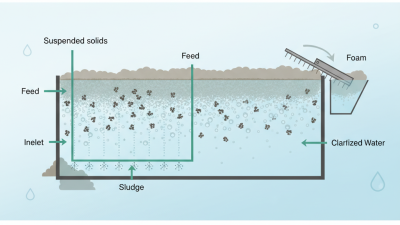
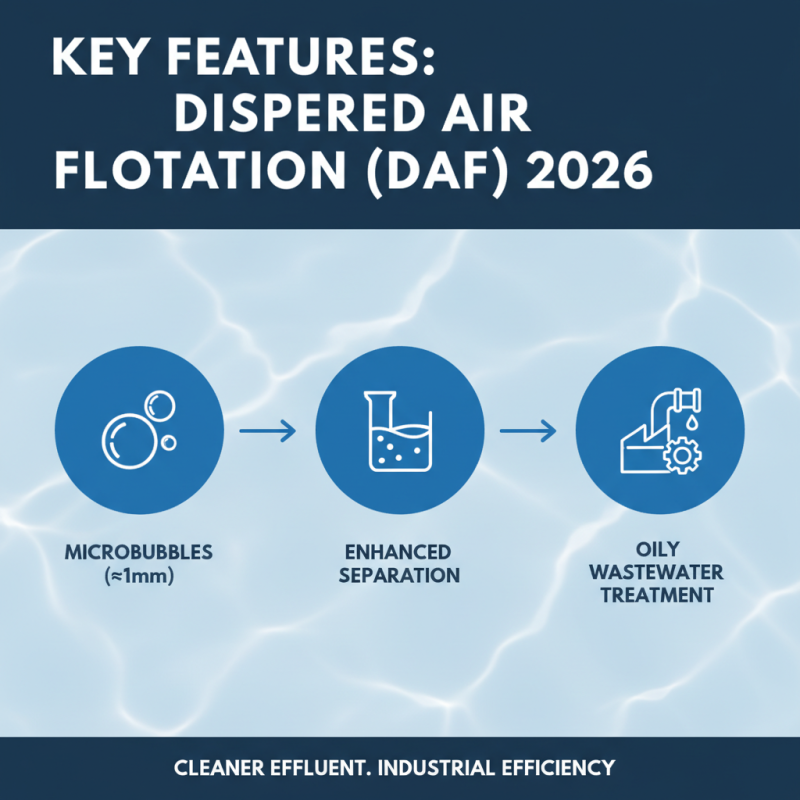
In 2026, dispersed air flotation systems stand out for their efficiency in industrial wastewater treatment. Key features contribute to their growing popularity. First, these systems utilize micro-bubbles, which enhance the separation of contaminants from water. By generating bubbles that are smaller than a millimeter, they achieve effective flotation, leading to clearer effluent. This technology is particularly crucial in sectors dealing with oily wastewater.
Another essential aspect is the energy efficiency of modern systems. Manufacturers focus on reducing power consumption without compromising performance. This balance helps industries lower operational costs, which is a significant consideration. However, users must ensure they maintain these systems properly. Neglected maintenance can lead to reduced efficiency and increased operational costs.
Flexibility in design is also noteworthy. The systems can be customized to fit various applications, ranging from food processing to chemical manufacturing. However, this adaptability may require a careful assessment of specific needs. Users should reflect on their unique requirements to optimize performance. Ultimately, the choice of a flotation system hinges on understanding both its capabilities and limitations.
Industry Standards and Environmental Regulations for Air Flotation Systems
Air flotation systems play a crucial role in wastewater treatment. They help separate contaminants from water. This process is essential for meeting environmental standards. Regulations often require specific removal efficiencies. Industries must adapt their systems to comply with these guidelines.
Environmental regulations vary widely across regions. Some areas enforce stricter rules than others. This inconsistency can create challenges for manufacturers and users of air flotation systems. Understanding local regulations is essential. Compliance not only ensures legal operation but also promotes sustainability.
Many facilities struggle with achieving efficiency. Some fail to meet the required standards, prompting a need for review and adjustment. Continuous monitoring and adaptation of air flotation technologies are necessary for success. The evolving landscape of environmental regulations demands flexibility and innovation. How can industries better align their practices with these shifting standards? This question remains vital for future improvements.
Global Adoption of Dispersed Air Flotation Systems (2026)
This chart illustrates the projected market share distribution of dispersed air flotation systems around the globe for the year 2026. North America and Asia are expected to hold the largest shares, indicating significant adoption and reliance on advanced water treatment technologies in these regions.
Comparative Analysis of Efficiency: Performance Metrics of Top Systems
When evaluating dispersed air flotation systems, efficiency is a key metric. These systems play a crucial role in water treatment. They utilize microbubbles to separate contaminants from water. The performance varies significantly among different systems. Factors like bubble size, flotation time, and design influence efficiency.
Effective systems typically showcase high removal rates for suspended solids and fats. However, efficiency does not only hinge on technology. Operator expertise and maintenance impact performance. A poorly maintained system may underperform, despite advanced technology. Regular checks and training can greatly enhance operational efficacy.
**Tip:** Regularly review system performance metrics to ensure optimal functioning. Minor adjustments can lead to significant improvements.
Another aspect to consider is the energy consumption of these systems. While some systems are efficient, they can consume excessive energy in operation. Striking a balance between efficiency and energy use is essential. Continuous monitoring can identify inefficiencies early on.
**Tip:** Utilize energy-efficient components wherever possible. This improves overall performance and reduces long-term costs.
2026 Best Dispersed Air Flotation Systems - Comparative Analysis of Efficiency
| System Model |
Treatment Capacity (m³/h) |
Efficiency (% Removal) |
Energy Consumption (kWh/m³) |
Maintenance Frequency (months) |
| Model A |
500 |
95 |
0.25 |
6 |
| Model B |
700 |
90 |
0.30 |
8 |
| Model C |
600 |
92 |
0.28 |
7 |
| Model D |
800 |
94 |
0.22 |
5 |
Cost-Benefit Analysis of Dispersed Air Flotation Systems for Global Buyers
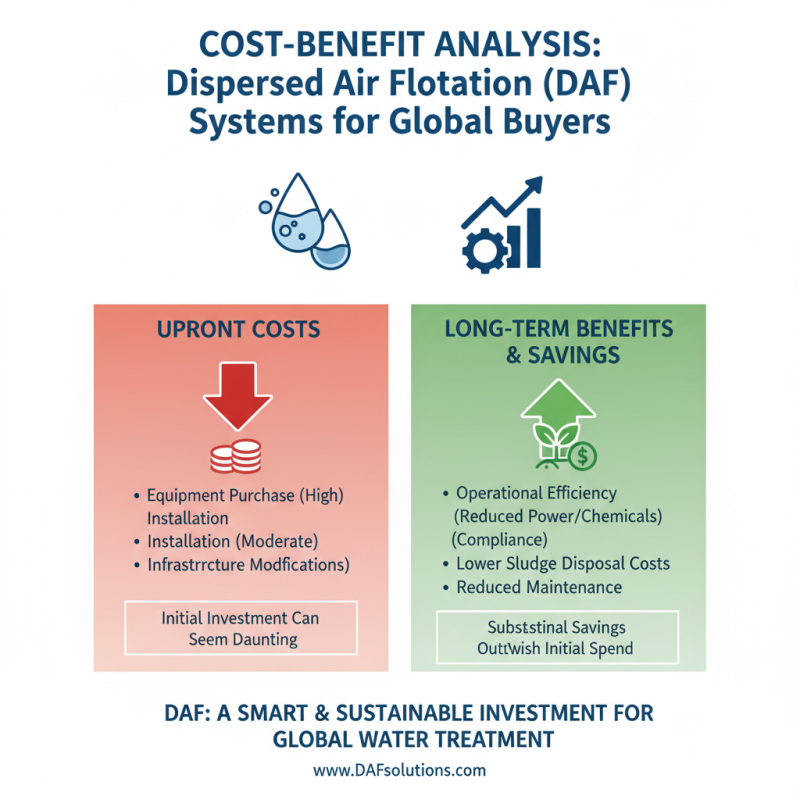
Dispersed Air Flotation (DAF) systems play a crucial role in water treatment. For global buyers, understanding the cost-benefit analysis of these systems is essential. Analyzing their efficiency can highlight their value. Many buyers may initially view the upfront costs as daunting. However, the long-term savings often outweigh initial investments.
Operational costs are another key aspect to consider. DAF systems reduce energy consumption significantly. This reduction can lead to substantial savings over time. Additionally, effective removal of contaminants enhances water quality. This improvement can decrease the need for additional treatment processes, which is cost-effective. Buyers should also consider maintenance costs. While DAF systems require upkeep, the maintenance demands are often manageable.
Moreover, technology advancements are improving DAF systems. New innovations lead to better performance and lower expenses. Still, not every system fits every application. Buyers must carefully assess their specific needs. Choosing the wrong system can lead to inefficiencies. This choice highlights the importance of thorough research. Each project has distinct variables that can affect overall success. Thus, making informed decisions is vital.