Choosing a Micro Dosing Pump for a global project involves more than comparing flow rates and prices. Buyers must match pump performance to the fluid, operating conditions, and process requirements. A small dosing error can affect product consistency, so published accuracy and repeatability figures deserve close attention. Ask how those figures were measured, and under what conditions.
Details matter. Check the required flow range, pressure, fluid viscosity, and wetted materials before comparing models. A pump suited to a thin cleaning solution may not handle a thicker liquid reliably. Confirm chemical compatibility with the manufacturer, especially when fluid temperature or concentration varies. Also consider control options, installation space, maintenance access, spare-part availability, and the clarity of service documentation. These practical points can matter as much as the headline specification.
Global buyers face different supply chains and support arrangements. Verify the seller’s delivery terms, warranty coverage, technical assistance, and any certifications required for the intended application or destination. Requirements vary. Do not assume one certificate or product configuration applies everywhere. This guide offers a structured way to compare pump types and shortlist candidates, using manufacturer data and application-specific checks rather than broad promises. Where performance is critical, request a trial or written confirmation for the actual operating conditions. No pump fits every setup. Even careful selection has limits, and real-world testing may reveal details a datasheet cannot.
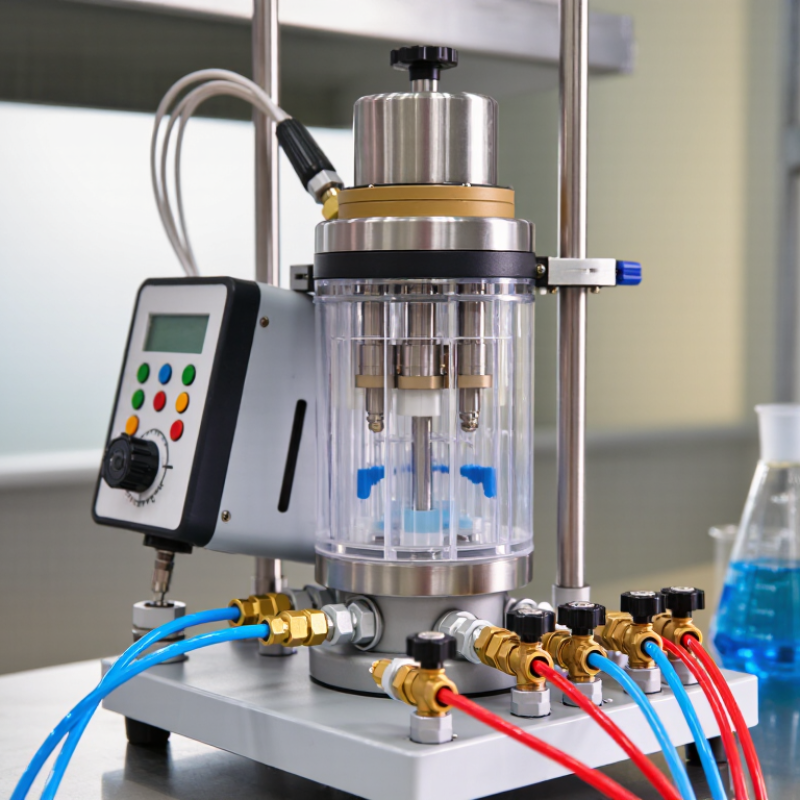
A micro dosing pump meters very small, controlled liquid volumes into a process, often continuously or at set intervals. It is used for water treatment, laboratory testing, food production, and other applications where an accurate feed rate matters. Common designs include diaphragm and peristaltic pumps. The right choice depends on flow range, liquid properties, pressure, and required accuracy. Small volumes matter. A tiny calibration error can change the final concentration, especially when the pump runs for long periods.
In water disinfection, a pump may feed chlorine solution into a line or storage tank. The World Health Organization’s Guidelines for Drinking-water Quality recommend at least 0.2 mg/L free chlorine at the point of delivery. This is a water-quality reference, not a universal pump setting; dose requirements depend on water quality and system design. In practical installations, operators should verify output by measurement rather than trusting the dial alone. That sounds simple on paper. Air bubbles, worn tubing, or changing back pressure can alter delivery.
Tips: Match wetted materials to the chemical, check calibration under actual operating pressure, and inspect tubing or valves regularly. Keep a log of measured output and adjustments. Check twice. A missed detail can matter.
A micro dosing pump delivers small, controlled amounts of fluid. This chart shows the calculated volume delivered at a constant flow rate of 1 mL/min.
Example: At 1 mL/min, a pump delivers 1 mL in 1 minute, 5 mL in 5 minutes, 15 mL in 15 minutes, and 60 mL in 60 minutes. Actual dosing accuracy and flow range depend on the pump and application.
2026 Best Micro Dosing Pump for Global Buyers
Micro dosing pumps deliver small, controlled fluid volumes by moving liquid through a defined chamber or dosing cycle. Their accuracy depends on more than the pump’s display. Fluid viscosity, tubing condition, inlet pressure, and operating speed can all affect the amount delivered.
Small volumes demand care. A practical setup starts with the fluid itself: measure its viscosity, check material compatibility, and keep the supply container near the pump’s recommended position. Then prime the line and collect several doses in a graduated vessel or on a suitable scale. Compare the measured output with the target, and repeat under normal operating conditions. That sounds simple. It isn’t always.
For consistent results, calibrate at the actual flow rate and with the actual fluid, not just with water during setup. Watch for air bubbles, worn tubing, leaks, or changes in back pressure; even a small disturbance can matter at low volumes. Keep a record of settings, measured doses, and maintenance dates. One limitation deserves attention: calibration cannot compensate for an unstable process. Recheck performance after changing fluid, tubing, or speed, and consult the equipment’s technical documentation when dose accuracy is critical.
A micro-dosing pump must deliver a stable, very small flow—not merely reach a low advertised rate. Peristaltic pumps keep fluid inside replaceable tubing, which helps limit contamination and simplifies cleaning. Diaphragm pumps suit continuous dosing and can handle higher discharge pressures, while syringe pumps offer precise, intermittent delivery. Each type has limits. Small details matter.
Wetted materials should match the fluid, temperature, and cleaning routine. Stainless steel may suit many process liquids; ceramic components resist wear, while PTFE and PVDF can offer broad chemical compatibility. Check seals and tubing separately: a compatible pump head does not guarantee compatible elastomers. For example, a fluid may tolerate the tubing but swell a seal over time. Compatibility tables help, but testing with the actual fluid is safer.
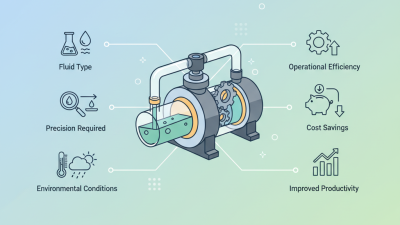
Compare minimum and maximum flow, pressure rating, repeatability, turndown ratio, and pulsation. A stated flow rate may change with viscosity, back pressure, tubing age, or suction lift. Ask whether accuracy figures come from operating conditions similar to yours. Not always. A useful acceptance test collects a measured dose over several cycles, then checks variation. Buyers should also confirm power supply, control signals, calibration access, and spare-part availability for the installation site. A neat specification sheet cannot replace a basic trial.
| Pump Type | How It Works | Typical Flow Range | Typical Pressure Range | Flow Control and Repeatability | Common Wetted Materials | Best-Fit Applications | Key Selection Consideration |
|---|---|---|---|---|---|---|---|
| Syringe pump | A motor-driven plunger pushes liquid from a syringe at a controlled rate. | About 0.001–100 mL/min, depending on syringe size and drive configuration. | Usually low to moderate; commonly up to a few bar. The syringe, fittings, and tubing set the practical limit. | Very fine, programmable delivery; suitable for low-flow dispensing and laboratory protocols. | Glass or polymer syringe barrels; stainless steel, polymer, and elastomer fittings or seals, as applicable. | Analytical chemistry, reagent addition, microfluidics, and laboratory sample delivery. | Check syringe size, minimum controllable flow, refill method, and pressure rating. A smaller syringe generally improves volume resolution but reduces capacity. |
| Peristaltic pump | Rollers or shoes compress flexible tubing to move liquid without contacting it with the pump head. | About 0.01–100 mL/min for many small-format dosing configurations; model and tubing dependent. | Generally low, often below about 3 bar; allowable pressure depends strongly on tubing and pump head. | Speed-controlled and easy to adjust; pulsation and tubing condition can affect low-flow consistency. | Replaceable tubing in materials such as silicone, PharMed-type thermoplastic elastomer, or other application-compatible polymers. | Bioprocess sampling, liquid transfer, water treatment, and applications where easy tubing replacement is valuable. | Confirm chemical compatibility, tubing life, back-pressure capability, and whether pulsation is acceptable. |
| Diaphragm metering pump | A reciprocating diaphragm displaces a repeatable volume through inlet and outlet check valves. | About 0.1–100 mL/min for small metering designs; actual turndown and minimum flow vary by model. | Commonly about 1–20 bar in compact designs; higher-pressure versions are available. | Stroke length or stroke frequency can regulate output; calibration may be needed for each liquid and operating condition. | PVDF, polypropylene, PTFE, ceramic, stainless steel, and compatible elastomers, depending on pump design. | Chemical dosing, water treatment, cleaning systems, and controlled addition of corrosive liquids. | Match the diaphragm, valve, and seal materials to the chemical; consider gas content, viscosity, and pulsation. |
| Plunger or piston metering pump | A close-fitting plunger or piston delivers liquid through precision valves in a displacement chamber. | About 0.001–100 mL/min in precision configurations; available ranges depend on head size and drive. | From several bar to hundreds of bar in specialized high-pressure designs. | Can provide accurate, repeatable dosing when properly calibrated and operated within its intended range. | Stainless steel, ceramic, sapphire, PTFE, and chemically compatible seals or valve materials. | High-pressure reagent delivery, chromatography, small-volume injection, and demanding process dosing. | Check seal compatibility, particle tolerance, maintenance requirements, and the minimum stable flow at the required pressure. |
| Micro gear pump | Meshing gears carry liquid from the inlet to the outlet in small, repeated volumes. | About 0.01–500 mL/min across small gear-pump designs; the usable range depends on size, speed, and viscosity. | Often several bar to tens of bar, subject to the pump’s design and fluid properties. | Continuous, low-pulsation delivery; flow is closely related to rotational speed but may vary with slip and viscosity. | Stainless steel, engineered polymers, and other matched gear and housing materials; seals selected for the fluid. | Ink, coatings, oils, additives, and other clean, compatible liquids requiring steady flow. | Best suited to clean liquids. Evaluate viscosity, lubrication properties, particle content, and allowable leakage or slip. |
| Piezoelectric micro pump | A piezoelectric actuator flexes a membrane or chamber to move very small liquid volumes. | Often in the microliter-per-minute to milliliter-per-minute range; performance depends on chamber and drive frequency. | Typically low to moderate; verify the specified head pressure and flow at the intended operating point. | Compact electronic control and fast response; output can be affected by liquid properties and system back pressure. | Depending on construction: silicon, glass, ceramic, stainless steel, and compatible polymer or elastomer layers. | Portable analytical instruments, lab-on-chip devices, medical instrumentation, and compact fluid systems. | Check priming requirements, operating voltage, fluid compatibility, allowable back pressure, and integration interfaces. |
Specification note: The figures above are indicative selection ranges for pump categories, not guaranteed ratings for every model. Maximum flow and pressure are usually not available simultaneously. Confirm the manufacturer’s pump curve, accuracy and repeatability definitions, fluid viscosity, temperature, chemical compatibility, and operating conditions before purchase.
2026 Best Micro Dosing Pump for Global Buyers
How to Compare Micro Dosing Pumps for Different Applications
A micro dosing pump should match the fluid, target flow, and operating conditions—not just the advertised accuracy. Small flows expose errors. Compare minimum and maximum flow, turndown ratio, repeatability, and performance against backpressure. A pump rated accurately at one setting may drift at another. Ask for test data across your real operating range, not a single best-case figure.
Fluid properties change the choice. Check viscosity, temperature, abrasiveness, and chemical compatibility with every wetted part. For a thick liquid, confirm suction capability and whether tubing or valves can clog. For frequent cleaning, review how easily components can be inspected and replaced. Test the actual fluid. No specification sheet captures every real-world variation, and that limitation deserves attention.
Control and maintenance matter too. Confirm whether the pump accepts the required signals, handles pulsed operation, and supports calibration checks. The U.S. Department of Energy’s 2006 Improving Pumping System Performance sourcebook reports that pumping systems use nearly 20% of global electricity demand, with pumps consuming 25–50% of energy in some industrial facilities. That broader figure is not specific to micro dosing, but it reinforces the value of avoiding oversized equipment and unnecessary recirculation. Compare total operating needs, not purchase price alone.
Choosing a micro dosing pump in 2026 starts with the process, not the catalog. Define the required flow range, dosing interval, fluid temperature, and operating pressure. A pump rated for a tiny flow may still struggle with a viscous liquid or frequent starts. Check whether the manufacturer specifies accuracy across your actual operating range, rather than at one ideal test point. Small details matter.
Confirm wetted materials against the fluid’s chemical properties, and ask for compatibility data in writing. Review calibration procedures, repeatability results, and how performance changes with tubing wear or temperature. For international purchasing, clarify voltage, control signals, spare-part availability, shipping protection, and technical support across time zones. Request drawings and operating instructions before ordering. A polished datasheet can leave practical questions unanswered; even experienced buyers can overlook setup and maintenance costs.
Tips: Send suppliers your real flow range, fluid description, pressure, and duty cycle. Ask for a sample test or documented test conditions when accuracy is critical. Compare total operating needs, not just purchase price. Check whether replacement parts are identifiable and readily available. If two models look nearly identical, ask what differs in their calibration method and service interval. Don’t assume “micro” means suitable for every low-flow task.