Leave Your Message

How to Choose Mini Max Dosing Pumps for Global Buyers?

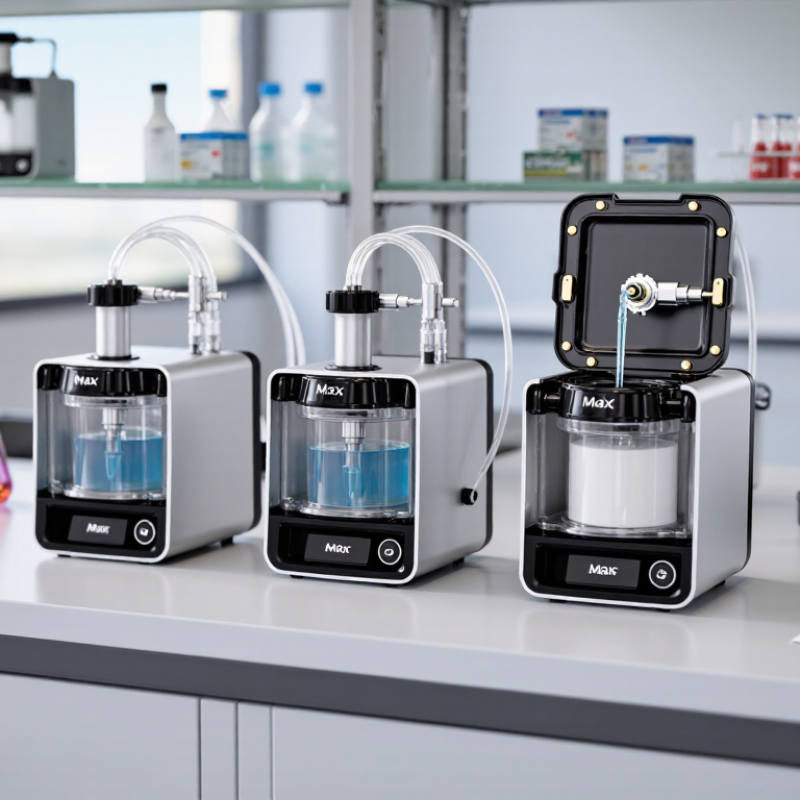
Choosing Mini Max Dosing Pumps for international projects requires more than comparing prices and catalog photographs. Buyers must connect pump performance with the actual dosing task, fluid properties, installation environment, and maintenance capacity. A small pump may handle disinfectant, nutrients, water-treatment chemicals, or laboratory reagents, but each application demands careful verification.

Start with the required flow range, pressure, accuracy, and operating cycle. Confirm whether the pump supports continuous or intermittent dosing. Check wetted materials, diaphragm construction, sealing quality, and chemical compatibility. A pump that performs well with clean water may fail quickly with abrasive, corrosive, or high-viscosity fluids. Temperature matters too. So does altitude.

Global buyers should review voltage, frequency, control signals, connection standards, documentation, and available spare parts. Reliable suppliers can provide test data, installation guidance, traceable quality records, and realistic delivery information. Certifications should match the destination market and application. Never assume that one certificate covers every country.

Field experience often reveals the difference. Ask how the pump behaves after months of cycling, not only during a factory demonstration. Listen for excessive noise. Inspect calibration stability. Confirm whether operators can replace a diaphragm without special tools. A low purchase price may hide costly downtime, customs delays, or unavailable parts. This is easy to overlook.

No checklist is perfect. Product selection still involves judgment. Buyers should request samples, verify performance under representative conditions, and compare total ownership costs. A dependable Mini Max Dosing Pumps solution should deliver controlled dosing, practical maintenance, and stable support across borders. That standard is demanding, but it prevents attractive specifications from becoming expensive surprises.
How to Choose Mini Max Dosing Pumps for Global Buyers?

Define Mini Max Dosing Pumps by Flow, Pressure, and Accuracy

How to Choose Mini Max Dosing Pumps for Global Buyers?

Define Mini Max Dosing Pumps by Flow, Pressure, and Accuracy

For global buyers, flow rate should match the real process demand. A pump rated at 10 L/h may not deliver that volume continuously. Check its output at the required pressure, temperature, and liquid viscosity. Flow comes first. Select a useful adjustment range, such as 1–10 L/h, instead of choosing maximum capacity alone. Oversizing can reduce control quality and increase operating costs.

Pressure defines whether the pump can overcome pipeline resistance. Review discharge pressure, valve resistance, elevation, and possible backpressure. A small pump may handle clean water well but struggle with thicker fluids. In field inspections, blocked injection points often reveal weak pressure planning. Leave a practical margin, but avoid excessive pressure ratings. Extra capacity does not automatically improve dosing.

Accuracy requires more than a specification sheet. Ask whether the stated accuracy applies to steady flow, repeated pulses, or the full adjustment range. Confirm calibration procedures and test conditions. A tolerance of ±1% may change when tubing softens or air enters the suction line. Keep the suction line short, use compatible materials, and install a stable calibration column. I have seen operators trust factory figures without checking site conditions. That assumption can be costly. Document the actual stroke setting, pressure, fluid temperature, and measured output during commissioning. Then compare the results after several operating cycles.
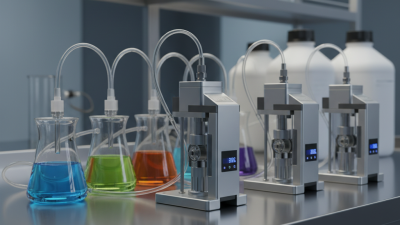
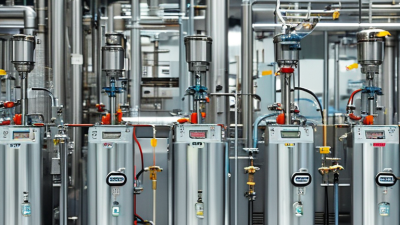
Compare ±1% Metering Accuracy and 10:1 Turndown Requirements

How to Choose Mini Max Dosing Pumps for Global Buyers?

A mini dosing pump should be judged by real operating conditions, not only its brochure rating. If ±1% metering accuracy is required, ask whether that figure means full-scale accuracy, flow-rate accuracy, or repeatability. These are different measurements. Test the pump at the lowest, middle, and highest required flow rates. A unit delivering 10 liters per hour should remain stable near 1 liter per hour when a 10:1 turndown is specified. Small errors become visible there.

Check calibration procedures, discharge pressure, fluid temperature, and viscosity. A pump may achieve ±1% with clean water, yet perform differently with thicker process fluids. I have seen specifications look excellent until back pressure changed. That detail is easy to miss. It should not be.

Tips: Request a witnessed flow test. Confirm the 10:1 range under your actual pressure. Review materials for chemical compatibility. Ask how often calibration is recommended. Also check power input, control signals, spare parts, and service access in your destination country. A compact pump is not automatically a simple pump. Sometimes, a slightly larger model provides steadier control and easier maintenance.

How to Choose Mini Max Dosing Pumps for Global Buyers? - Compare ±1% Metering Accuracy and 10:1 Turndown Requirements
The figures below are representative engineering ranges for pump selection. Actual performance depends on fluid properties, pressure, temperature, installation, calibration, and control method.
Pump Type Typical Flow Range Practical Turndown Typical Metering Accuracy Typical Pressure Capability Best Application Fit Ability to Meet ±1% and 10:1 Requirements Key Selection Risks
Solenoid-Driven Diaphragm Approximately 0.5–100 L/h Up to about 10:1 with pulse-frequency or stroke-length control Typically ±1–2%; ±1% generally requires calibration and stable back pressure Commonly up to approximately 10–20 bar, depending on model and flow rate Water treatment chemicals, pH correction, disinfectants, and compact skid systems Possible when operated within the calibrated range and supplied with suitable control resolution Accuracy can change with gas bubbles, check-valve wear, pulsation, and fluctuating discharge pressure
Motor-Driven Diaphragm Approximately 1–500 L/h Commonly 10:1 or higher with variable-speed and stroke control Typically ±0.5–1% after calibration under defined operating conditions Commonly up to approximately 10–25 bar, depending on design Continuous chemical metering where stable flow and good control resolution are required Strong candidate for a ±1% accuracy and 10:1 turndown specification Higher initial cost, larger package size, and potential diaphragm fatigue in difficult services
Motor-Driven Piston or Plunger Approximately 0.1–2,000 L/h Commonly 10:1; wider ranges may require multiple control methods Typically ±0.5–1% when correctly sized, calibrated, and operated at steady conditions Often approximately 20–400 bar, depending on pump construction and flow rate High-pressure injection, boiler chemicals, process additives, and low-flow precision dosing Strong candidate, particularly when pressure capability and repeatability are priorities Less tolerant of abrasive or solids-containing fluids; pulsation dampening may be required
Peristaltic Approximately 0.01–100 L/h for compact units Often 10:1 or higher through speed control Typically ±1–2%; short-term repeatability can be good, while long-term accuracy depends on tubing condition Usually approximately 1–8 bar for compact dosing applications Shear-sensitive fluids, slurries, dirty fluids, laboratory systems, and applications requiring fluid isolation Conditional; ±1% may be achievable over a limited operating period with frequent calibration or tube replacement Tubing elasticity, temperature, back pressure, compression setting, and tube wear affect delivered volume
Progressive Cavity Approximately 0.1–5,000 L/h Commonly around 10:1 with variable-speed control Typically ±1–2%; actual accuracy depends strongly on stator condition and slip Often approximately 6–30 bar, depending on stages and fluid properties Viscous fluids, polymers, sludge, emulsions, and fluids containing suspended solids Conditional; suitable when viscosity is stable and wear compensation is included Slip increases with wear, temperature, and reduced viscosity; dry running can damage the stator
Minimum Buyer Requirement Define normal flow, minimum flow, maximum flow, and any start-up or peak-flow condition Minimum flow should be no greater than one-tenth of maximum flow for a 10:1 turndown Specify whether ±1% means instantaneous accuracy, average batch accuracy, or repeatability Confirm rated pressure at the required maximum flow, not only the pump's shut-off pressure Document viscosity, solids content, gas content, temperature, corrosiveness, and compatibility requirements Require test conditions, calibration method, and acceptance criteria in the technical specification A broad accuracy claim without defined operating conditions is not sufficient for global purchasing
Technical note: Turndown ratio is calculated as maximum controllable flow divided by minimum controllable flow. Metering accuracy is not the same as repeatability; both should be specified separately. A flow meter or gravimetric calibration procedure is recommended when the application requires verified ±1% dosing performance.

Match Pump Materials to Chemicals, Temperature, and pH Conditions

How to Choose Mini Max Dosing Pumps for Global Buyers?

For global buyers, a mini max dosing pump should be selected by its wetted materials, not flow rate alone. The same 10 L/h duty can behave differently with sodium hypochlorite, sulfuric acid, or a warm solvent. Record concentration, temperature, pH, solids, and cleaning chemicals before requesting quotations. Small omissions create large failures.

Polypropylene suits many mild aqueous chemicals, while PVDF offers broader resistance to oxidizers and acids. PTFE is valuable for diaphragms, seats, and seals exposed to aggressive fluids. However, temperature changes the decision. A material chart rated at 20°C may not protect a pump at 60°C. Stainless steel can perform well in many services, yet chlorides may cause pitting. Ceramic or reinforced components may help with abrasion, but they can increase cost and reduce impact tolerance. Check the complete wetted path, including valve balls and O-rings.

The U.S. Department of Energy reports that pumping systems can represent 25–50% of energy use in some industrial facilities (Improving Pumping System Performance). Correct material selection supports stable dosing and avoids premature replacement. ASTM D543 provides a useful reference for testing plastics against chemical reagents, but laboratory data is not a field guarantee.

Ask suppliers for concentration-specific compatibility evidence and temperature limits. Run a small immersion or circulation test when the chemical is unfamiliar. I would not rely on pH alone; a pH 7 liquid can still attack elastomers. That detail is easy to miss.

Verify API 675, IP Ratings, Voltage, and Global Certification Needs

Choosing Mini Max Dosing Pumps for Global Buyers

When selecting a mini max dosing pump, verify API 675 compliance instead of trusting a sales description. API 675 covers controlled-volume reciprocating pumps, including design, performance, and testing expectations. Ask for the applicable certificate, test records, and pump specification sheet. Check whether the document matches the exact model, wetted materials, pressure range, and serial number. A generic certificate may look convincing but prove little.

Inspect the IP rating carefully. IP65 can resist dust and water jets, but it does not guarantee chemical compatibility or safe immersion. Confirm the enclosure rating against the actual installation, especially near washdown areas. Voltage and frequency also need close attention. A pump marked 230 V, 50 Hz may not suit a 220 V, 60 Hz supply. Check phase, motor current, plug type, control signals, and starting conditions. Small mismatches create large delays.

Certification requirements vary by destination and site classification. Depending on the project, buyers may need local conformity documents, electrical safety approvals, or hazardous-area certification. Request current certificates, not screenshots from old projects. Verify the certification body and scope independently. In field checks, overlooked accessories often cause the real problem: the pump complies, but the control panel does not. I would also confirm calibration procedures and spare-part availability before ordering. This step is easy to skip. It should not be.

Calculate Total Cost from Energy, Spares, Shipping, and Service Support

When global buyers compare mini max dosing pumps, purchase price can hide the real expense. Calculate total cost over the pump’s operating life. The U.S. Department of Energy identifies pumping systems as a major industrial electricity user, often near one-quarter of industrial consumption. A small motor still runs thousands of hours annually. Multiply its rated power by operating hours, local electricity rates, and expected efficiency losses.

Spare parts need equal attention. A low-cost pump may require frequent diaphragm, valve, seal, or tubing replacement. Ask for replacement intervals, kit prices, stock locations, and compatibility records. A missing valve can stop dosing for days. That delay may cost more than the pump. My first cost estimate would look too neat if it ignored emergency purchases. Real plants rarely operate under perfect conditions.

Shipping is another variable. UNCTAD’s Review of Maritime Transport reports that more than 80% of global merchandise trade by volume moves by sea. Ocean freight may reduce unit cost, but it adds customs handling, port charges, insurance, and longer replenishment time. Compare delivered cost, not factory price. Service support also needs measurable terms: response time, remote troubleshooting, technician coverage, training, and warranty exclusions. A simple spreadsheet should include energy, scheduled spares, freight, taxes, downtime risk, and annual service fees. Leave a contingency line. Ten percent may be reasonable for planning, but it is not a universal rule.