
Leave Your Message
Choosing Mini Max Dosing Pumps for global sourcing requires more than comparing catalog prices. Buyers must connect flow accuracy, chemical compatibility, pressure stability, maintenance access, and supplier reliability. A pump that performs well in a clean laboratory may struggle beside a dusty production line. Small differences matter. Tubing hardness, valve materials, calibration methods, and motor control can change real-world performance.
Pump specialist Dr. Lev Nelik offers a useful selection principle: “The right pump is chosen from the process, not from the pump catalogue.” This idea keeps sourcing decisions practical. Before contacting manufacturers, define the liquid viscosity, temperature range, dosing rate, suction lift, discharge pressure, and operating cycle. Request test data under comparable conditions. Ask whether the quoted output was measured with water or with your actual fluid. That detail can expose an uncomfortable gap.
Supplier evaluation also deserves careful attention. Review factory experience, quality-control records, spare-parts availability, documentation, and communication speed. Confirm whether each Mini Max Dosing Pumps model supports regional voltage requirements and recognized safety expectations. Check packaging strength, labeling, and replacement-part lead times. A low unit price may become expensive after repeated calibration failures or delayed repairs.
There is no perfect checklist. Some buyers overvalue technical specifications and overlook service response. Others trust polished samples too quickly. A better approach combines verified data with a small pilot order. Observe noise, pulsation, leakage, temperature rise, and dosing consistency during extended operation. Record the results. Then compare suppliers using evidence, not promises. Global sourcing rewards patience, but deadlines rarely allow unlimited testing. That tension should remain visible throughout the decision.
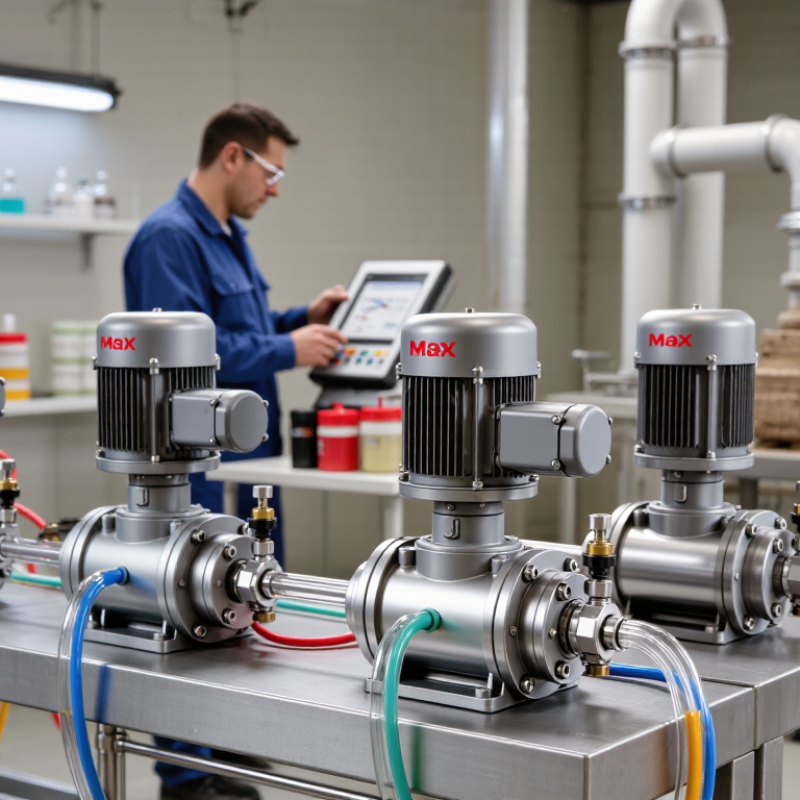
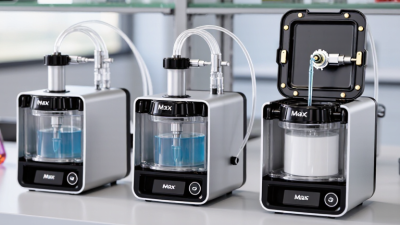
Mini Max dosing pumps are compact metering units designed to inject controlled liquid volumes into a process line. They typically combine a small motor, diaphragm or piston, flow-control settings, and chemical-resistant wetted parts. The term is not a universal technical standard. Suppliers may use it for different capacities, so buyers should confirm flow range, pressure rating, accuracy, and connection size.
Their core applications include drinking-water treatment, cooling systems, wastewater processing, food production, agriculture, and laboratory equipment. Chlorine, pH agents, coagulants, nutrients, and cleaning chemicals require stable dosing. The 2024 MarketsandMarkets Metering Pumps Market report projects growth from approximately USD 6.1 billion in 2024 to USD 8.2 billion by 2029. Water treatment remains a major demand driver. The WHO/UNICEF Joint Monitoring Programme reported that 2.2 billion people lacked safely managed drinking water in 2022, increasing pressure on treatment infrastructure.
In practical sourcing, a pump should be tested with the actual liquid, not only clean water. Viscosity, temperature, suspended solids, and chemical concentration can change performance. Request calibration records, material certificates, cycle-life data, and spare-part availability. ISO 9001 certification can support process consistency, but it does not prove dosing accuracy. That distinction matters. A compact pump may look efficient on a test bench yet struggle with pulsing, air locking, or seal wear in the field. Buyers should also compare energy use, control signals, maintenance access, and regional compliance requirements before selecting a model.
| Data Dimension | Definition or Typical Data | Why It Matters for Selection | Common Application Examples |
|---|---|---|---|
| Product Definition | A mini dosing pump is a compact positive-displacement pump designed to deliver a controlled volume of liquid. “Mini” generally refers to a small footprint, low power demand, and low to moderate flow capacity rather than one universal size standard. | Product dimensions and performance should be confirmed from the supplier’s technical datasheet because the term “mini” is not an internationally standardized specification. | Portable instruments, compact analyzers, laboratory equipment, medical devices, water-treatment units, and small chemical dosing systems. |
| “Max” Performance Range | Maximum flow, pressure, operating temperature, duty cycle, and fluid compatibility vary by pump design. A practical sourcing comparison should record the exact maximum values instead of relying on the product name. | Operating continuously at a maximum rating can shorten service life. Select a pump with suitable design margin for the required application. | High-frequency dispensing, compact process skids, reagent delivery, cleaning systems, and proportional chemical injection. |
| Pump Mechanism | Common mechanisms include diaphragm, piston, peristaltic, gear, and solenoid-driven metering designs. Each mechanism has different behavior concerning pulsation, self-priming, shear, leakage, and maintenance. | The mechanism influences accuracy, allowable fluid viscosity, particle tolerance, noise, and expected service life. | Diaphragm pumps for chemicals, peristaltic pumps for contamination-sensitive dosing, piston pumps for precise metering, and gear pumps for relatively viscous liquids. |
| Flow-Rate Range | Specify the minimum, nominal, and maximum flow in units such as mL/min, L/h, or m³/h. The usable range should be verified at the actual pressure, temperature, and fluid viscosity. | A pump may reach its advertised maximum flow only under defined test conditions. A complete flow-versus-pressure curve gives a more reliable comparison. | Microliter or milliliter dosing in instruments; low-flow chemical injection; nutrient dosing; and controlled transfer of process liquids. |
| Pressure and Head | Record maximum discharge pressure, suction lift, and differential pressure. Pressure is commonly stated in bar, kPa, or psi; liquid head may be stated in meters. | Flow capacity normally decreases as discharge pressure increases. The pump must meet the required pressure at the required flow, not at zero backpressure. | Reverse-osmosis pretreatment, boiler-water chemical dosing, analytical instruments, filtration systems, and spray or washing equipment. |
| Dosing Accuracy | Accuracy describes how closely the delivered volume matches the target. Repeatability describes how consistently the pump produces the same volume over repeated cycles. Both can be affected by pressure, temperature, tubing elasticity, and fluid properties. | For laboratory, medical, and process-control applications, request test conditions and measurement methods rather than comparing a single percentage figure. | Reagent addition, calibration solutions, disinfectant dosing, nutrient delivery, and automated sample preparation. |
| Control Method | Typical control options include fixed-speed operation, variable-voltage or variable-current control, pulse control, stepper-motor control, and digital interfaces such as RS-485 or industrial communication protocols. | Control compatibility affects integration cost, dosing resolution, automation capability, and electrical certification requirements. | OEM instruments, programmable laboratory systems, smart water-treatment equipment, and remotely monitored dosing cabinets. |
| Wetted Materials | Frequently used materials include polypropylene, polyethylene, PTFE, PVDF, stainless steel, ceramic, silicone, EPDM, and FKM. The correct choice depends on the chemical, concentration, temperature, and exposure time. | Material compatibility prevents swelling, cracking, corrosion, contamination, and premature failure. Compatibility charts should be checked for the exact fluid and operating conditions. | Acids, alkalis, oxidizing agents, solvents, detergents, ultrapure water, disinfectants, and laboratory reagents. |
| Fluid Characteristics | Evaluate viscosity, density, temperature, volatility, abrasiveness, gas content, particle size, crystallization tendency, and whether the liquid is hazardous or sterile. | Fluid properties can change priming behavior, flow accuracy, seal life, pressure capability, and the need for filtration or degassing. | Low-viscosity water-based chemicals, mildly viscous additives, particle-free reagents, and selected fluids requiring gentle handling. |
| Self-Priming and Dry-Run Capability | Some compact diaphragm and peristaltic designs can self-prime or tolerate short dry-running periods, while others require flooded suction or continuous lubrication by the process fluid. | Confirm the permissible suction lift, priming time, dry-run duration, and restart conditions. Do not assume these features from the pump mechanism alone. | Portable dosing equipment, tank-mounted systems, sampling devices, and applications with intermittent operation. |
| Pulsation and Flow Smoothness | Reciprocating pumps naturally produce pulsating flow. Peristaltic, gear, or multi-head designs may provide different flow characteristics, while dampers can reduce pulsation in a system. | Flow pulsation can affect sensors, spray patterns, mixing quality, and dosing accuracy. Review the complete fluid circuit rather than the pump alone. | Analytical instruments, chromatography-related equipment, spray systems, precision mixing, and continuous sampling. |
| Electrical Requirements | Common miniature pump configurations use low-voltage DC supplies such as 5 V, 12 V, or 24 V, while some systems use AC motors or external drivers. Record voltage, current, power, connector type, and protection features. | Electrical compatibility, inrush current, electromagnetic compatibility, and control signals must match the destination equipment and local regulations. | Battery-powered devices, control panels, laboratory analyzers, portable water systems, and industrial automation equipment. |
| Operating Environment | Define ambient temperature, humidity, dust or water exposure, vibration, installation orientation, altitude, and indoor or outdoor use. Ingress protection ratings may be relevant for the complete assembly. | Environmental conditions influence insulation, sealing, corrosion resistance, motor cooling, and long-term reliability. | Factory equipment, mobile instruments, outdoor water-treatment units, medical equipment, and enclosed control systems. |
| Noise and Vibration | Noise is commonly reported in dB(A), although test distance and operating conditions must be stated. Vibration depends on motor type, speed, mounting, pulsation, and balance. | Low noise and vibration are important for medical, laboratory, office, residential, and portable products. | Diagnostic instruments, indoor air-treatment systems, benchtop analyzers, and consumer or professional appliances. |
| Service Life and Duty Cycle | Ask for expected operating hours, cycle count, rated duty cycle, diaphragm or tube replacement interval, and test conditions. Service life is application-dependent and should not be treated as a universal value. | A pump rated for intermittent use may not be suitable for continuous 24-hour operation. Maintenance intervals affect total ownership cost. | Batch dosing, periodic cleaning, continuous process control, equipment cooling, and automated reagent delivery. |
| Connection Standard | Common connection formats include barbed hose fittings, compression fittings, threaded ports, sanitary fittings, and custom manifolds. Sizes should be specified by actual tubing or port dimensions and applicable standards. | Correct connections reduce leakage, installation time, dead volume, and the need for adapters in global projects. | OEM assemblies, laboratory tubing circuits, chemical cabinets, filtration systems, and modular water-treatment equipment. |
| Global Sourcing Documentation | Request a datasheet, dimensional drawing, performance curve, material declaration, electrical specification, inspection standard, packaging specification, and applicable conformity documentation. | Complete documentation supports engineering approval, customs processing, quality control, and consistent repeat orders across markets. | International OEM procurement, contract manufacturing, regulated equipment, and multi-country maintenance programs. |
| Quality Verification | Useful checks include incoming visual inspection, dimensional inspection, leak testing, flow testing, pressure testing, electrical safety testing, and sample-based endurance testing. | A documented acceptance plan helps verify that delivered pumps match the approved sample and stated performance. | Pre-shipment inspection, production-line qualification, incoming quality control, and recurring supplier audits. |
| Packaging and Logistics | Assess protection against moisture, impact, electrostatic discharge, contamination, and deformation of tubes or fittings. Confirm carton labeling, spare parts, batch traceability, and storage conditions. | Proper packaging reduces transit damage and simplifies identification during assembly and after-sales service. | Air freight, sea freight, mixed-component shipments, spare-part inventories, and long-distance international distribution. |
| Total Cost of Ownership | Consider purchase price, driver or controller cost, tubing and seal replacement, energy consumption, calibration, installation, downtime, freight, duties, and after-sales support. | The lowest unit price may not provide the lowest long-term cost if the pump has high maintenance needs or poor process stability. | High-volume OEM production, installed treatment systems, laboratory service contracts, and industrial replacement programs. |