How to Choose a Dissolved Air Flotation System in 2026?
Choosing a Dissolved Air Flotation System in 2026 requires more than comparing tank dimensions or catalog prices. Industrial wastewater is becoming harder to treat, especially when it contains suspended solids, fats, oils, metals, or rapidly changing chemical loads. The U.S. Environmental Protection Agency identifies nutrient pollution as one of the most widespread water-quality challenges in the country. Meanwhile, the UN World Water Development Report 2024 highlights growing pressure on freshwater resources and treatment infrastructure. These trends make reliable solid-liquid separation increasingly important.
A practical selection begins with the wastewater itself. Measure flow variation, turbidity, particle size, temperature, pH, oil concentration, and sludge characteristics. A clear sample in the morning may become a thick, foaming mixture after production begins. That detail matters. Operators should compare recycle ratios, air-to-solids loading, hydraulic surface loading, retention time, and chemical demand. The correct design must also match available floor space, operator skills, maintenance access, and discharge limits. Energy consumption deserves attention, because pumps and air saturation systems can influence long-term operating costs.
Recent market studies from Grand View Research and MarketsandMarkets report continued growth in water and wastewater treatment equipment, driven by industrial reuse, stricter discharge expectations, and infrastructure investment. However, market growth does not guarantee good equipment selection. No choice is perfect. A larger unit may provide stability but increase capital and cleaning requirements. A compact unit may reduce space needs but offer less tolerance during shock loads. Reviewing pilot-test results, verified performance data, service records, and total lifecycle cost can support a more defensible decision in 2026.
Define Influent Loads: Flow, TSS, FOG, and Peak Factors
Choosing a dissolved air flotation system in 2026 starts with measured influent loads, not equipment catalogues. Record average, minimum, and hourly peak flow for several weeks. The U.S. EPA’s 2004 Primer for Municipal Wastewater Treatment Systems reports typical domestic wastewater TSS near 210 mg/L, but industrial streams can vary widely. A single sample is weak evidence.
Flow affects hydraulic loading, while TSS determines solids capture demand. FOG needs separate attention. The Water Environment Federation’s Manual of Practice No. 8 identifies flow variation and solids loading as core design inputs. Measure FOG during production changes, cleaning cycles, and after weekends. Kitchen or food-processing discharges may show short, severe spikes. They can disappear before the sampler arrives.
Peak factors must be calculated, not guessed.
Compare the 95th-percentile hourly flow with the daily average, then test unusual operating days. EPA design guidance commonly uses peaking factors around 2 to 4 for municipal flows, but industrial sites may exceed these values. Real plants are messier. Use composite sampling for TSS and FOG, plus grab samples during suspected peaks. I would also challenge the laboratory result: poor mixing, cold weather, or settled solids can distort it. A conservative design should evaluate average load, peak load, and a credible upset case before selecting flotation capacity, recycle rate, and chemical demand.
Match Pretreatment Needs to 20–100 μm DAF Bubble Performance
How to Choose a Dissolved Air Flotation System in 2026?
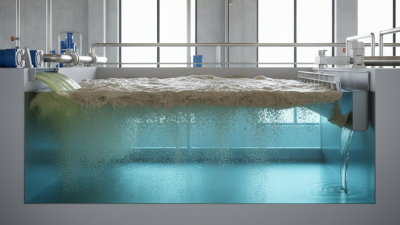
Choosing a dissolved air flotation (DAF) system in 2026 starts with pretreatment, not equipment size. Coagulation and flocculation determine whether 20–100 μm bubbles can capture contaminants effectively. Fine bubbles provide large attachment surfaces for suspended solids, fats, oils, algae, and some metal hydroxide flocs. They cannot repair weak chemistry. A poorly formed floc may pass through the flotation zone, even with excellent air saturation. That distinction matters.
Match bubble performance to particle behavior. For dense mineral solids, stronger flocs and stable hydraulic conditions may matter more than the smallest bubbles. For light oils or algae, smaller bubbles can improve attachment and flotation speed. However, chasing a narrow bubble size is risky. Feed temperature, viscosity, surfactants, and recycle pressure can shift actual performance. Ask for measured bubble distribution, not a brochure range. Test real wastewater, including seasonal variation, before final selection. Jar tests help, but pilot trials reveal skimmer loading, sludge concentration, and carryover.
Review pretreatment targets with system engineers and plant operators. Confirm pH control, coagulant dose, polymer mixing, contact time, recycle ratio, and hydraulic loading. A practical design should maintain stable effluent quality during peak flow, not only during laboratory testing. Keep maintenance accessible: saturated-air systems need reliable pumps, nozzles, valves, and pressure controls. I would leave design margin for uncertain influent data. More capacity is not always better. Oversizing can reduce solids capture and increase energy use. Record the actual bubble cloud, sludge blanket, and effluent trend during each trial.
Size Hydraulic Capacity at 5–15 m³/m²·h Surface Loading
How to Choose a Dissolved Air Flotation System in 2026?
Size hydraulic capacity at a surface loading rate of 5–15 m³/m²·h. This rate compares influent flow with the effective flotation area. For example, 50 m³/h at 10 m³/m²·h requires about 5 m² of effective area. Do not size from tank volume alone. Flow distribution, recycle water, inlet turbulence, and usable surface area can change actual performance.
Begin with measured average and peak flows. Then review suspended solids, oils, temperature, and chemical demand. A lower loading rate often provides more stable clarification when solids vary sharply. Higher rates may reduce equipment size, but they leave less operating margin. Field testing or a pilot unit is valuable, especially when sludge rises slowly or forms fragile mats. Real wastewater rarely behaves like a laboratory sample.
Tips: Keep a design margin for peak flow and seasonal changes. Check the nozzle arrangement and surface skimmer path. Ask for test data using wastewater similar to yours. Confirm whether the stated area excludes inactive zones. A spreadsheet can catch errors, but it cannot reveal poor floc strength. I have seen designs meet the hydraulic calculation and still produce cloudy effluent. The missing detail was usually pretreatment, not flotation capacity. Use the 5–15 m³/m²·h range as a starting window, then adjust it with operating evidence.
How to Choose a Dissolved Air Flotation System in 2026?
Preliminary DAF sizing based on a surface loading rate of 5–15 m³/m²·h. Required flotation area is calculated as:
Area = Hydraulic Flow ÷ Surface Loading Rate.
Lower surface loading rates require more tank area and generally provide greater hydraulic retention capacity.
Final equipment selection should also consider solids loading, influent characteristics, recycle ratio, clarification performance, and available space.
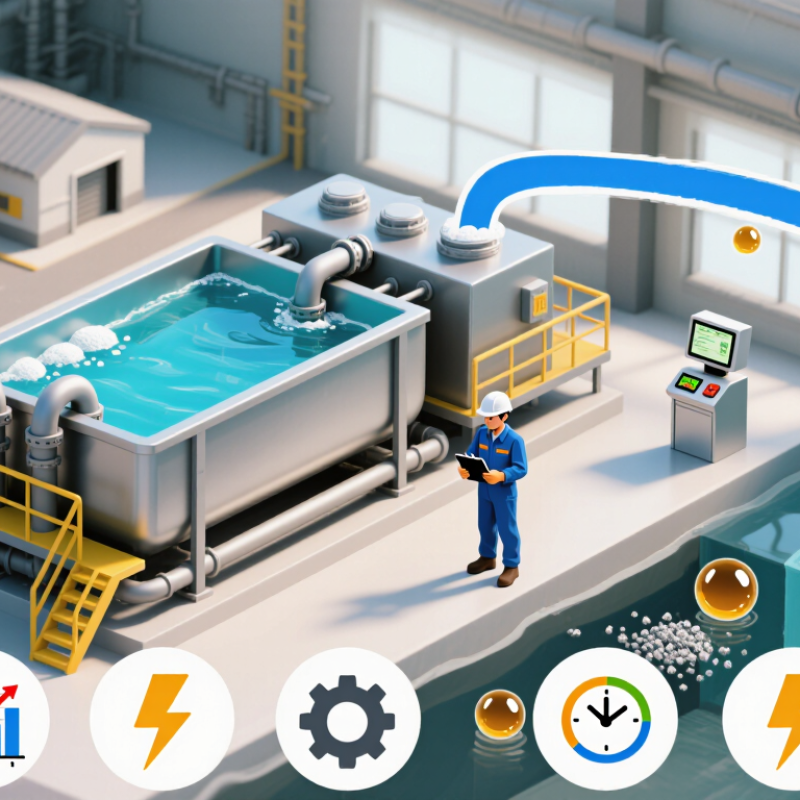
Evaluate Chemical Demand, Sludge Yield, Energy, Automation, and Compliance
Choosing a Dissolved Air Flotation System in 2026 requires more than comparing removal rates. Chemical demand often controls operating cost. A jar test should measure coagulant, polymer, pH, and temperature effects. Small dosage changes can alter sludge volume significantly. The Water Environment Federation’s MOP 8 guidance supports pilot testing before full-scale design. Laboratory results, however, can flatter performance.
Sludge yield deserves careful measurement. Record dry solids, float blanket thickness, moisture, and hauling frequency during variable loading. A system producing clearer water may still create expensive, wet sludge. Energy is another practical concern. The U.S. EPA reports that wastewater treatment can consume 30–40% of municipal electricity use. Compare recycle-pump power, compressor demand, and start-up behavior, not only nameplate efficiency. I would request seasonal testing. Winter data is often missing.
Automation should protect treatment quality without hiding weak process control. Online turbidity, pressure, flow, and pH monitoring can support faster adjustments. Keep manual override and alarm histories available. Compliance planning must match the receiving permit, including nutrients, metals, fats, and discharge temperature. The revised European Urban Wastewater Treatment Directive sets an energy-neutrality target for larger plants by 2045. That makes energy records increasingly important. A polished spreadsheet can still mislead. Verify every assumption with operating data, maintenance records, and a realistic pilot campaign.