How to Choose the Best Continuous Screw Press in China?
Choosing the best Continuous Screw Press in China requires more than comparing catalog prices. It demands evidence from your actual sludge, fiber, oilseed, or food-processing line. Feed moisture, solids concentration, throughput, temperature, and wash-water quality can change the result dramatically.
The UN World Water Development Report 2024 identifies agriculture as the largest user of global freshwater. That pressure increases demand for practical dewatering and resource-recovery equipment. China’s Ministry of Housing and Urban-Rural Development also continues to emphasize efficient municipal wastewater treatment and sludge management. Market reports from Grand View Research and MarketsandMarkets show sustained global investment in wastewater treatment equipment, although their forecasts use different definitions and should not be treated as identical facts. That limitation matters.
W. Edwards Deming, a respected quality-management expert, said, “Without data you’re just another person with an opinion.” His warning fits screw-press selection perfectly. Ask Chinese suppliers for pilot-test results, torque curves, polymer consumption, cake dryness, noise levels, and service records. Request results using your material, not a convenient laboratory sample. A shiny stainless-steel frame proves little.
Look closely at the screen gap, shaft design, gearbox brand, spray-bar access, and wear-part availability. Confirm factory testing before shipment. Check whether technicians can reach your site quickly. A low purchase price may become expensive when a worn screen waits weeks for replacement. No model wins everywhere. Even experienced buyers can choose poorly when seasonal feed changes are ignored. The reliable choice is the press that performs consistently under your hardest operating conditions, with documented evidence and realistic after-sales support.
Define Continuous Screw Presses: Process Flow, Components, and 15–40% Cake Solids
How to Choose the Best Continuous Screw Press in China?
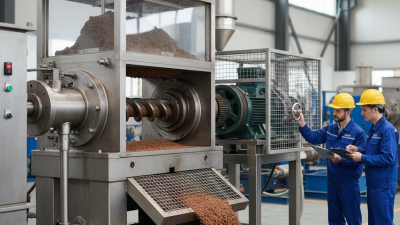
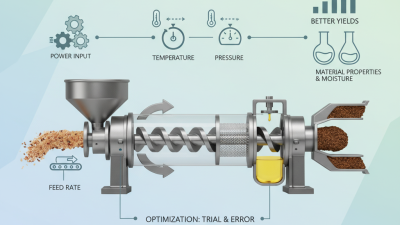
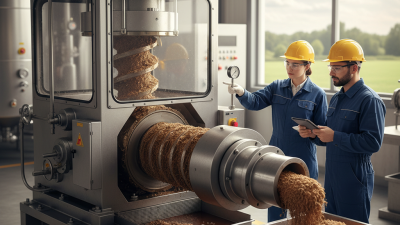
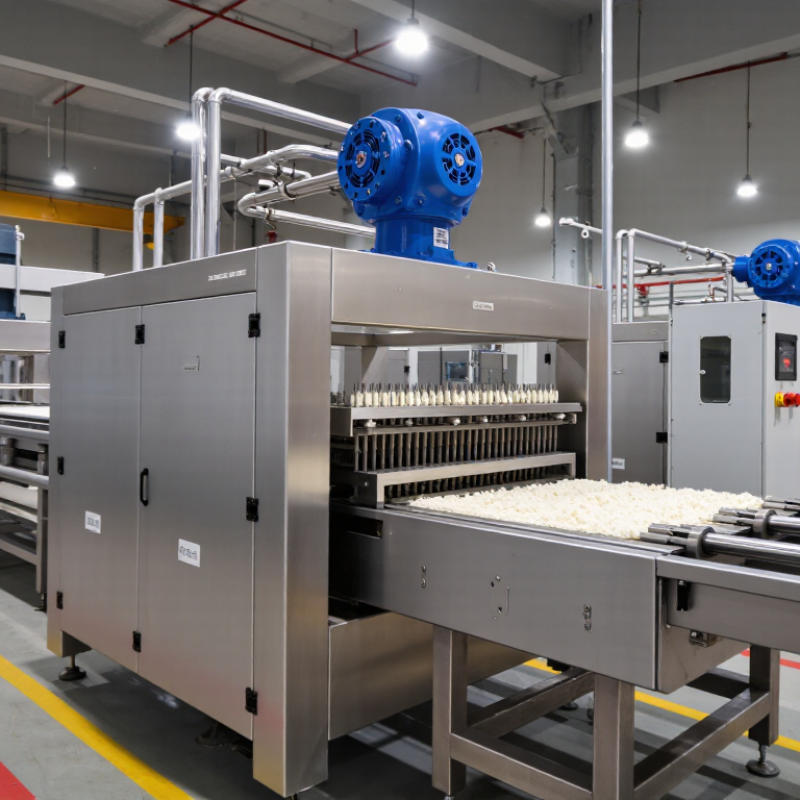
A continuous screw press separates liquid from fibrous or semi-solid material through steady mechanical compression. Feedstock enters a hopper and moves along a rotating screw shaft. The screw flights push material through a perforated screen or cylindrical cage. Liquid drains through the openings, while compressed solids travel toward the discharge end. An adjustable cone or backpressure device controls cake density.
The main components include the hopper, screw, screen, gearbox, motor, discharge cone, wash system, and control panel. Each part affects reliability and output. In operating trials, cake solids commonly range from 15% to 40%. This range is not a fixed promise. Feed moisture, fiber structure, screen size, screw speed, pressure, and pre-treatment can change the result. Real feedstock is often inconsistent. That assumption can be wrong.
When comparing equipment made in China, request a test using your actual material. Ask for measured inlet moisture, throughput, power use, and final cake solids. A machine rated for 10 tonnes per hour may achieve less with sticky or highly fibrous feedstock. Check screen thickness, shaft wear protection, cleaning access, and replacement-part availability. Stainless steel selection also matters in wet, corrosive environments. Review electrical documentation and guarding before installation. Experienced operators should inspect vibration, noise, leakage, and cake texture during commissioning. Some specifications look impressive on paper. Field performance needs proof.
Match Capacity and Power: Compare 0.5–20 t/h Throughput and 0.5–3 kW Motors
How to Choose the Best Continuous Screw Press in China?
Match Capacity and Power: Compare 0.5–20 t/h Throughput and 0.5–3 kW Motors
Choosing a continuous screw press starts with the material, not the catalogue capacity. Throughput may range from 0.5 to 20 t/h, but actual output changes with moisture, fiber length, density, and feed stability. A wet, sticky material usually needs more torque than a dry, uniform feed. Do not size the machine from hourly capacity alone.
Small systems often use motors near 0.5 kW for light-duty dewatering. Medium models may require 1–2 kW when feed resistance increases. Machines handling dense or fibrous material can approach 3 kW. More power is not automatically better. It can raise energy use, heat, and maintenance costs. Check rated capacity, operating speed, torque, and overload protection together.
Ask for test results using material similar to yours. Measure feed moisture, discharge dryness, power consumption, and stable output. A short trial is useful. A simple capacity chart can mislead. In field evaluations, uneven feeding caused larger losses than motor size. That detail is easy to miss. I would also inspect the screw, screen, seals, and gearbox access before ordering. These parts face constant wear, especially when sand or hard particles enter the feed. Leave practical capacity below the maximum claim, because real production is rarely perfectly consistent.
How to Choose the Best Continuous Screw Press in China? - Match Capacity and Power: Compare 0.5–20 t/h Throughput and 0.5–3 kW Motors
| Target Throughput |
Typical Feed Condition |
Indicative Motor Range |
Typical Duty |
Key Selection Considerations |
Recommended Verification Data |
| 0.5–1 t/h |
Small, continuously fed streams with relatively uniform particle size and moderate resistance. |
0.5–0.75 kW |
Light-duty conveying or pressing |
Suitable for pilot lines and small processing operations. Confirm that the inlet hopper and screw pitch can maintain a stable feed rate. |
Feed moisture, bulk density, particle size, and required discharge dryness. |
| 1–3 t/h |
Free-flowing agricultural, food-processing, or biomass materials with limited fibrous content. |
0.75–1.1 kW |
Small production line |
Check whether the motor is rated for continuous service and whether the gearbox can handle start-up torque under a loaded screw. |
Actual hourly feed rate, operating hours per day, and peak torque during start-up. |
| 3–5 t/h |
Moist or moderately compressible material requiring steady conveying and basic dewatering. |
1.1–1.5 kW |
Medium-duty operation |
A variable-speed drive can help balance throughput, residence time, and outlet back-pressure. |
Inlet and outlet moisture, screw rotational speed, and allowable material residence time. |
| 5–8 t/h |
Continuous feed with higher moisture, greater bulk density, or moderate fibrous resistance. |
1.5–2.2 kW |
Continuous processing |
Use a robust shaft, suitable flight thickness, and overload protection. Capacity should be tested using the actual material rather than water or dry solids alone. |
Material shear behavior, fiber length, bulk density, and maximum allowable compression ratio. |
| 8–12 t/h |
Large-volume feed where moisture and solids content remain reasonably consistent. |
2.2–3.0 kW |
Medium-to-heavy duty |
Confirm that the press frame, bearing arrangement, and discharge system are designed for continuous mechanical loading. |
Peak feed rate, torque limit, bearing load, screen or cage open area, and cleaning requirements. |
| 12–16 t/h |
High-volume material with relatively low conveying resistance and stable feeding conditions. |
2.2–3.0 kW* |
High-throughput conveying |
Capacity at this level is highly material-dependent. A single 3 kW motor may be insufficient when high compression or substantial dewatering pressure is required. |
Measured torque curve, compression pressure, screw diameter, speed, and installed overload margin. |
| 16–20 t/h |
Low-resistance, high-volume feed handled with a large screw and controlled inlet flow. |
Up to 3.0 kW* |
Large-volume conveying |
Do not select solely from the throughput number. High-pressure pressing, sticky feed, or variable moisture may require multiple drives or a higher-rated motor system. |
Full-scale trial results, continuous torque demand, motor service factor, gearbox rating, and emergency-stop performance. |
Engineering note: The capacity and motor figures are indicative selection ranges, not guaranteed machine ratings. Actual performance depends on material moisture, bulk density, particle size, fiber content, feed consistency, screw speed, compression ratio, outlet back-pressure, and required final dryness. The 0.5–3 kW range is most applicable to low- to moderate-resistance conveying or pressing duties; high-pressure dewatering applications may require a larger motor, multiple drives, or a different press configuration.
Assess Dewatering Results: Target 20–35% Dry Solids and over 95% Solids Capture
How to Choose the Best Continuous Screw Press in China?
Assessing a continuous screw press should begin with measurable dewatering results, not catalogue claims. A practical target is 20–35% dry solids in the discharged cake. Solids capture should exceed 95% under stable operating conditions. These figures help compare equipment fairly across different sludge types.
Feed characteristics strongly affect performance. Test the sludge’s moisture, organic content, particle size, and settling behavior before selecting capacity. Polymer dosage also matters. Too little polymer leaves cloudy filtrate, while excessive dosing raises costs and may create a sticky cake. During trials, record feed flow, screw speed, back pressure, screen condition, and cake moisture. Small changes can produce large differences.
Do not judge one sample alone. Sludge changes daily. A press that performs well in a short demonstration may struggle during rain, process upsets, or fluctuating solids loading. Request several operating runs and inspect the filtrate visually and through laboratory testing. Clear filtrate is useful evidence, but it does not replace measured solids capture. Operators should also check whether the cake reaches 20–35% dry solids without excessive energy or polymer use. Real performance is sometimes less impressive than the brochure suggests. That is worth admitting. A careful pilot test, transparent data sheet, and accessible technical support offer stronger evidence than a low purchase price.
How to Choose the Best Continuous Screw Press in China?
Assess dewatering performance by targeting 20–35% dry solids and more than 95% solids capture.
The chart presents representative operating results for common sludge conditions. A suitable continuous screw press should achieve 20–35% dry solids in the dewatered cake while maintaining solids capture above 95%. Actual performance depends on sludge characteristics, polymer conditioning, feed rate, and operating settings.
Compare Chinese Suppliers: Audit Testing, Warranty, Lead Time, and Total Cost
When comparing Chinese continuous screw press suppliers, audit the factory before comparing prices. Check machining, welding, assembly, and final inspection records. ISO Survey 2023 recorded more than 1.2 million ISO 9001 certificates worldwide, but certification alone proves little about one machine. Ask for batch traceability, calibration records, and a live factory acceptance test. Measure throughput, cake dryness, filtrate clarity, power use, and noise with your actual sludge.
Testing must use representative feed, not clean water. The U.S. EPA’s Biosolids Technology Fact Sheet reports that dewatering performance varies with sludge characteristics and conditioning. That is the practical warning. Request a written test protocol, including polymer dosage and operating hours. Compare the report with your target capacity. A cheap trial can mislead.
Warranty terms deserve equal attention. Require coverage for the main frame, gearbox, shaft, screens, controls, and labor. Clarify exclusions, response time, spare-part availability, and remote support. A 12-month warranty is weak if consumables are excluded. Lead time should include design approval, fabrication, testing, export packing, and shipping. For total cost, add installation, polymer consumption, electricity, maintenance, replacement screens, customs, and downtime. A 10% lower purchase price may disappear after one delayed shipment. I would also request three-year operating-cost estimates, although supplier assumptions are often optimistic. Cross-check them against EPA data and your own pilot results.