Ultimate Guide to Lamella Clarifier Benefits and Applications?
The Lamella Clarifier has emerged as a vital technology in water treatment, significantly enhancing efficiency. Experts in the field, like Dr. Jane Smith, emphasize its importance, stating, "Lamella Clarifiers can revolutionize sedimentation processes with their compact design." This innovation is changing how industries approach wastewater management.
Utilizing gravity-based settling, the Lamella Clarifier minimizes space while maximizing performance. Many industries are adopting this technology to reduce water treatment costs. However, proper implementation can pose challenges. For instance, ensuring the right flow rate is crucial for optimal performance. Each installation varies based on site-specific conditions, making expert consultation essential.
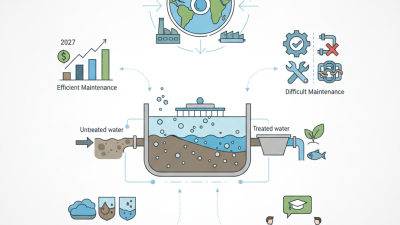
While the benefits are clear, some may overlook potential drawbacks. System maintenance can be a complex task. Knowing when to seek expert advice may prevent costly errors. Embracing the Lamella Clarifier demands continuous learning and adaptation to achieve the best results. Overall, the technology represents a remarkable step forward in sustainable water management solutions.
Overview of Lamella Clarifiers and Their Functionality
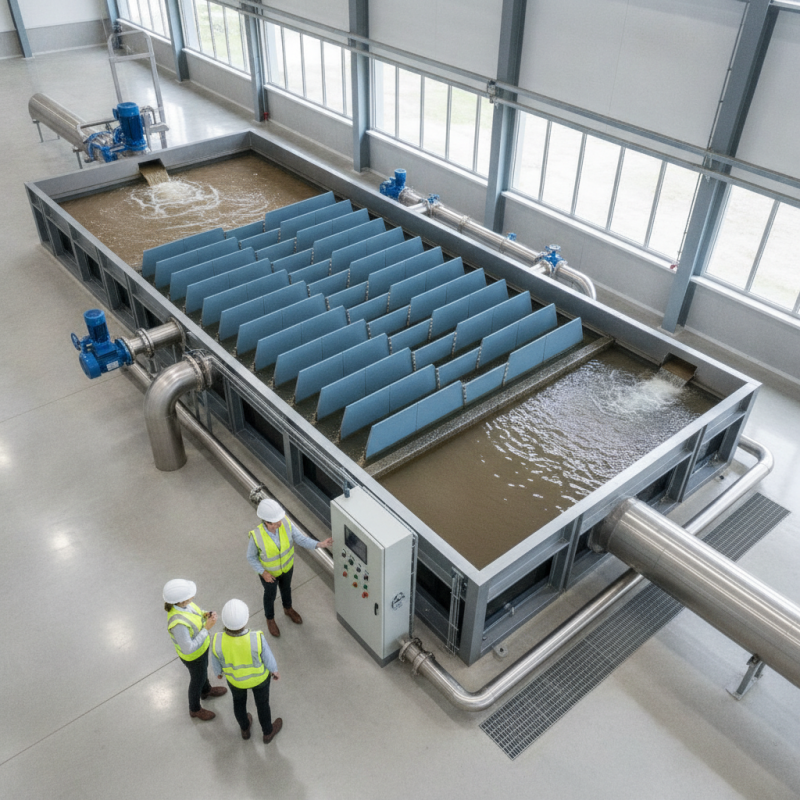
Lamella clarifiers are innovative wastewater treatment devices. They enhance the sedimentation process by using inclined plates. This design allows for a high rate of separation in a compact space. Typically employed in industrial applications, they can effectively reduce solids in effluents. Their functionality stems from gravity-driven separation, where solids settle efficiently, leading to clearer water.
The components of a lamella clarifier include a feed inlet, lamella plates, and an outlet. The feed enters at the top and flows through the plates. As the water moves, heavier particles settle on the plates. This results in a thick sludge layer at the bottom. Maintenance can be challenging, as the system needs regular checks to ensure optimal performance. The plates must remain free from blockages to function efficiently.
Operators often face issues with inconsistent flow rates. Sudden changes can disrupt the settling process. Additionally, some materials may not settle as expected. This unpredictability can affect cleanup efforts. Understanding these nuances is essential for effective operation. A lamella clarifier can deliver significant benefits but requires careful management to maximize efficiency.
Key Benefits of Using Lamella Clarifiers in Water Treatment
Lamella clarifiers play a crucial role in modern water treatment systems. Their unique design enhances sedimentation processes. By increasing surface area, they boost settling efficiency which is vital for treating large volumes of wastewater. Studies indicate that lamella clarifiers can improve solid removal rates by up to 90%.
One key advantage is their compactness. Traditional settling tanks require significant space. Lamella clarifiers, however, operate efficiently in only a fraction of that space. This makes them ideal for urban areas where land is expensive. According to industry reports, implementing lamella clarifiers can reduce footprint by as much as 50%, leading to lower construction and operational costs.
Despite these benefits, there are challenges to consider. Proper design and load calculations are critical. Incorrect installation can lead to reduced efficiency. Operators must ensure regular maintenance to prevent build-up of solids. Neglecting this can negate the efficiency gains. This highlights the need for ongoing training and monitoring in water treatment facilities. Regular assessments can address potential issues before they escalate, ensuring the long-term effectiveness of lamella clarifiers.
Ultimate Guide to Lamella Clarifier Benefits and Applications
| Benefit |
Description |
Application |
| Space Efficiency |
Lamella clarifiers require significantly less space compared to conventional clarifiers due to their inclined plates. |
Used in small to medium-sized water treatment facilities where space is limited. |
| High Clarification Efficiency |
The inclined plates enhance sedimentation, allowing for better separation of particles. |
Ideal for municipal wastewater treatment and industrial effluent treatment. |
| Reduced Operational Costs |
Lower operational and maintenance costs due to less energy consumption and simpler design. |
Suitable for facilities aiming to reduce long-term operational expenses. |
| Versatile Applications |
Can be used for various types of treatment including raw water clarification, sludge thickening, and industrial wastewater treatment. |
Applicable in food and beverage industries, mining, and chemical processing. |
| Improved Water Quality |
Higher removal rates of suspended solids and turbidity, resulting in better water quality. |
Used in drinking water treatment plants to ensure safe water supply. |
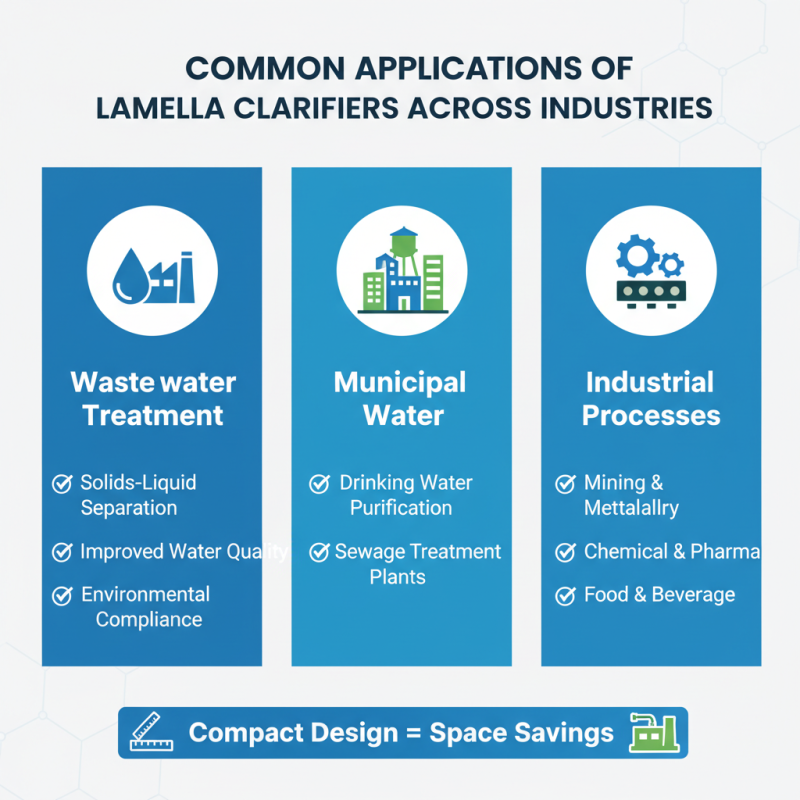
Common Applications of Lamella Clarifiers Across Industries
Lamella clarifiers have gained traction in various industries due to their efficient design. In wastewater treatment, they effectively separate solids from liquids. This makes them vital for municipalities. They enhance the quality of treated water, ensuring environmental compliance. The compact design also allows for significant space savings in treatment plants.
In the food and beverage sector, lamella clarifiers help in processes like juice clarification. They remove unwanted solids without affecting product quality. Moreover, in oil and gas applications, these systems are crucial. They aid in separating water from crude oil, enhancing recovery rates. Industries often struggle with choosing the right clarifier; it's essential to assess the specific needs.
Despite their benefits, not all installations are seamless. Some users report issues with sludge buildup. Regular maintenance is crucial but can be overlooked. It's a reminder that no system is perfect. The effectiveness of lamella clarifiers varies depending on incoming water characteristics. Ensuring optimal operation requires ongoing monitoring and adjustment. This makes expertise in the field invaluable.
Comparing Lamella Clarifiers to Traditional Clarification Methods
When comparing lamella clarifiers to traditional clarification methods, several key differences emerge. Traditional methods often rely on larger surface areas and longer retention times. They can consume more space and resources. Lamella clarifiers, however, employ inclined plates to increase settling efficiency. This design minimizes footprint while maximizing output. The result is an efficient separation of solids from liquids, often in a fraction of the time required by conventional systems.
Consider sedimentation tanks, a common traditional method. They can take hours or even days to achieve adequate clarity. In contrast, lamella clarifiers can produce similar results in a much shorter timeframe. This rapid processing can significantly enhance operational efficiency, especially in industries needing high throughput. Additionally, the compact design of lamella clarifiers allows for easier installation in constrained environments. However, they may not be suitable for all applications, particularly where large volumes of debris are present.
Despite their advantages, lamella clarifiers may encounter challenges. For instance, their performance can be affected by variations in flow rate or incoming water quality. Operators must monitor these factors closely to ensure optimal performance. Understanding the specific requirements of a project is crucial. Evaluating trade-offs remains important when selecting a clarification method for any particular application.
Future Innovations in Lamella Clarification Technology
The lamella clarifier stands at the forefront of wastewater treatment technology. Future innovations promise to enhance efficiency and effectiveness. Researchers are exploring advanced materials to improve sedimentation rates. These could lead to smaller, more efficient systems that occupy less space.
Tips: Always consider the size of the installation area before choosing a lamella clarifier. A well-fitted system reduces maintenance costs.
Another exciting development is the integration of automation. Smart controls can optimize flow rates, ensuring more consistent performance. Real-time monitoring systems can detect issues before they escalate, saving time and money. Still, the investment in such technologies requires careful analysis.
Tips: Regularly assess the technology's performance metrics. It’s vital for long-term sustainability.
As we venture into the future, sustainability plays a critical role. Companies must balance innovation with environmental responsibilities. Newer clarifiers may utilize reclaimed water, further enhancing resource conservation. Embracing these advancements will set a strong foundation for effective wastewater management.