How to Choose a Metering Dosing Pump in 2026?
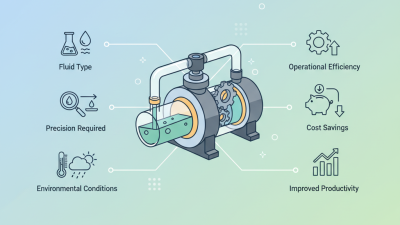
Choosing a Metering Dosing Pump in 2026 starts with the process, not the product brochure. What fluid will it handle? How much must it deliver, and how steadily? A pump dosing a thin water treatment chemical faces different demands from one moving a viscous additive into a warm production line. These details shape the right choice.
Small differences matter. A flow rate that looks adequate on paper may drift when pressure changes or tubing wears. Check the required dosing range, discharge pressure, fluid temperature, viscosity, and chemical compatibility. Then consider control options, including manual adjustment, timers, or signals from a process controller. A digital display is useful, but it cannot fix poor sizing.
Maintenance counts.
Ask how often the pump needs calibration, which parts contact the fluid, and whether seals or diaphragms are easy to replace. Request performance data for conditions close to your actual setup. If a supplier offers only a maximum flow figure, ask what pressure and fluid assumptions sit behind it. That question is easy to overlook.
The best selection balances accuracy, durability, installation needs, and total operating cost. No single pump suits every plant, and a technically impressive model may be more than a simple dosing task requires. Requirements can also change after commissioning; real processes are not always as tidy as initial specifications. This guide explains the key criteria to compare, the trade-offs worth checking, and the questions to ask before choosing a Metering Dosing Pump in 2026.
Define the Required Dose, Flow Range, and Discharge Pressure in L/h and bar
Choosing a metering dosing pump starts with the dose your process actually needs. Record the amount per batch or hour, then convert it to liters per hour. For example, 250 mL/h equals 0.25 L/h. If dosing occurs in short bursts, calculate the required peak flow as well as the daily average. Small details matter. Check that the normal operating rate sits comfortably within the pump’s adjustable range, not at its limit.
Discharge pressure matters just as much as flow. Estimate the pressure at the injection point, including pipe friction, elevation, and any valves or filters. Then compare that figure with the pump’s rated pressure and flow performance. A pump may deliver less flow as backpressure rises. Confirm the published curve or test data for your operating conditions. Don’t rely on a maximum-flow figure alone. In practice, an early estimate can be wrong, so verify it against the installed line.
Tips: Write down the required dose, minimum and maximum flow in L/h, and expected discharge pressure in bar. Include the fluid’s viscosity and any pulsation concerns when checking suitability. Leave room. A modest operating margin can help accommodate process changes, but avoid oversizing so much that low-flow adjustment becomes difficult.
Compare Vendor-Stated ±1% Accuracy and Verify API 675 Compliance
How to Choose a Metering Dosing Pump in 2026?
A vendor-stated ±1% accuracy is only a starting point. Ask how it was measured. Was the test performed with water, steady pressure, and a warm pump? Real dosing may involve changing viscosity, pulsation, backpressure, and long pipe runs. The U.S. Department of Energy’s Pumping System Sourcebook reports that pumping systems can consume 25% to 50% of industrial facility electricity. Poor control can therefore increase both chemical use and operating cost. I have seen a pump meet ±1% on a test bench, then drift noticeably after installation. That gap deserves attention.
API 675 should be verified through documents, not marketing language. Request the exact edition, compliance statement, certified performance curves, material records, and factory test results. Check capacity at minimum, normal, and maximum stroke settings. Confirm repeatability under your process pressure. API 675 compliance does not automatically prove your application will achieve ±1% accuracy. The purchase specification must define the test fluid, temperature, pressure, calibration method, and acceptable deviation. This is often overlooked.
Tips: Test with your actual chemical, if safely possible. Record discharge pressure and suction conditions. Compare three readings, not one. Ask for calibration traceability. Also inspect pulsation dampeners, because unstable flow can make accurate metering look inaccurate. The 2024 Global Water Intelligence market analysis continues to highlight efficiency and process control as major priorities in water treatment. However, market reports describe trends, not your pump’s performance. Treat every percentage as conditional.
Size the Pump for Maximum Pressure, Fluid Viscosity, and NPSH Conditions
How to Choose a Metering Dosing Pump in 2026?
Size the pump for the toughest credible operating condition, not the comfortable day-to-day point. Calculate maximum discharge pressure from vessel pressure, elevation, piping losses, and injection-point backpressure. Include a plugged or partially restricted line scenario where appropriate. API Standard 675 covers controlled-volume pumps and their performance requirements; use its framework alongside verified pump curves and application data. Do not treat a pressure rating as the recommended continuous operating point.
Fluid viscosity can change the dose you actually deliver. A cold chemical may move slowly through suction tubing, delay check-valve response, and reduce filling. Use viscosity data at the lowest expected temperature, not just the supplier’s room-temperature figure. Check seal and valve compatibility, too. Small details matter. The U.S. Department of Energy’s Improving Pumping System Performance sourcebook estimates that pumping systems use nearly 20% of global electricity demand. That figure covers pumping broadly, but it reinforces why matching capacity to duty matters.
Check NPSH available at the pump inlet under the worst suction conditions. Account for liquid level, vapor pressure, suction-line friction, and any strainers or fittings. Compare the result with the pump’s stated requirement for the actual fluid and speed; confirm any required margin with the manufacturer’s technical documentation. For viscous fluids, the answer can be less tidy than a simple water-based calculation. Recheck the assumptions. A clean spreadsheet can still miss a warm-up cycle, a nearly empty tank, or a pulsating suction line.
Select Wetted Materials for Chemical Compatibility and Operating Temperature
When choosing a metering dosing pump, assess every wetted component, not just the pump head. The diaphragm, check valves, seals, and tubing all contact the chemical. A material that resists the liquid in one part may fail in another. Small details matter.
Start with the chemical’s full name, concentration, and temperature range, including cleaning and flushing conditions. Compatibility charts are useful, but they may not cover mixtures or brief temperature spikes. PTFE can suit many demanding chemicals, while metals such as stainless steel work well in some services and corrode in others. Neither is a universal answer. Check seals, too. Their material can limit the entire assembly.
Operating temperature affects more than chemical resistance. Heat may soften plastics, accelerate corrosion, or change seal performance; cold can make some materials less flexible. Confirm both continuous and peak temperatures against the pump’s specifications. Then consider pressure and the chemical’s viscosity, since these can affect valve response and dosing stability. I would still leave room for doubt: published compatibility data cannot reproduce every site condition. For critical service, ask the supplier for documented limits or test a sample under realistic conditions. A few hours with the actual fluid may reveal swelling or discoloration that a chart misses.
Validate Dosing Controls at 10%, 50%, and 100% of Rated Flow
When choosing a metering dosing pump in 2026, test its controls at 10%, 50%, and 100% of rated flow. Use the intended liquid, operating pressure, and temperature where practical. Record the setup. A water-only bench test may not predict performance with a thicker process fluid.
At 10%, check whether the pump can hold a stable, measurable dose. Small errors matter. Collect several timed samples and weigh them on a suitable scale; compare the average with the target. Watch for missed strokes, delayed priming, or output that changes after adjustment. Then repeat. Low-flow performance often reveals control limits hidden at higher settings.
At 50% and 100%, verify output using the same method and test conditions. Note pressure, fluid temperature, and any visible pulsation, then compare measured delivery with the process tolerance and pump specifications. Test adjustments and restarts, too. A clean test bench can flatter a pump; installed suction lines and backpressure may change results. That gap deserves a second look. Keep the records, including imperfect runs, so operators can distinguish a control issue from a changing process condition.
How to Choose a Metering Dosing Pump in 2026?
Validate dosing controls at 10%, 50%, and 100% of rated flow
How to read the validation results
This representative engineering validation uses a pump rated at 100 L/h, tested with water at ambient temperature,
a constant 5 bar discharge pressure, and a 60-second collection interval. The measured flow remains close to the
commanded setpoint across the operating range, while absolute deviation decreases from 2.0% at low flow to 0.4%
at full rated flow. A suitable dosing pump should maintain stable output at all three checkpoints, not only at its
maximum capacity.