Leave Your Message

How to Choose the Best Dewatering Press Machine?

Choosing the right Dewatering Press Machine is more than comparing prices, motor ratings, or stainless-steel finishes. It is a process decision shaped by sludge type, daily throughput, polymer use, dryness targets, and operator experience. UNESCO’s World Water Development Report 2024 states that 2.2 billion people lacked safely managed drinking water in 2022, while 3.5 billion lacked safely managed sanitation. These figures underline the growing pressure on treatment facilities to manage wastewater solids efficiently and responsibly.

A reliable selection begins with measured data. Test sludge moisture, organic content, particle size, and seasonal variation before contacting suppliers. The U.S. Environmental Protection Agency’s Biosolids Technology Fact Sheet on belt filter presses highlights feed conditioning, polymer selection, solids loading, and drainage performance as important operating factors. A screw-type, belt-type, or chamber press may each perform well, but not under identical conditions. There is no universal winner.

Look beyond the catalogue.

Ask for verified pilot-test results using sludge similar to yours. Observe the cake texture, filtrate clarity, wash-water demand, noise, and cleaning time. A machine producing firm cake at noon may struggle during a rainy week or after process changes. This is where many buying guides become too neat. Real plants experience blocked nozzles, fluctuating feed solids, and hurried maintenance. Those details matter.

The best choice balances capture rate, cake dryness, energy use, footprint, automation, and long-term service support. Suppliers should explain their calculations, not only present attractive percentages. A careful decision may cost more initially, yet reduce disposal, labour, and downtime across years of operation.
How to Choose the Best Dewatering Press Machine?

What Is a Dewatering Press Machine and How Does It Work?

A dewatering press machine separates water from sludge before disposal, drying, or further treatment. It does not remove every drop. Its practical purpose is volume reduction.

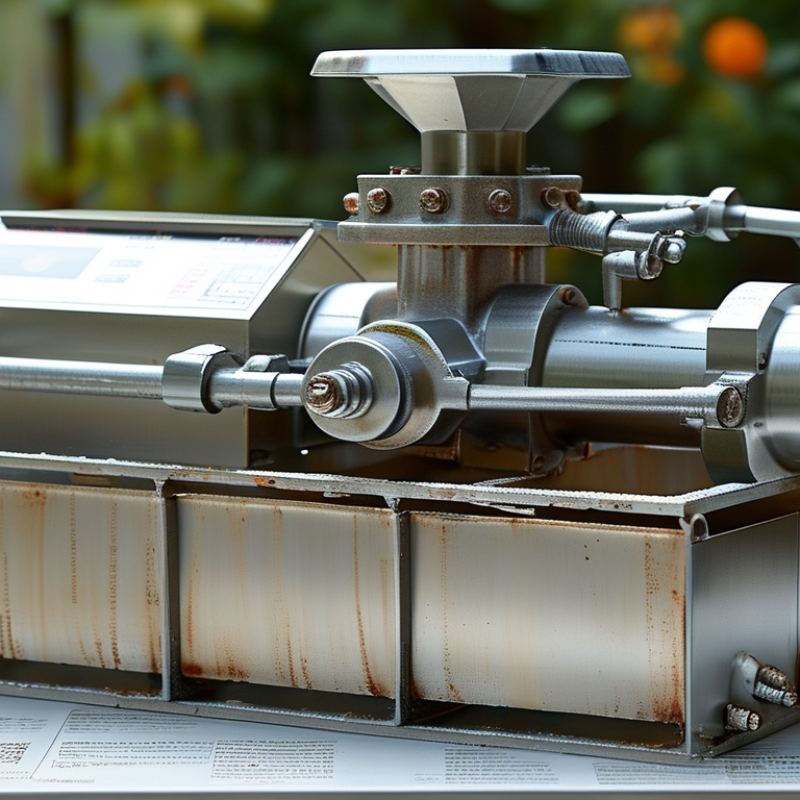
In a typical screw press, sludge enters a perforated cylindrical screen. A slowly rotating screw moves the material forward. The clearance narrows gradually, creating pressure. Free water passes through the screen as filtrate, while compressed solids leave as a cake. Polymer conditioning helps particles bind together. Without correct dosing, the filtrate may look cloudy and the cake may remain soft.

The U.S. Environmental Protection Agency reports typical screw-press cake solids around 15–30%, with solids capture commonly reaching 95–99% under suitable conditions. Actual results depend on sludge type, feed concentration, polymer selection, and operating speed. The U.S. EPA Biosolids Technology Fact Sheet also notes that belt presses often require continuous wash water, while screw presses generally use less wash water. That difference matters at water-limited sites.

The machine is not magic. High capture does not always mean dry cake. Field operators often adjust polymer dose and backpressure several times daily. A 2024 UN World Water Development Report highlights rising wastewater pressure worldwide, making efficient sludge handling increasingly important. Still, reported performance can look better in laboratories than on a changing treatment line. Real selection should include pilot testing, maintenance access, energy use, wash-water demand, and the final cake-handling method.
Which Sludge Properties Determine the Right Machine Choice?

Choosing a dewatering press starts with sludge properties, not catalog capacity. Measure feed solids, particle size, organic content, temperature, pH, and flow variation. The U.S. EPA’s Biosolids Technology Fact Sheet reports typical belt-press feed solids of about 1–4%, with cake solids often reaching 12–30%. These figures are useful, but they are not promises.

Slimy, biological sludge usually needs careful polymer conditioning. Excess polymer raises operating costs and may create a sticky cake. Fibrous sludge can drain quickly, while fine clay particles may blind the filter and reduce water release. Grease creates another problem. It can coat filter media and cause unstable performance. A jar test should examine polymer dose, mixing energy, settling speed, and filtrate clarity. Small changes matter.

The European Commission’s Waste Treatment BAT Reference Document identifies feed composition, moisture, and particle behavior as key factors in mechanical dewatering. In practice, sludge compressibility often decides the machine type. A screw press may suit moderate flows and variable operation, while a belt press can provide stronger washing and continuous drainage. Centrifugal equipment may handle fine solids, but power demand can be higher. The EPA also notes that final cake dryness depends heavily on sludge conditioning and equipment settings. I would not trust one laboratory result. Real sludge changes after rainfall, biological treatment, or industrial discharge. Test samples across several operating days before selecting the press.

How to Choose the Best Dewatering Press Machine? - Which Sludge Properties Determine the Right Machine Choice?

Sludge Property Typical Condition or Range Why It Matters Suitable Machine Choice Typical Cake Solids* Recommended Operating Considerations
Low feed solids Approximately 0.5–2% total solids Large water volume increases hydraulic loading and may cause poor capture if conditioning is insufficient. Screw press or belt filter press, usually with polymer conditioning 15–25% for many municipal sludges Provide adequate flocculation, dilution control, and a stable feed-pressure or belt-loading rate.
Moderate to high feed solids Approximately 2–8% total solids Higher solids reduce hydraulic load but increase torque, pressure, and conveying resistance. Recessed-chamber filter press, screw press, or centrifuge 20–40%, depending on sludge type and equipment settings Check motor torque, feed-pump capacity, and the machine's maximum solids loading.
High organic or biological content Activated sludge, waste biological sludge, or mixed organic sludge Biological sludge often contains fine, compressible particles that release water poorly without effective conditioning. Belt filter press, screw press, or centrifuge after polymer testing 15–25% is a common design range Perform jar tests or pilot trials to select polymer type, dosage, and mixing energy.
High mineral content Inorganic, chemical, or lime-conditioned sludge with substantial ash Mineral particles generally drain more readily but can increase abrasion and cloth or screen wear. Recessed-chamber filter press or belt filter press 25–45% or higher in some chemically conditioned applications Use abrasion-resistant wetted components and verify cake discharge and cloth-cleaning arrangements.
Very fine particles or colloids Particles remain suspended and settle slowly Fine particles can pass through screens or form a highly resistant cake, lowering filtrate quality and capacity. Recessed-chamber filter press or centrifuge; belt press only with optimized flocculation 20–40%, depending on conditioning and pressure Use coagulant or polymer screening and monitor filtrate turbidity and solids capture.
Fibrous or stringy material Paper fibers, textile fibers, food fibers, or plant residues Fibers can improve drainage but may wrap around rotating parts or block narrow passages. Belt filter press or screw press with suitable inlet screening 20–35% in many fibrous applications Install screening or maceration where necessary and select a machine with easy access for cleaning.
High oil and grease content Grease-trap sludge, food-processing sludge, or oily industrial sludge Oil can interfere with floc formation, blind filter media, and make cake release more difficult. Screw press or centrifuge after pretreatment; filter press for high dryness targets 15–30%, highly dependent on pretreatment Consider equalization, heating, chemical conditioning, and frequent cleaning of screens or cloths.
Good flocculability Stable, rapidly settling flocs after polymer addition Well-formed flocs improve water release, solids capture, and throughput on continuous machines. Belt filter press or screw press 15–30% for typical municipal applications Optimize polymer dose and shear; excessive mixing can break flocs and reduce capture.
Poor flocculability Weak flocs, slow settling, or unstable polymer response Poor flocs may cause cloudy filtrate, low solids capture, and rapid media blinding. Recessed-chamber filter press or centrifuge, subject to pilot testing 20–40% with suitable conditioning Test multiple polymers and consider coagulant addition before selecting continuous equipment.
High compressibility Cake becomes dense and less permeable as pressure increases Additional pressure may provide limited benefit because the cake resists further water flow. Recessed-chamber filter press with suitable cycle control 25–45%, depending on sludge characteristics Use gradual pressure increase, adequate cake thickness, and realistic cycle-time expectations.
High abrasive solids Sand, grit, glass particles, or other hard mineral matter Abrasive solids accelerate wear on screws, pumps, screens, bearings, and centrifuge bowls. Filter press or reinforced screw press after grit removal 20–40%, depending on mineral concentration Use upstream grit removal, wear-resistant materials, and a planned inspection schedule.
Requirement for maximum cake dryness Disposal, transport, or thermal processing requires the lowest practical water content Higher dryness reduces hauling mass and may improve handling, but usually increases cycle time, energy, or chemical use. Recessed-chamber filter press; centrifuge may be suitable for continuous operation 25–45% for many sludges; actual results vary widely Compare total lifecycle cost, including polymer, power, labor, cloth replacement, and cake disposal.
Need for continuous, low-attention operation Stable feed with limited operator intervention Automation, self-cleaning, and steady feed control are more important than peak batch dryness. Screw press or automated centrifuge 15–30% in many applications Evaluate automatic polymer dosing, torque protection, wash-water demand, noise, and vibration controls.

*Note: Cake-solids values are typical engineering ranges rather than guaranteed performance figures. Actual results depend on sludge origin, temperature, volatile-solids content, particle-size distribution, polymer selection, feed concentration, machine sizing, and operating conditions. A laboratory jar test and pilot or field trial should be completed before final equipment selection.

How to Compare Capacity, Dewatering Results, and Energy Use?

How to Choose the Best Dewatering Press Machine?

Capacity should be compared by dry solids throughput, not wet sludge volume. A feed rate of 20 m³/h can hide very different solids loads. Record inlet concentration, polymer dose, and operating hours during a site trial. The U.S. EPA’s Biosolids Technology Fact Sheet: Belt Filter Press reports typical cake solids of 12–30%. That range is useful, but it is not a guarantee.

Look beyond the percentage. A 20% cake may still release water during transport. The European Commission’s 2016 BAT Reference Document reports typical dewatered sludge solids around 15–35%, depending on conditioning and sludge type. Measure filtrate clarity, cake texture, capture rate, and wash-water demand. Do not trust one test day.

Energy comparisons need a common basis. WEF energy guidance commonly reports mechanical dewatering consumption near 0.02–0.10 kWh per kilogram of dry solids, depending on equipment and loading. Check installed power, actual running power, polymer systems, and cleaning pumps. A larger motor may run only briefly. My first comparison ignored standby electricity, which changed the ranking. Use measured kWh per dry tonne, not motor size alone. Small mistakes matter.

Which Design Features Simplify Installation and Maintenance?

Choosing the best dewatering press machine requires more than comparing capacity and purchase price. Installation becomes easier when the frame has lifting points, adjustable feet, and a compact layout for pipe and cable access. A preassembled skid can reduce alignment work on site. Quick-release covers also help operators reach rollers, screens, and spray bars without dismantling the machine. Small details matter. A drain channel beneath the press prevents spilled sludge from becoming a daily cleaning problem.

Maintenance-friendly design should include automatic belt tracking, visible pressure gauges, wash-water filters, and tool-free inspection panels. The U.S. Environmental Protection Agency’s Biosolids Technology Fact Sheet: Belt Filter Press reports typical solids capture of 95–99% and cake solids of approximately 12–35%, depending on feed and operation. These figures are useful benchmarks, not promises. The Water Environment Federation’s Manual of Practice No. 8 also emphasizes correct conditioning, polymer control, and routine inspection for stable performance. In field use, access matters as much as theoretical throughput. If an operator cannot safely reach a bearing or flush a blocked nozzle, maintenance will be delayed. That weakness is easy to overlook. Select corrosion-resistant contact materials, standardized bearings, and simple wash-water connections. Leave working space around the machine, even when the room feels crowded. A tighter installation may save floor area, but it can increase labor and downtime later.

How to Choose the Best Dewatering Press Machine?

The chart compares practical design priorities that simplify installation and routine maintenance. Higher scores indicate features that generally reduce service effort, improve accessibility, and support safer operation. These are comparative engineering ratings rather than manufacturer-specific performance claims.

How to Assess Safety, Durability, and Total Ownership Cost?

How to Choose the Best Dewatering Press Machine?

Safety, durability, and total ownership cost deserve more attention than the purchase price. During equipment evaluations, inspect guards, emergency stops, access doors, and overload protection. Operators should reach routine controls without standing near moving parts. Ask for test records, operating instructions, and maintenance procedures. Verify that the machine can meet your site’s applicable safety requirements. Do not rely on attractive sales claims alone.

Durability begins with the sludge type and daily workload. Corrosive sludge may require suitable stainless steel components, protected bearings, and strong welds. Check whether screens, seals, and drive parts are easy to replace. A machine that stops for several hours can cost more than expected. Energy use, polymer consumption, wash-water demand, labor, spare parts, and sludge disposal all belong in the calculation. Request a performance trial using representative material. Laboratory results can be useful, but they may not reflect winter temperatures or changing solids content.

Tips: Build a five-year cost sheet before purchasing. Include installation, training, cleaning time, and emergency repairs. Ask current users about noise, odor control, and actual maintenance frequency. Choose clear documentation over vague promises. A cheaper machine is not always economical. I have seen buyers underestimate downtime. That mistake is easy to repeat. Recheck every assumption before approval.