Leave Your Message

How to Choose the Right Micro Pore Air Diffusers?

Choosing Micro Pore Air Diffusers is not just a matter of comparing pore size or purchase price. The right diffuser must match the tank’s dimensions, operating depth, airflow range, and water quality. A unit that performs well in a clean test tank may behave differently in wastewater containing grease, minerals, or suspended solids. Small details matter. So does the maintenance plan.

The expert voice below is illustrative, not a verified quotation from a real person: aeration engineer “Dr. Lena Morris” says, “Choose for stable oxygen transfer under your actual operating conditions, not for a catalogue figure alone.” This is an editorially drafted line, not a sourced statement. A real quotation should be verified before publication. Still, the principle is practical: compare oxygen-transfer performance at relevant depths and airflow rates, and examine pressure loss, fouling risk, cleaning needs, and expected service life.

This guide explains how to assess those factors without treating any single specification as decisive. It also considers diffuser materials, layout, blower compatibility, and the trade-offs between initial cost and long-term energy use. A useful comparison begins with real operating data. If that data is missing, the choice deserves another look. The recommendations are not one-size-fits-all; site conditions can change the result, and even experienced operators may need to revise an initial selection after observing the system in service.
How to Choose the Right Micro Pore Air Diffusers?

Understand How Micro Pore Air Diffusers Work

How to Choose the Right Micro Pore Air Diffusers?

Understand How Micro Pore Air Diffusers Work

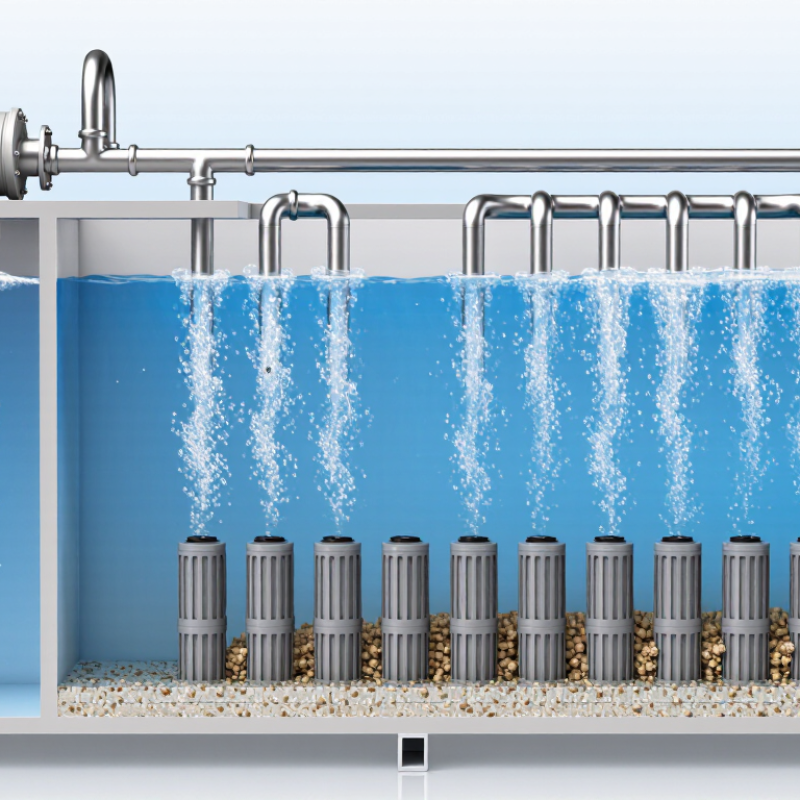
Micro-pore diffusers push compressed air through tiny openings in a membrane or ceramic element. These openings release fine bubbles near the tank floor. As bubbles rise, oxygen moves across the air-water boundary and dissolves into the wastewater. More contact area can support oxygen transfer. Small bubbles matter. But wastewater solids and surfactants can change how bubbles form and rise.

The U.S. EPA’s 1999 Fine Bubble Aeration fact sheet reports oxygen-transfer efficiencies of about 2–6% per foot of diffuser submergence. Treat this as a guide, not a plant guarantee: wastewater conditions, airflow, and maintenance all affect results. ASCE/EWRI Standard 2-06 sets out clean-water oxygen-transfer testing, so test figures may not match field performance. A smaller pore is not automatically better. Check the air pressure and bubble pattern during operation; rising backpressure or uneven bubbling may signal fouling. I would also compare these observations with oxygen readings, rather than choosing a diffuser by pore size alone.
Define the Aeration Needs of Your System

Before selecting micro-pore air diffusers, define the oxygen demand your system must meet. Start with daily and peak wastewater flows, ammonia levels, temperature, and treatment targets. The US EPA’s Nutrient Control Design Manual (2010) gives a theoretical oxygen requirement of 4.57 kg per kg of ammonia-nitrogen oxidized during nitrification. Actual demand also includes carbon removal and operating conditions. Numbers matter.

Check how demand changes across a typical day. A morning flow surge or cold-weather increase in oxygen demand can leave a system short if sizing relies only on average conditions. The US EPA’s Energy Efficiency in Water and Wastewater Facilities (2013) reports that aeration can account for 25–60% of a treatment plant’s energy use. That makes airflow control and diffuser performance important, not just total oxygen capacity. Basin depth, diffuser layout, wastewater solids, and fouling can all affect oxygen transfer. Estimates need field verification.

Tips: Review flow and ammonia records, then compare them with blower airflow and dissolved oxygen readings. Note where readings vary across the basin; one probe may miss low-oxygen zones. If data are incomplete, treat the design estimate as provisional and confirm it during operation.

Compare Diffuser Materials and Pore Sizes

Micro pore air diffusers are usually made from ceramic, flexible membranes, or porous plastics. Each material behaves differently in water. Ceramic can resist wear, but it is rigid and may crack if handled roughly. Membranes flex with pressure changes and are easier to fit, though oils, cleaning chemicals, and heat can affect their service life. Porous plastic can be lightweight, but its compatibility with the water and cleaning routine should be checked. Ask for material data, not just a general claim of durability.

Pore size changes bubble formation and airflow resistance. Smaller pores can create finer bubbles, which may stay suspended longer and improve gas transfer. Small bubbles help. But very fine pores can demand more pressure and may clog sooner in water containing solids or mineral deposits. Not always. A stated pore size may also be a nominal measurement, not the actual bubble diameter. Compare options under similar airflow and water-depth conditions, and check pressure readings during operation. I would not choose the smallest pore automatically; that sounds efficient, but it can be a costly assumption. A small diffuser trial in the real water often reveals more than a specification sheet.

How to Choose the Right Micro Pore Air Diffusers? - Compare Diffuser Materials and Pore Sizes

Diffuser material or type Typical pore or opening size Bubble and transfer characteristics Main advantages Considerations Often suitable for
Porous ceramic Commonly around 50–200 μm; product designs vary Can produce fine bubbles when supplied at the correct pressure and airflow; bubble size is also affected by water depth and operating conditions. Rigid, heat-resistant, and suitable for steady aeration. Can be brittle; pores may clog with scale, solids, or biological growth. Cleaning and pressure requirements depend on the design. Aquaculture, laboratory aeration, and applications where a rigid porous element is preferred.
Sintered polyethylene Often approximately 20–100 μm; varies with material grade and manufacturing method A porous structure can generate relatively small bubbles, but output depends on pore distribution, airflow, and diffuser geometry. Lightweight and corrosion-resistant; available in a range of shapes and pore grades. May be less tolerant of heat and some chemicals than metal or ceramic. Fine pores can foul and increase backpressure. Low-pressure aeration and systems that need a lightweight, non-metallic porous diffuser.
EPDM membrane Typically uses flexible slits or perforations rather than a fixed porous-pore rating; opening dimensions are design-specific. Slits open under air pressure and close when airflow stops. Bubble size and distribution depend on slit design, membrane condition, and operating rate. Flexible and widely used in wastewater aeration; self-closing slits can help limit water and solids entering the air system when off. Membrane aging, fouling, temperature, and chemical exposure can affect performance. Check compatibility and replacement requirements. Wastewater treatment and other systems needing flexible, intermittently operated aeration.
Silicone membrane Usually slit- or perforation-based; there is no single standard pore size across designs. Produces bubbles through pressure-opened openings. Bubble output depends on the membrane pattern and airflow rather than a simple pore-size value. Flexible and can perform across a range of temperatures; silicone formulations may suit applications needing particular material properties. Confirm chemical compatibility, mechanical durability, and operating pressure for the specific formulation and design. Aeration systems where a flexible membrane is desired and the material is compatible with the process conditions.
Sintered stainless steel Available in fine grades, often in the low-micrometre to tens-of-micrometres range; grade and pore rating must be specified. Fine pores can create small bubbles, but typically require adequate pressure. Actual bubbles are not the same size as the rated pores. Rigid and mechanically strong; stainless steel can offer good corrosion resistance when the alloy suits the fluid. Higher pressure loss and cost may apply. Pore blockage is possible, and corrosion resistance depends on alloy and water chemistry. Industrial or process aeration where a rigid, fine-pore metal element is appropriate.

Selection note: Pore-size ranges are indicative, not universal specifications. For membrane diffusers, openings are commonly slits or perforations rather than a uniform porous network. Smaller pores do not automatically guarantee smaller bubbles or better oxygen transfer: compare airflow, pressure loss, water depth, fouling risk, material compatibility, and the supplier’s performance data under your operating conditions.

Check Airflow, Pressure, and Installation Requirements

Micro-pore air diffusers should match the airflow your system can deliver, not just the tank size. Check the recommended airflow range for each diffuser and calculate the total for the full layout. A unit operated below its range may produce uneven bubbles. Too much air can raise pressure loss and strain the blower. Small details matter.

Compare the diffuser’s pressure requirement with the blower’s performance at the intended water depth. Include losses from pipes, bends, valves, and filters; the blower’s free-air rating alone may not tell the whole story. Catalog values are a starting point, and real installation conditions can shift the result. Verify the operating point before ordering.

Installation affects distribution, too. Plan pipe spacing so air reaches the tank evenly, and keep connectors accessible for inspection. Check whether the diffuser needs a level mounting surface or a specific orientation. Measure twice. After installation, look for leaks and compare bubble patterns across the system. Persistent gaps may point to blocked pores, uneven pressure, or poorly balanced piping. Don’t assume every diffuser will behave exactly like its test-sheet example.

Evaluate Maintenance Needs and Operating Costs

When comparing micro pore air diffusers, look beyond the purchase price. Fine pores can transfer oxygen efficiently, but they may need careful cleaning if solids or biological growth block airflow. Ask how the diffuser should be inspected and cleaned, and whether it can be serviced without draining the tank. A short maintenance interval can add labor costs and interrupt operations. Check the recommended operating pressure and airflow range, too. If pressure rises over time, fouling or a leak may be responsible; either can increase blower energy use. Small changes matter.

Tips: Record airflow, pressure, and energy use at installation. Compare those readings during routine checks. Follow the supplier’s cleaning guidance, and avoid harsh methods unless they are approved. Keep spare parts available if downtime is costly.

Estimate total operating costs over the expected service life, not just one year. Include labor, cleaning supplies, replacement parts, and the electricity needed to maintain airflow. Actual costs vary with water quality, loading, and operating schedules, so treat estimates as estimates. I would also leave room for uncertainty: a diffuser that performs well in a clean test may behave differently in a heavily loaded tank. Ask for performance data under conditions close to yours, then review it against your own operating records.