Leave Your Message

China Top 10 Dispersed Air Flotation Manufacturers?

China Top 10 Dispersed Air Flotation Manufacturers? This question deserves more than a factory list. It requires practical comparisons, technical judgment, and evidence from real installations.

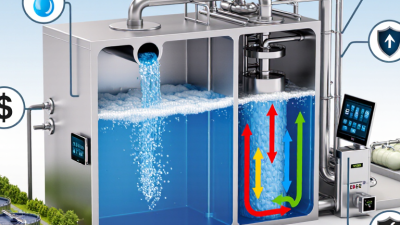
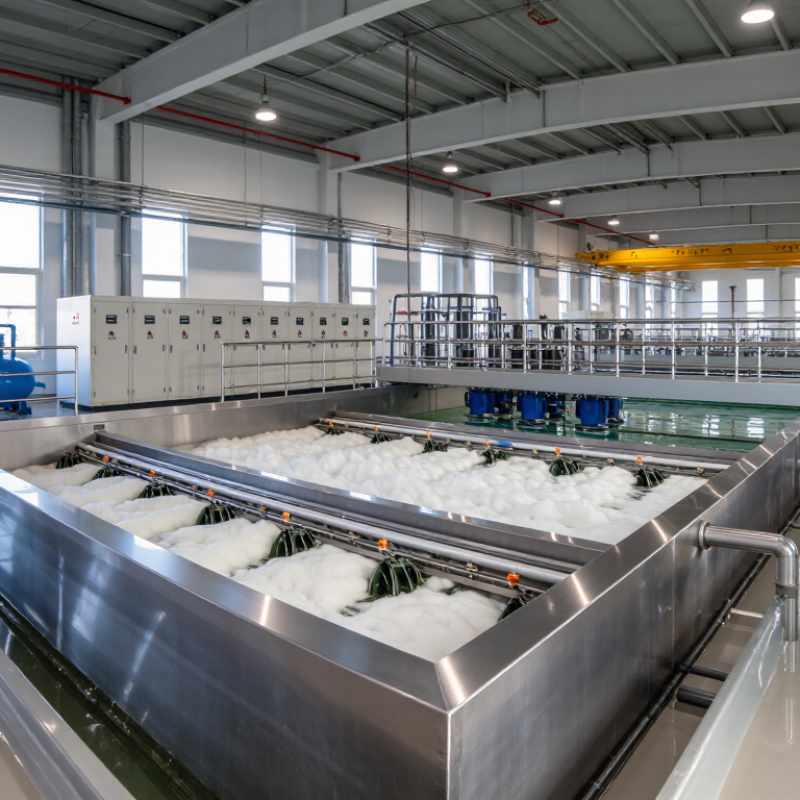
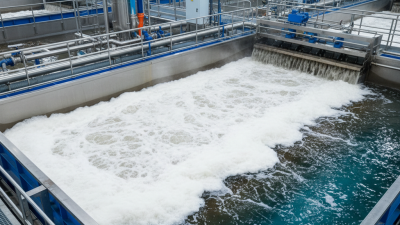
Dispersed Air Flotation uses mechanically generated bubbles to attach to suspended solids, oils, and other light contaminants. Inside a flotation tank, visible foam may rise within minutes. Scrapers then remove the concentrated surface layer. Small details matter. Bubble size, impeller design, retention time, and sludge handling can change the final result.

James K. Edzwald, a widely cited water-treatment and flotation authority, states, “Dissolved air flotation is a solid-liquid separation process.” His observation helps clarify the broader principle. However, dispersed-air systems create bubbles differently from dissolved-air units. Treating them as identical would be a technical mistake.

This introduction presents ten Chinese manufacturers associated with Dispersed Air Flotation equipment and related wastewater systems. The evaluation considers engineering capability, manufacturing consistency, customization, after-sales support, testing records, and project experience. It also examines whether suppliers explain operating limits honestly.

Some manufacturers show strong stainless-steel fabrication and practical workshop experience. Others offer attractive drawings but limited field evidence. That difference matters. A polished brochure cannot replace stable operation beside a food-processing line, chemical plant, or municipal screening system.

The ranking is not absolute. Performance depends on wastewater chemistry, oil loading, temperature, and pretreatment. A compact unit may succeed in one plant and struggle in another. Buyers should request process data, reference projects, energy figures, and maintenance details before making a decision. The market still leaves room for better transparency. That is worth remembering.
China Top 10 Dispersed Air Flotation Manufacturers?

Dispersed Air Flotation: Definition, Principles, and Applications

Dispersed air flotation uses mechanical agitation to release fine air bubbles directly into wastewater. The bubbles attach to suspended solids, oils, and algae, reducing their apparent density. A surface skimmer then removes the floating layer. Unlike dissolved air flotation, this process does not require pressurizing and recycling a large water stream.

The operating details matter. The U.S. EPA’s Wastewater Technology Fact Sheet on Dissolved Air Flotation reports typical hydraulic loadings near 2–4 gallons per minute per square foot. This range is a useful benchmark, not a universal design rule. Water temperature, bubble size, mixing energy, and solids concentration can change performance sharply. The Water Environment Federation’s MOP No. 8 also emphasizes pretreatment and controlled chemical conditioning for stable separation.

Applications include food-processing wastewater, oily industrial streams, algae removal, and sludge thickening. In China, manufacturers are often compared by air-dispersion stability, skimmer control, corrosion resistance, and pilot-test results rather than appearance.

A clear tank outlet can still hide poor removal of fine particles. That is easy to miss. Field testing should measure turbidity, suspended solids, oil, and sludge moisture across several operating conditions.

The EPA data supports process screening, but full-scale performance still depends on site-specific wastewater. More testing is usually wiser.
Key Criteria for Evaluating Chinese DAF Manufacturers

China Top 10 Dispersed Air Flotation Manufacturers?

Selecting a DAF manufacturer requires more than comparing tank prices. A credible evaluation begins with verified project experience. Ask for references from wastewater plants with similar flow, oil content, temperature, and suspended solids. Request operating data, not only polished brochures. Removal rates should be supported by laboratory reports or site records.

Factory capability matters. Inspect welding quality, surface treatment, pressure-vessel controls, and assembly procedures. Review whether each unit receives hydraulic and electrical testing before shipment. Experienced engineers should explain recycle ratios, saturation pressure, scraper speed, and sludge-handling limits in practical terms. Clear drawings and complete manuals also reveal professional discipline. Small omissions can create expensive delays.

Compliance evidence deserves careful attention. Check material certificates, inspection records, control-panel documentation, and applicable international standards. A reliable supplier should explain warranty boundaries and spare-parts availability without vague promises. Technical support should include commissioning guidance and operator training. Ask how quickly faults are diagnosed across different time zones. References may still be selective, so contact more than one customer. No supplier is perfect. I would also examine failed projects and design changes, although many manufacturers hesitate to discuss them. The strongest evaluation combines factory visits, independent testing, lifecycle costs, and honest communication before placing an order.

Profiles of China’s Top 10 Dispersed Air Flotation Manufacturers

China Top 10 Dispersed Air Flotation Manufacturers?

China’s dispersed air flotation sector serves municipal, food, chemical, textile, and metal-finishing wastewater plants. The Ministry of Ecology and Environment reported that 94.6% of monitored surface-water sections reached Grade I–III quality in 2023. That progress increases demand for reliable solids separation equipment.

The ten profiles should compare engineering evidence, not advertising claims. One manufacturer focuses on compact dissolved-air systems for food factories. Another builds stainless-steel units for oily wastewater. A third specializes in automated sludge skimming and polymer dosing. Other candidates emphasize electro-mechanical integration, modular containerized plants, high-salinity treatment, textile-color removal, and mining applications. Two further profiles represent firms with strong export documentation and established after-sales teams.

Performance claims need careful checking. The Global Water Intelligence Global Water Market 2024 report identifies industrial reuse and advanced treatment as continuing investment areas. Yet flotation results depend heavily on pressure, recycle ratio, bubble size, and influent chemistry. A catalog cannot prove field performance. Site references, pilot-test records, energy data, and sludge moisture results matter more.

Some published comparisons remain imperfect. Manufacturers may report different influent conditions and testing periods. That makes direct ranking difficult. Buyers should inspect commissioning records, maintenance access, corrosion protection, and spare-parts availability. A technically modest system may outperform a larger unit when operators can adjust it daily.

Technology, Product Range, and Industry Focus Comparison

China Top 10 Dispersed Air Flotation Manufacturers: Technology, Product Range, and Industry Focus Comparison

China’s top ten dispersed-air flotation manufacturers should be compared by engineering capability, not factory size alone. Their systems commonly use microbubbles, pressurized recycle water, skimming units, and automated sludge removal. Product ranges may include compact packages, stainless-steel modules, inclined-plate designs, and customized industrial lines. According to the U.S. EPA Water Treatment Technology Database, flotation can target suspended solids, oils, grease, and algae. Actual removal performance still depends on water chemistry and pretreatment.

Industry focus creates clearer differences. Some manufacturers serve municipal sewage and food processing plants. Others concentrate on electroplating, petrochemical, paper, textile, or slaughterhouse wastewater. The China Water Resources Bulletin reports continuing pressure on industrial water efficiency and pollution control. Therefore, manufacturers with laboratory testing, pilot units, and process guarantees deserve closer attention. Equipment capacity alone can mislead. A large tank may perform poorly with unstable influent.

Tips: Request jar-test results, air-to-solids ratios, sludge moisture data, and energy consumption. Check whether the quoted capacity reflects peak flow or average flow. Grand View Research estimates sustained growth in the global water and wastewater treatment market, but market forecasts are not performance certificates. Buyers should verify references under similar temperatures, oil loads, and suspended-solids conditions. I would also question vague “high-efficiency” claims. They sound attractive, yet often lack comparable operating data.

China Top 10 Dispersed Air Flotation Manufacturers? - Technology, Product Range, and Industry Focus Comparison

Rank Supplier Profile Core DAF Technology Typical Product Range Typical Flow Range Primary Industry Focus Common Pretreatment Typical Differentiator
1 Profile 01 Pressurized dissolved-air flotation with recycle saturation and fine-bubble release Rectangular DAF units, circular clarifiers, sludge scrapers, air saturators 5–2,000 m³/h Municipal wastewater, food processing, industrial parks Coagulation and flocculation Broad standard-platform coverage and skid-mounted configurations
2 Profile 02 High-rate DAF using recycled effluent, microbubble generation, and lamella separation Compact DAF systems, lamella DAF, integrated chemical dosing units 10–1,500 m³/h Dairy, beverage, meat processing, edible oils pH adjustment, coagulant, polymer dosing Compact footprint for facilities with limited installation space
3 Profile 03 Dissolved-air flotation with stainless-steel construction and automatic sludge removal Stainless-steel DAF tanks, pressurized air systems, sludge dewatering packages 5–1,000 m³/h Chemical manufacturing, surface treatment, metal processing Equalization, oxidation, chemical precipitation Corrosion-resistant materials for demanding industrial wastewater
4 Profile 04 Circular flotation with mechanical skimming, recycle pumps, and adjustable air saturation Circular DAF clarifiers, scraper bridges, dissolved-air pump packages 20–1,200 m³/h Municipal plants, slaughterhouses, livestock wastewater Screening, grit removal, biological or chemical flocculation Suitable for larger hydraulic loads and continuous operation
5 Profile 05 Tube or nozzle-based microbubble flotation with low-pressure recycle circulation Small packaged DAF units, containerized systems, mobile treatment units 1–300 m³/h Small factories, temporary projects, remote installations Screening and compact chemical dosing Fast delivery and reduced civil-construction requirements
6 Profile 06 Electro-assisted or enhanced flotation options combined with conventional DAF separation Enhanced DAF, electro-flotation modules, oil-removal systems 2–500 m³/h Oily wastewater, machinery manufacturing, vehicle washing Oil separation, pH control, emulsion breaking Focused on free oil, suspended solids, and emulsified contaminants
7 Profile 07 Lamella-assisted DAF with inclined plates for increased clarification area Lamella DAF, dissolved-air clarifiers, tertiary polishing units 10–800 m³/h Paper mills, printing, textile and dyeing wastewater Color reduction, coagulation, polymer flocculation High surface loading in a relatively compact tank volume
8 Profile 08 Integrated DAF and biological treatment process with automated recycle control DAF pretreatment trains, dissolved-air polishing units, complete treatment skids 5–600 m³/h Food, pharmaceutical, municipal and mixed industrial wastewater Screening, anaerobic or aerobic treatment, chemical dosing Process integration with PLC-based monitoring and control
9 Profile 09 High-efficiency flotation using optimized recycle ratio and fine-bubble distribution High-rate DAF, oil-water separators, suspended-solids removal systems 5–1,000 m³/h Petrochemical, refinery, marine and offshore support facilities API separation, chemical conditioning, emulsion breaking Designed for oil, grease, hydrocarbons, and fine suspended solids
10 Profile 10 Modular pressurized flotation with remote monitoring and automated sludge discharge Containerized DAF, modular treatment packages, retrofit flotation units 3–400 m³/h Industrial retrofits, decentralized wastewater, water reuse projects Equalization, filtration, coagulation and polishing Flexible modular design for phased expansion and retrofit projects
Comparison note: Flow ranges, configurations, and application areas represent typical engineering ranges for Chinese dissolved-air flotation suppliers. Final equipment selection depends on wastewater characteristics, design loading, hydraulic retention time, chemical requirements, discharge standards, and site conditions.

How to Select a Suitable Chinese DAF Manufacturer

China Top 10 Dispersed Air Flotation Manufacturers?

Choosing a suitable Chinese DAF manufacturer requires more than comparing a “top 10” list. Rankings can change, and some lists lack transparent evidence. Request verifiable project records, factory photographs, technical drawings, and client references. An experienced supplier should understand flow rate, suspended solids, oil content, pH, temperature, and sludge characteristics. These details affect flotation performance.

Ask for a process proposal based on your actual wastewater, not a generic catalogue. A reliable manufacturer should explain hydraulic loading, recycle ratio, air dissolution pressure, scraper design, and expected removal efficiency. Request pilot testing when wastewater varies seasonally. Inspect fabrication quality, including welds, stainless-steel thickness, control panels, and corrosion protection. Small details matter.

Tips: Send representative samples and complete laboratory data. Compare pilot results, energy use, maintenance access, delivery terms, warranty coverage, and spare-parts support. Confirm whether installation supervision and operator training are included. Ask for drawings before production begins. One overlooked pipe connection can delay commissioning. Do not select the lowest quotation automatically; cheaper equipment may bring higher cleaning and repair costs. I have seen technically strong proposals fail because communication was slow or site conditions were misunderstood. A written responsibility schedule can prevent that problem.