2026 How to Use Dispersed Air Flotation for Efficient Water Treatment?
Dispersed Air Flotation (DAF) is an innovative technology for water treatment. It utilizes tiny air bubbles to separate contaminants efficiently. This method enhances the removal of solids from wastewater, making it a vital tool for various industries.
Implementing DAF can be challenging. Operators must understand the system’s mechanics thoroughly. Factors like bubble size and flow rates greatly influence its effectiveness. Proper training and experience are crucial in preventing operational issues.
Reliable water treatment relies on technology and skilled professionals. Dispersed Air Flotation offers significant advantages, but its success depends on the user’s expertise. Many facilities still struggle with optimizing DAF systems. Continuous improvement and adaptation are necessary to harness its full potential in water treatment.
Overview of Dispersed Air Flotation Technology in Water Treatment
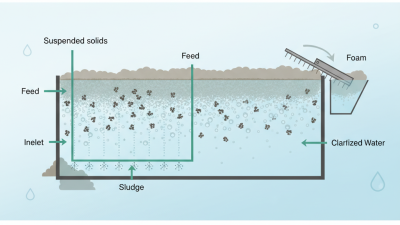
Dispersed Air Flotation (DAF) has emerged as a crucial technology in water treatment. This method utilizes microbubbles to promote the separation of contaminants from water. The bubbles adhere to solid particles, allowing them to rise to the surface. This floating mass can then be easily removed, resulting in cleaner water.
DAF systems are particularly effective for treating industrial wastewater. They can remove oils, greases, and suspended solids. In many cases, the removal efficiency will depend on the characteristics of the influent water. Understanding these specifics is key to optimizing the process.
Implementing DAF technology often requires careful consideration. Selecting the right bubble size and flow rate is essential. Suboptimal choices can lead to inefficient treatment. Operators may need to adjust parameters based on real-time data. Regular maintenance is critical to keep the system operating effectively. Therefore, continuous learning and adaptation are vital for successful application.
Mechanisms of Dispersed Air Flotation: How It Works
Dispersed Air Flotation (DAF) is a water treatment technology that employs tiny air bubbles to separate contaminants. The mechanism is based on physics. Air is introduced into water under pressure. When this pressure is released, microbubbles form. These bubbles attach to solid particles and create a buoyant force. The solid particles then rise to the surface, forming a sludge layer, while clean water remains below.
One significant aspect of DAF is its efficiency in handling oily and greasy substances. In industries such as food processing, this can be invaluable. The process can be sensitive to variations in flow rate or air supply. Sometimes, the bubbles might not effectively capture all contaminants. This indicates a need for constant monitoring and adjustment.
While DAF offers notable benefits, it is not a perfect solution. It requires skilled operators. Aging systems may struggle with performance. Regular maintenance is essential for optimal results. Developing a deep understanding of the mechanisms behind DAF can lead to better practices and improvements in water treatment efficiency. Continuing education in this field is critical for professionals involved.
2026 How to Use Dispersed Air Flotation for Efficient Water Treatment? - Mechanisms of Dispersed Air Flotation: How It Works
| Parameter |
Value |
Unit |
Notes |
| Influent Turbidity |
300 |
NTU |
Typical for wastewater |
| Air Flotation Rate |
0.15 |
m/s |
Optimal for separation efficiency |
| Bubble Size |
50 |
μm |
Ideal for attachment to particles |
| Retention Time |
20 |
minutes |
Critical for effective treatment |
| Removal Efficiency |
90 |
% |
Based on influent characteristics |
| Chemical Dosage |
70 |
mg/L |
Coagulant required for efficient separation |
Applications of Dispersed Air Flotation in Various Water Treatment Processes
Dispersed Air Flotation (DAF) is gaining traction as a versatile water treatment technique. Its applications span various sectors, like sewage treatment and industrial wastewater. In these contexts, DAF effectively separates solids and fats from water, making it clearer and cleaner.
One prominent application is in the food processing industry. Wastewater often contains high concentrations of fats and oils. DAF systems can efficiently remove these contaminants, improving water quality. This technology reduces the need for subsequent treatment stages, saving time and resources. In municipal sewage treatment, DAF helps to enhance the overall effectiveness. However, the setup can be challenging, requiring precise control of air ratios and retention times.
Another significant use is in oil and gas operations. Here, DAF treats produced water that contains emulsified oils. The flotation process enables a high removal efficiency of oil, achieving regulatory standards. Each application demands distinct adjustments and tuning, reflecting the complexities of water chemistry. Operators must be vigilant, as improper settings can lead to suboptimal performance. DAF shows potential, but ongoing improvements are necessary to maximize its effectiveness.
Advantages of Using Dispersed Air Flotation for Water Treatment Efficiency
Dispersed air flotation (DAF) is increasingly recognized for its role in enhancing water treatment efficiency. This method utilizes small air bubbles to separate contaminants from water effectively. According to industry reports, DAF systems can remove up to 90% of suspended solids, making them highly beneficial for municipal and industrial applications.
One key advantage of DAF is its ability to operate efficiently under varying conditions. In a study conducted by the Water Environment Federation, 75% of water treatment facilities reported improved performance after implementing DAF systems. This adaptability allows treatment plants to respond swiftly to changing water quality and flow rates.
Moreover, DAF technology is energy-efficient. Compared to traditional sedimentation methods, it generally requires less space and energy. However, there are complexities involved. The proper dosing of chemicals and careful monitoring of bubble formation are critical. Incorrect configurations may lead to reduced efficiency. Hence, operators must ensure thorough training and regular system evaluations to maximize performance.
Key Considerations for Implementing Dispersed Air Flotation Systems
Dispersed Air Flotation (DAF) systems have gained traction in water treatment, offering efficient removal of suspended solids, oils, and grease. Key considerations for implementing DAF systems start with understanding their operational parameters. According to a 2022 report from the Water Environment Federation, proper design can achieve removal efficiencies exceeding 90%. This data highlights the potential of DAF in various industrial applications, where water clarity is critical for compliance.
Another crucial aspect is the selection of appropriate air-to-sludge ratios, which significantly impacts performance. A study published in the Journal of Environmental Engineering found that a 1:1 air-to-sludge ratio often leads to optimal flotation dynamics. However, not all systems perform flawlessly. Some facilities reported inconsistent results due to fluctuating inflow characteristics. This variability necessitates a flexible approach to system adjustments, emphasizing the need for continuous monitoring and fine-tuning.
Economic considerations are also vital. While DAF systems can reduce sludge volume, initial investments may be considerable. Cost-benefit analyses, such as those from the American Society of Civil Engineers, reveal that long-term operational savings can offset upfront expenditures. Nonetheless, the complexity of installation and maintenance should be factored into financial planning. Without thorough assessments, projects can face unforeseen challenges that complicate their cost-effectiveness.
2026 Dispersed Air Flotation Water Treatment Efficiency
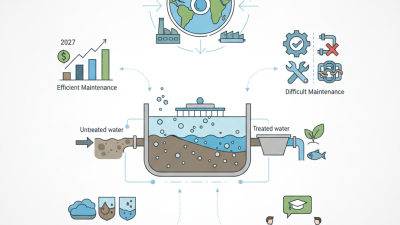
This chart illustrates the performance metrics of Dispersed Air Flotation systems in water treatment, including influent and effluent quality, removal efficiency, energy consumption, and operational cost. Effective implementation of these systems can significantly enhance water treatment efficiency.