
Leave Your Message
China’s wastewater projects increasingly need compact, dependable treatment that can handle changing flows and suspended solids. A Dissolved Air Flotation System meets this need by releasing fine air bubbles that carry oils, grease, and particles to the water’s surface. The result depends on more than the flotation tank. Saturation pressure, recycle flow, chemical dosing, and skimmer design all affect performance.
For buyers comparing China Top Dissolved Air Flotation System Manufacturers, the practical question is not simply who offers the lowest price. Ask for process data, material specifications, commissioning support, and references from applications similar to yours. A food-processing plant, for example, may need different pretreatment and solids handling from a municipal facility. Details matter.
Wastewater-treatment specialist Dr. David Jenkins is known for work on treatment processes and their operation. A useful, non-verbatim takeaway from his broader work is: “Reliable treatment depends on sound process control, not equipment labels alone.” This is not a direct quotation about dissolved air flotation; it is a practical lens for evaluating supplier claims. Compare test results and operating conditions, not just brochure figures. And remember that a polished proposal cannot replace a well-run site trial.
This guide introduces manufacturers through engineering capability, customization, service, and verifiable project experience. China has many suppliers, but capabilities vary. Some details may be hard to confirm before contacting a manufacturer. That uncertainty deserves attention, not guesswork.
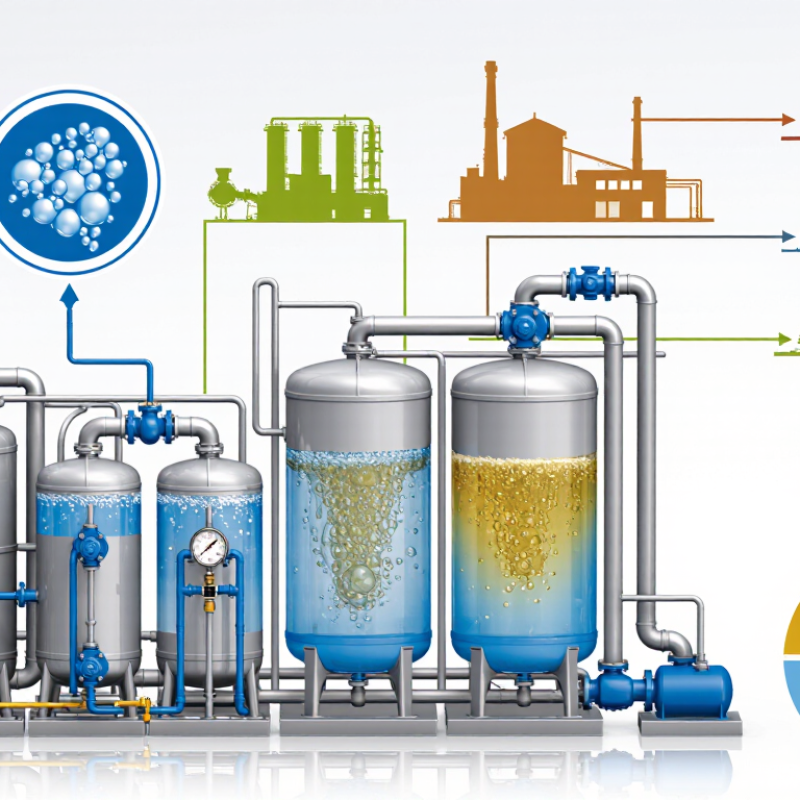
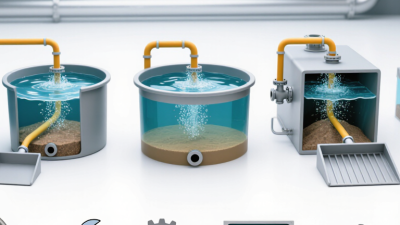
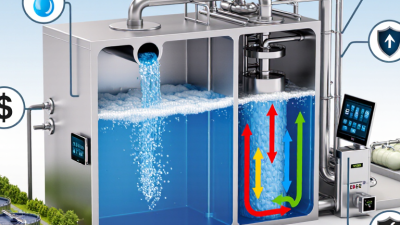
A dissolved air flotation system, or DAF system, removes suspended solids, oils, and grease from water. A portion of clarified water is pressurized and mixed with air in a saturation vessel. When this water returns to the flotation tank, the pressure drops and tiny bubbles form. These bubbles attach to particles and lift them to the surface. The process is physical, not a chemical dissolving step. That distinction matters.
The core equipment includes a flotation tank, recycle pump, air supply, saturation vessel, and release valves or nozzles. Inside the tank, a skimmer moves the floating sludge toward a collection trough. Heavier material may collect near the bottom, depending on the design. Sensors and control panels help operators monitor flow, pressure, and water levels. Small details count.
Performance depends on bubble size, water flow, and the characteristics of the incoming wastewater. A plant may need screening or chemical pretreatment before flotation. Operators should check for uneven sludge buildup and blocked release points. The hardware is straightforward; tuning is not. A clean equipment diagram can make installation look simple, but actual wastewater conditions often vary. That deserves attention.
| System Element | Definition | Primary Function | Key Design or Operating Consideration |
|---|---|---|---|
| Dissolved Air Flotation (DAF) | A clarification process that separates suspended solids, fats, oils, and other low-density material from water by attaching fine air bubbles to particles. | Floats attached particles to the water surface, where they can be removed as a surface sludge or scum layer. | Performance depends on water chemistry, particle characteristics, air supply, hydraulic loading, and consistent operation. |
| Flotation Tank | The vessel or basin in which the flotation and separation process takes place. | Provides space for bubble-particle contact, float formation, clarified-water collection, and sludge removal. | Internal flow distribution and adequate separation space help limit turbulence and prevent short-circuiting. |
| Recycle Pressurization System | A pump and pressure vessel or equivalent arrangement that pressurizes a portion of clarified effluent with air. | Dissolves air into the recycled water before it is released into the flotation zone. | Pressure, recycle flow, and air feed should be selected for the application and maintained within the equipment design limits. |
| Air Release Device | A nozzle, valve, or other pressure-release device that discharges pressurized recycle water into the flotation tank. | Creates supersaturation conditions that cause dissolved air to come out of solution as fine bubbles. | Reliable release and even distribution support stable bubble formation across the treatment zone. |
| Microbubbles | Small air bubbles formed when pressurized, air-saturated water is depressurized. | Attach to particles and reduce the effective density of particle-bubble aggregates so they rise. | Bubble size and distribution depend on pressure release, water quality, and the design of the air-release system. |
| Recycle-Water Stream | A portion of treated effluent returned to the pressurization system. | Acts as the carrier water for dissolved air that is released into the flotation tank. | Recycle flow is set according to the solids load, process configuration, and system design; it is not a universal fixed percentage. |
| Coagulation and Flocculation (When Required) | Upstream chemical-treatment steps that destabilize particles and encourage them to form larger aggregates. | Improve the ability of fine or colloidal particles to attach to bubbles and separate from water. | Chemical selection and dosage are normally established through water testing, such as jar testing, and adjusted to feed-water conditions. |
| Surface Skimmer | A mechanical scraper or skimming device installed at the water surface. | Moves accumulated float sludge toward a collection trough or discharge point. | Skimmer speed and operating schedule should remove float without unnecessarily disturbing the clarified-water zone. |
| Clarified-Water Collection | An outlet arrangement that collects treated water after solids have floated and been removed. | Maintains the treated-water flow leaving the flotation tank. | Outlet placement and flow distribution should avoid drawing floating material into the effluent. |
| Sludge Collection and Discharge | A trough, hopper, or discharge line that receives the skimmed float material. | Conveys separated solids for further handling, dewatering, or disposal. | Discharge frequency and sludge handling depend on solids concentration and the downstream treatment arrangement. |
| Controls and Instrumentation | Monitoring and control devices for relevant flows, pressures, levels, and equipment status. | Support repeatable operation and help operators identify process changes or equipment faults. | Useful monitoring points commonly include recycle flow, pressurization pressure, tank level, and pump or skimmer status. |
| Typical Applications | Water and wastewater streams containing floatable or suspended material that can be separated by flotation. | Used in applications such as industrial wastewater clarification, oily-water treatment, and some drinking-water or process-water treatment trains. | Suitability should be confirmed through feed-water characterization and, where appropriate, pilot or treatability testing. |
Note: Component arrangements and operating settings vary by application and equipment design. Values and configuration should be confirmed against the project specification, water-quality data, and applicable engineering requirements.